
Padmanabha
Padmanabha is a form of the Hindu deity Vishnu, prominently featured in the Padmanabhaswamy Temple in Thiruvananthapuram, Kerala. He is depicted in a state of yogic sleep on his serpent mount, Shesha, and is the tutelary deity of the Travancore royal family. The deity is revered as one of the 108 Divya Desams, sacred sites in the Sri Vaishnava tradition.
Key Facts
- ›Padmanabha is a form of Lord Vishnu, depicted in yogic sleep on his serpent mount, Shesha.
- ›The Padmanabhaswamy Temple in Thiruvananthapuram, Kerala, is dedicated to him.
- ›He is considered one of the principal deities of the 108 Divya Desams in Vaishnavism.
- ›The Travancore royal family considers Padmanabha their tutelary deity.
- ›The idol of Padmanabha is crafted from 12,008 saligramams.
- ›The temple and its assets are traditionally believed to belong to Lord Padmanabhaswamy.

Anantha Padmanabhaswamy, Padmanabha Swamy
- Depicted In Yogic Sleep
- Reclining On His Serpent Mount, Shesha
- Right Hand Placed Over A Shiva Lingam
- Sridevi-Lakshmi and Bhudevi By His Side
- Brahma Emerging From A Lotus Emanating From His Navel
Vishnu Purana, Brahma Purana, Matsya Purana, Varaha Purana, Skanda Purana, Padma Purana, Vayu Purana, Bhagavata Purana, Mahabharata, Divya Prabandha
Consort of Sridevi-Lakshmi, Consort of Bhudevi
Aipasi Festival, Panguni Festival, Navaratri Festival, Laksha Deepam, Murajapam
- Padmanabhaswamy Temple, Thiruvananthapuram, Kerala
- Padma Theertham Tank
Shesha
About Padmanabha
Padmanabha is a prominent form of the Hindu deity Vishnu, most famously enshrined in the Padmanabhaswamy Temple located in Thiruvananthapuram, Kerala, India. He is depicted in a state of eternal yogic sleep, reclining upon his cosmic serpent mount, Shesha, also known as Ananta. This form of Vishnu is venerated as one of the principal deities within the Sri Vaishnava tradition, being the central focus of one of the 108 Divya Desams, considered sacred pilgrimage sites.
Mythology and Significance
The mythology surrounding Padmanabha connects him deeply with the history and traditions of the region. Legends suggest that the idol was purified and venerated by Parashurama in the Dvapara Yuga. The Padmanabhaswamy Temple itself is referred to as 'Syanandoorapura' in ancient Puranas and Hindu Epics, with several major texts mentioning its sanctity. Padmanabha holds particular importance as the tutelary deity of the Travancore royal family. This relationship is deeply ingrained in the region's history, with the royal family dedicating the Kingdom of Travancore to Padmanabhaswamy in the 18th century, with rulers and their descendants serving as 'Padmanabha Dasa' (servant of Padmanabha).
Temple and Iconography
The idol of Padmanabha is unique, fashioned from 12,008 saligramams sourced from the Gandaki River in Nepal. His iconography is distinctive: he lies on Shesha, whose five hoods are turned inward, symbolizing contemplation. His right hand rests upon a Shiva lingam, while his consorts, Sridevi-Lakshmi (Goddess of Prosperity) and Bhudevi (Goddess of Earth), are by his side. Brahma is depicted emerging from a lotus that blooms from Padmanabha's navel, giving him the name 'Padmanabha' (lotus-navel).
Historical Context and Worship
The temple's history is extensive, with references found in Sangam period literature. Historical accounts and poetry from later periods describe the temple and city as possessing immense wealth. The temple has a rich tradition of temple administration, historically involving councils like the Ettara Yogam and the Travancore royalty. Major festivals, including the bi-annual Aipasi and Panguni festivals, the annual Navaratri festival, and the grand Laksha Deepam festival, are celebrated with great devotion. Devotees perform darshan and pooja, with the deity visible through three distinct doors, each revealing different aspects of his divine form and surrounding deities.
Source: Wikipedia ↗
Frequently Asked Questions
Who is Padmanabha?
Padmanabha is a form of the Hindu deity Vishnu. He is depicted in a state of yogic sleep (Anantha Padmanabhaswamy) on his cosmic serpent mount, Shesha (also known as Ananta). He is the principal deity of the Padmanabhaswamy Temple in Thiruvananthapuram, Kerala.
What is the significance of Padmanabha in Hinduism?
Padmanabha is highly significant as the main deity of one of the 108 Divya Desams, which are considered sacred abodes of Vishnu in the Sri Vaishnava tradition. He is also the tutelary deity of the Travancore royal family, with historical accounts detailing their deep devotion and service to him.
What is the Padmanabhaswamy Temple known for?
The Padmanabhaswamy Temple is renowned for its immense wealth, ancient history, and unique deity form. It is also famous for its architectural marvels, including a corridor with 365 sculptured granite pillars and its historical association with the Travancore royal family, who dedicated their kingdom to the deity.
What is the idol of Padmanabha made of?
The idol of Padmanabha is uniquely constructed from 12,008 saligramams, which are aniconic representations of Vishnu, sourced from the Gandaki River in Nepal. This idol is then covered with a special ayurvedic mix called 'Katusarkara yogam'.
What is the historical relationship between the Travancore royal family and Padmanabha?
The Travancore royal family considers Padmanabha their tutelary deity. In the 18th century, King Anizham Thirunal Marthanda Varma dedicated the Kingdom of Travancore to Padmanabhaswamy, with him and his descendants pledging to serve as 'Padmanabha Dasa' (servant of Padmanabha).
What are the major festivals associated with Padmanabhaswamy?
Major festivals include the bi-annual Aipasi and Panguni festivals, which last for 10 days each and culminate in the Aarat (holy bath) procession. The annual Navaratri festival and the grand Laksha Deepam festival, observed once every six years, are also significant.
Related Hindu deities

Nataraja
Nataraja is a depiction of the Hindu deity Shiva as the divine cosmic dancer, known for his tandava dance. This iconic form symbolizes Shiva's cosmic functions of creation, preservation, and destruction, and is widely revered as one of the highest forms of Shiva, particularly in Tamil Nadu. The Nataraja sculpture is a significant symbol of Indian culture and Hindu art, representing the interconnectedness of religion and the arts.
Kamadeva
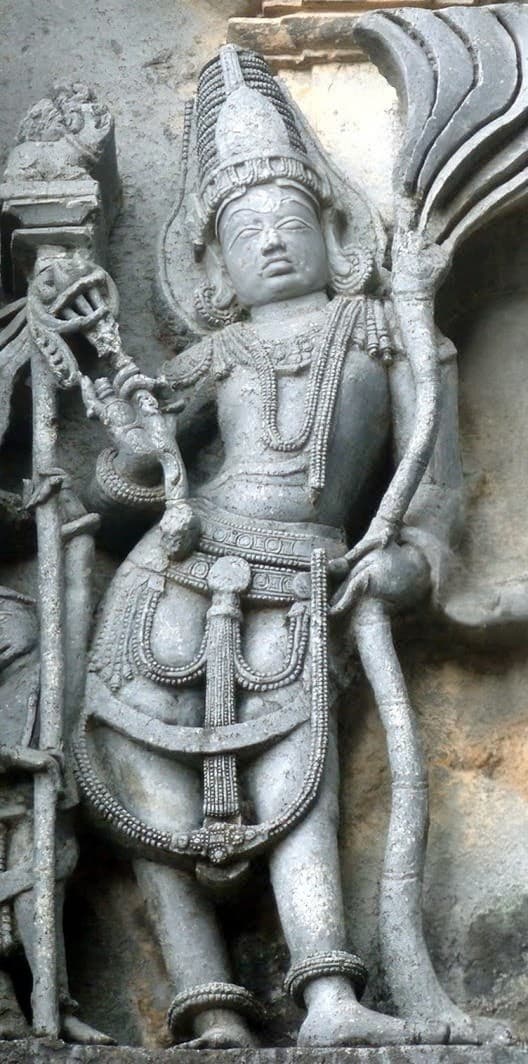
Kamadeva is the Hindu god of love, attraction, pleasure, and beauty, as well as the personification of kāma (desire). He is depicted as a handsome youth armed with a bow of sugarcane and flower arrows, often accompanied by his consort Rati. Kamadeva's mythology is prominent in the Puranas, where he is known for being incinerated by Shiva's third eye and subsequently reborn as Pradyumna.
Hayagriva
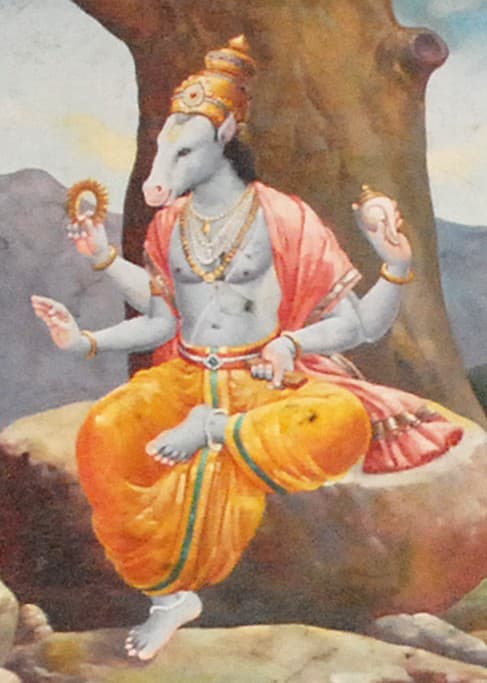
Hayagriva is a significant Hindu deity, depicted as the horse-headed avatar of Vishnu. He is revered as the god of knowledge, wisdom, and speech, often invoked to overcome ignorance and demonic forces. His form symbolizes the triumph of divine knowledge over darkness and passion.