
Mount Kailash
Mount Kailash, revered in four major religions, is a sacred peak in Tibet, China, considered the spiritual center of the universe. Its religious significance has led to a prohibition on climbing, preserving its pristine state for pilgrims who undertake arduous circumambulations around its base. The mountain is also a critical source for several major Asian rivers.
Key Facts
- ›Considered sacred by Buddhists, Bon, Hindus, and Jains.
- ›Prohibited from climbing by the Chinese government due to its religious importance.
- ›The source of four major rivers: Indus, Sutlej, Brahmaputra, and Ghaghara.
- ›In Hindu tradition, it is the abode of Lord Shiva.
- ›In Jain tradition, it is where the first Tirthankar attained enlightenment.
- ›The circumambulation (Kora) around the mountain is a significant pilgrimage activity.
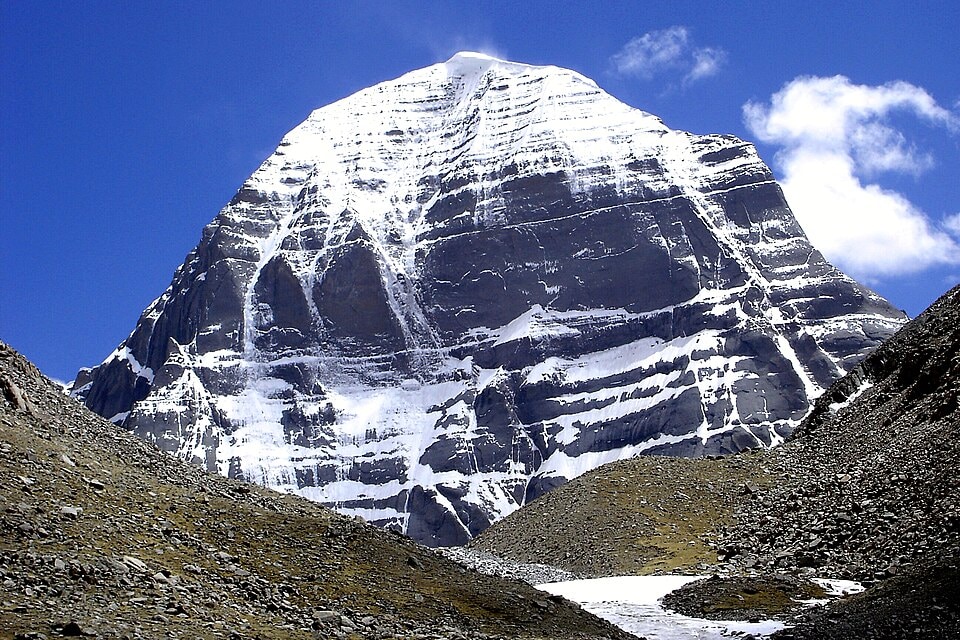
KailāSa, Gang Rinpoche, Gang Tise, Kangri Rinpoche, 岡仁波齊峰
- Abode of Lord Shiva
- Mythological Mount Meru
- Center of the Ancient Bon Empire of Zhang Zhung
- Site Where Rishabhadeva Attained Moksha
- Source of Mythical Lion, Horse, Peacock, and Elephant Rivers
- Circumambulation of the Mountain
- Trekking Towards Lake Manasarovar
- Ritual Bath In Manasarovar
- Chanting Prayers and Singing Songs
- Full Body-Length Prostrations As A Form of Circumambulation
Shiva, Parvati, Ganesha, Kartikeya, Padmasambhava, Milarepa, Naro BöNcham, Sipaimen, Rishabhadeva, Bharata Chakravartin, Mahavira, Ravana
- Climbing Is Prohibited By the Chinese Government.
About Mount Kailash
Mount Kailash: A Sacred Pinnacle
Mount Kailash, known by various names including Kailāsa, Gang Rinpoche, and Gang Tise, is a majestic mountain situated in the Ngari Prefecture of Tibet Autonomous Region, China. It forms part of the Gangdise Shan mountain range within the Transhimalaya, located in the western reaches of the Tibetan Plateau. With a peak elevation of 6,638 meters (21,778 feet), it stands near the border tripoint of China, India, and Nepal, and is in close proximity to the sacred lakes of Manasarovar and Rakshastal. The mountain's significance extends beyond its geographical prominence, as it is considered a deeply sacred site by four major world religions: Buddhism, Bon, Hinduism, and Jainism.
Religious and Spiritual Importance
In Hinduism, Mount Kailash is revered as the divine abode of Lord Shiva, where he meditates with his consort Parvati. For Buddhists, it is seen as the mythological Mount Meru and the spiritual center of the universe. Bon texts refer to it as the abode of the sky goddess Sipaimen and the heart of the ancient Zhang Zhung empire. Jains believe that their first Tirthankar, Rishabhadeva, attained liberation (moksha) on its slopes. The mountain is also the source of four major rivers—the Indus, Sutlej, Brahmaputra, and Ghaghara—underscoring its role in both spiritual and ecological life.
Pilgrimage and Prohibitions
Due to its profound sacredness, Mount Kailash is a major pilgrimage destination. Devotees undertake a ritual circumambulation, known as a 'Kora' or 'Yatra', around the mountain's base, a journey of approximately 53 kilometers. This pilgrimage is a central practice for adherents of the various faiths, with Hindus often performing a ritual bath in Lake Manasarovar beforehand. While the mountain has been surveyed by climbers, any attempt to ascend its summit is strictly forbidden by the Chinese government, preserving its sanctity. There are no recorded successful ascents, as the mountain is considered too spiritually significant to be climbed. Access for pilgrimage is managed, with specific periods and routes designated for devotees, particularly from India and Nepal.
Source: Wikipedia ↗
Frequently Asked Questions
What is Mount Kailash known for?
Mount Kailash is renowned for its profound religious significance, revered by four major faiths: Buddhism, Bon, Hinduism, and Jainism. It is considered a sacred site and a spiritual center, with many pilgrims undertaking a journey to circumambulate its base.
Can Mount Kailash be climbed?
No, climbing Mount Kailash is strictly prohibited by the Chinese government due to its immense religious significance. There have been no recorded successful ascents, as the mountain is considered too sacred to be scaled.
Which rivers originate from Mount Kailash?
Mount Kailash is located near the sources of four major Asian rivers: the Indus, the Sutlej, the Brahmaputra, and the Ghaghara, a tributary of the Ganges. These rivers begin their course in the vicinity of the mountain.
What is the religious significance of Mount Kailash in Hinduism?
In Hinduism, Mount Kailash is believed to be the eternal abode of Lord Shiva, who resides there with his consort Parvati. It is also mythologically identified with Mount Meru, the cosmic axis of the universe.
What is the pilgrimage route around Mount Kailash?
The pilgrimage around Mount Kailash, known as a 'Kora' or 'Yatra', involves a trek of approximately 53 km. It typically begins and ends at Darchen, with the highest point reached at the Drölma pass.
How long does the circumambulation of Mount Kailash take?
The circumambulation of Mount Kailash typically takes about three days on foot. However, more extreme methods, such as full body-length prostrations, can extend the pilgrimage to an average of three weeks.
Related Sacred Mountains
Girnar Parvat
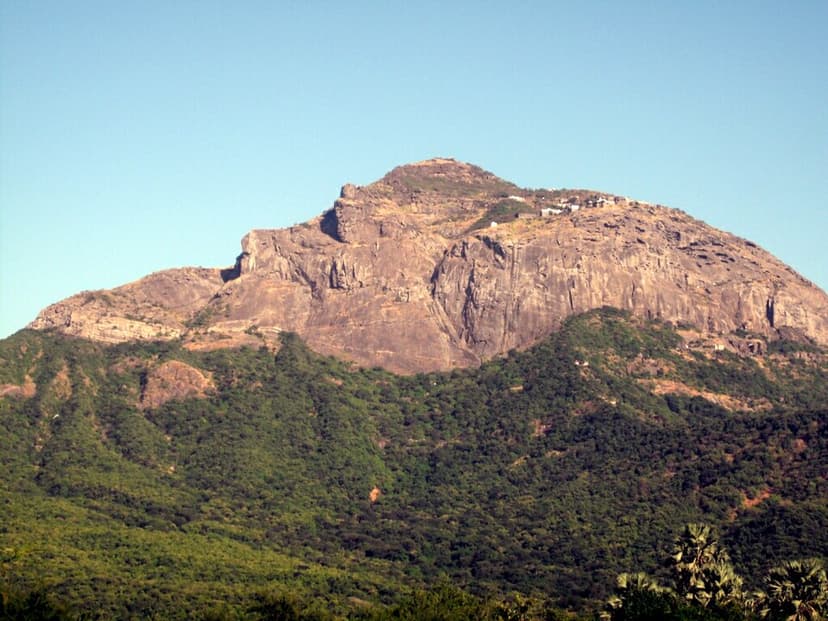
Girnar Parvat, also known as Mount Girnar, is an ancient and sacred hill located in Junagadh, Gujarat, India. It is a pivotal pilgrimage site for Jains, recognized as a Mahatirth where the 22nd Tirthankara, Lord Neminath, attained enlightenment and nirvana. The mountain also holds historical significance with ancient rock edicts and is a complex igneous plutonic formation.

Parasnath Shikharji
Parasnath Shikharji, also known as Sammet Shikhar or Marang Buru, is a sacred mountain peak in Jharkhand, India, revered by Jains as the site where the 23rd Tirthankara, Parshvanatha, attained liberation. It is considered one of the holiest Jain pilgrimage sites, with 20 of the 24 Tirthankaras believed to have achieved nirvana there. The mountain also holds significance for the local Santhal community, who refer to it as Marang Buru.
Emei Shan
Mount Emei, standing at 3,099 meters, is the highest of China's Four Sacred Buddhist Mountains and is revered as the bodhimaṇḍa of the Bodhisattva Samantabhadra. Its steep terrain features numerous Buddhist monasteries adapted to the landscape, and it is a significant pilgrimage site, rich in biodiversity with endemic plant and animal species.