
Emei Shan
Mount Emei, standing at 3,099 meters, is the highest of China's Four Sacred Buddhist Mountains and is revered as the bodhimaṇḍa of the Bodhisattva Samantabhadra. Its steep terrain features numerous Buddhist monasteries adapted to the landscape, and it is a significant pilgrimage site, rich in biodiversity with endemic plant and animal species.
Key Facts
- ›Highest of the four Sacred Buddhist Mountains of China.
- ›Traditionally considered the bodhimaṇḍa (place of enlightenment) of Bodhisattva Samantabhadra.
- ›Features 76 Buddhist monasteries from the Ming and Qing dynasties, many near the summit.
- ›The site of the first Buddhist temple built in China, dating to the 1st century CE.
- ›A UNESCO World Heritage Site since 1996.
- ›Known for its rich biodiversity, including endemic plant species and various mammals like the red panda.
Mount Omei
- Bodhimanda of Bodhisattva Samantabhadra.
- Site of the First Buddhist Temple In China.
- Historical References To Martial Arts Training In Its Monasteries.
- Pilgrimage Destination For Chinese Buddhists.
- Offering Burning Sandalwood To Send Prayers To Heaven.
- Walking the 50 Km Footpath.
- Visiting Buddhist Monasteries.
Samantabhadra
About Emei Shan
Mount Emei: A Sacred Buddhist Peak
Mount Emei ([ɤ̌.měɪ]; Chinese: 峨眉山; pinyin: Éméi shān), also known as Mount Omei, is a prominent sacred mountain located in Sichuan Province, China. Standing at 3,099 meters (10,167 ft), it holds the distinction of being the highest of China's Four Sacred Buddhist Mountains. The name 'Emei' translates to 'towering eyebrows' in Chinese, likely referencing its distinctive silhouette.
Religious and Spiritual Importance
Mount Emei is traditionally revered as the bodhimaṇḍa, or place of enlightenment, for the Bodhisattva Samantabhadra (Puxian). This spiritual significance draws numerous Chinese Buddhist pilgrims who travel to the mountain to engage in religious practices, including offering burning sandalwood to send prayers to heaven. The mountain is home to the first Buddhist temple built in China, dating back to the 1st century CE, and features seventy-six Buddhist monasteries from the Ming and Qing dynasties. These monasteries are notable for their architectural adaptability, blending seamlessly with the surrounding natural landscape.
Geological and Natural Significance
The broader region surrounding Mount Emei is geologically recognized as the Permian Emeishan Large Igneous Province, a testament to ancient volcanic activity. The mountain itself boasts remarkable biodiversity, with flora that varies from subtropical evergreen forests at lower elevations to subalpine shrubland near the summit. It is a significant area for endemic plant species, with approximately 100 plant species unique to the region. The fauna is equally rich, with over 2,300 animal species recorded, including mammals like the red panda and Asian black bear, as well as a variety of birds, reptiles, and amphibians. Tibetan macaques are a common sight, often interacting with visitors.
Accessibility and Heritage
Mount Emei was designated a UNESCO World Heritage Site in 1996, acknowledging its profound cultural and natural value. The winding footpaths on the mountain span 50 km (31 mi), making the pilgrimage a journey of several days. For those seeking easier access, cable cars provide passage to temples located at Jinding, at an elevation of 3,077 meters, which is a short hike from the mountain's peak. The climate at the summit is an alpine subarctic type, characterized by long, cold winters and short, cool summers, with precipitation occurring year-round.
Source: Wikipedia ↗
Frequently Asked Questions
What is the significance of Mount Emei in Buddhism?
Mount Emei is regarded as the bodhimaṇḍa, or place of enlightenment, for the Bodhisattva Samantabhadra. It is one of the Four Sacred Buddhist Mountains of China and a major pilgrimage destination for Chinese Buddhists.
What is the origin of the name Emei?
The name Emei in Chinese translates to 'towering eyebrows', likely inspired by the mountain's distinctive shape.
What kind of architecture can be found on Mount Emei?
The mountain hosts seventy-six Buddhist monasteries from the Ming and Qing dynasties, many located near the summit. These structures exhibit a flexible architectural style that integrates with the natural landscape, utilizing terraces or raised stilts.
Is Mount Emei a UNESCO World Heritage Site?
Yes, Mount Emei, along with the Leshan Giant Buddha Scenic Area, was designated a UNESCO World Heritage Site in 1996, recognizing its cultural and natural significance.
What wildlife is found on Mount Emei?
Mount Emei is home to a diverse range of wildlife, with approximately 2,300 animal species recorded. Notable native mammals include the red panda, Asian golden cat, and Asian black bear. Tibetan macaques are also commonly seen interacting with visitors.
How long does it take to explore Mount Emei?
The winding footpaths on Mount Emei stretch for 50 km (31 mi), typically taking several days to traverse. Cable cars are available to ease the ascent to temples at Jinding.
Related Sacred Mountains
Tai Shan
Mount Tai is a mountain of immense historical and cultural significance in China, revered as the foremost of the Five Sacred Mountains. For over 3,000 years, it has been a vital ceremonial center, particularly for imperial sacrifices to Heaven and Earth, and is associated with sunrise, birth, and renewal. Its profound spiritual importance and dramatic landscape led to its designation as a UNESCO World Heritage Site.

Mount Lao
Mount Lao, also known as Laoshan, is a significant mountain located on the southeastern coast of China's Shandong Peninsula. It is renowned as a cradle of Taoism, housing numerous temples and being associated with the development of the Complete Perfection School. The mountain is also recognized for its geological formations, rich cultural traditions, and natural beauty, attracting both pilgrims and tourists.
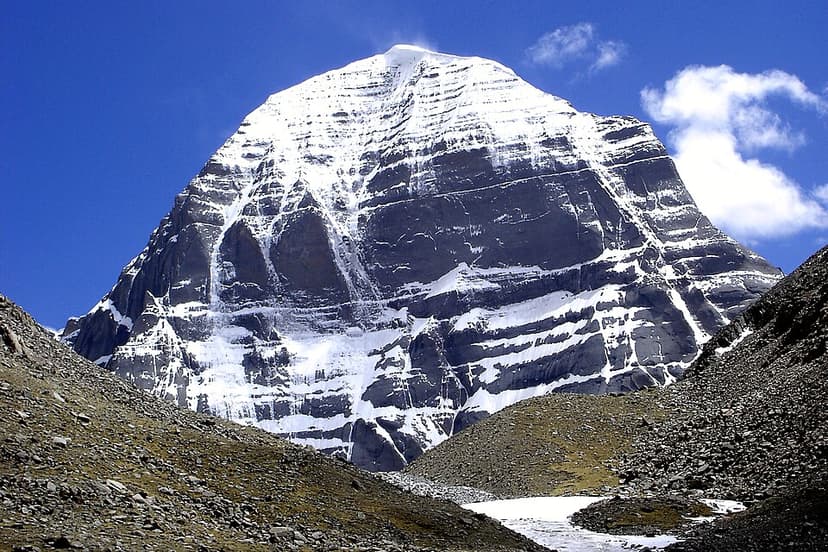
Mount Kailash
Mount Kailash, revered in four major religions, is a sacred peak in Tibet, China, considered the spiritual center of the universe. Its religious significance has led to a prohibition on climbing, preserving its pristine state for pilgrims who undertake arduous circumambulations around its base. The mountain is also a critical source for several major Asian rivers.