
Mount Lao
Mount Lao, also known as Laoshan, is a significant mountain located on the southeastern coast of China's Shandong Peninsula. It is renowned as a cradle of Taoism, housing numerous temples and being associated with the development of the Complete Perfection School. The mountain is also recognized for its geological formations, rich cultural traditions, and natural beauty, attracting both pilgrims and tourists.
Key Facts
- ›Mount Lao is the highest coastal mountain in China and the second highest in Shandong province, with its peak, Jufeng, reaching 1,132.7 meters.
- ›The mountain is composed of granite and its landforms were shaped by glacial action and meltwater erosion during the Quaternary period.
- ›It is considered one of the birthplaces of Taoism, where the Complete Perfection School developed.
- ›Historically, Mount Lao has been known by various names including Laoshan, Lao Shan, and Mount Ao.
- ›Numerous Taoist temples, palaces, and nunneries were historically built on the mountain, with the Temple of Supreme Purity being a major site.
- ›Mount Lao is featured in legends and traditions, including stories of emperors seeking immortality and the development of the Northern Praying Mantis martial arts style.

Laoshan, LáO ShāN, 劳山, 牢山, Mount Futang, Mount Ao, 鰲山
- Cradle of Taoism
- Development Site of the Complete Perfection School
- Setting For Legends of Emperors Seeking Immortality
- Origin of the Northern Praying Mantis Martial Arts Style
- Source of Spring Water For Tsingtao Brewery
- Famous For Its Green Tea
Faxian, Changchun, Pu Songling, Wang Lang, Liu Zhijian, Qin Shi Huang, Emperor Wu of Han
About Mount Lao
Mount Lao: A Sacred Peak of Taoism and Natural Beauty
Mount Lao, also transliterated as Laoshan, is a prominent mountain located on the southeastern coast of China's Shandong Peninsula, overlooking the East China Sea. It holds significant cultural and religious importance, widely regarded as one of the "cradles of Taoism." The mountain is characterized by its granite composition and was shaped by glacial activity and meltwater erosion during the Quaternary period. Mount Lao stands as the highest coastal mountain in China and the second highest in Shandong, with its main peak, Jufeng, reaching an elevation of 1,132.7 meters.
Religious and Historical Significance
Laoshan is deeply intertwined with the history of Taoism, serving as the birthplace for the Complete Perfection School. Throughout history, numerous Taoist temples, palaces, and nunneries have been established on its slopes. The Temple of Supreme Purity (Tàiqīng Gōng) is a notable example, first built during the Northern Song dynasty, with its present structures dating to the Ming dynasty. This complex houses statues of the Taoist Trinity and other deities. The Temple of Great Purity (Shàngqīng Gōng), also known as the Upper Temple, is another ancient structure on the southeastern slope.
Cultural Narratives and Natural Attractions
The mountain is a focal point for many legends and local traditions. It is said to have been visited by emperors seeking immortality, such as Qin Shi Huang and Emperor Wu of Han. The martial arts style of Northern Praying Mantis is attributed to Wang Lang, who is believed to have developed it while living on Mount Lao. Beyond its spiritual and historical import, Mount Lao is celebrated for its natural beauty, including the Longtan Waterfall and twelve traditionally recognized scenic spots. The mountain's pure spring water is famously used in the production of Tsingtao beer, and it is also renowned for its green tea.
Tourism and Accessibility
Mount Lao is a popular tourist destination, recognized with a 5A government rating. It is protected by the Qingdao Laoshan National Park, which covers a substantial area. The mountain is divided into six designated scenic areas, making it accessible for visitors to explore its temples, natural landscapes, and cultural heritage. While historically known by names such as Mount Ao, the name Laoshan is now widely used, and the mountain continues to attract both pilgrims and tourists seeking its spiritual tranquility and scenic vistas.
Source: Wikipedia ↗
Frequently Asked Questions
What is Mount Lao's geological composition?
Mount Lao is primarily composed of granite. Its distinctive landforms were shaped by the effects of glaciers during the Quaternary period and subsequent erosion by meltwater.
What is the religious significance of Mount Lao?
Mount Lao is considered one of the cradles of Taoism and is particularly associated with the development of the Complete Perfection School. Historically, it hosted a significant number of monks and nuns.
Which are the main historical religious sites on Mount Lao?
Key religious sites include the Temple of Supreme Purity (Tàiqīng Gōng), the largest temple complex, and the Temple of Great Purity (Shàngqīng Gōng). Many other temples and palaces were built on the mountain throughout history.
What are some of the cultural stories associated with Mount Lao?
Legends say that emperors like Qin Shi Huang and Emperor Wu of Han visited Mount Lao seeking immortality. It is also linked to the origin of the Northern Praying Mantis martial arts style.
Is Mount Lao a popular tourist destination?
Yes, Mount Lao is a popular tourist site with a 5A government rating. It receives a large number of visitors, especially during holiday periods.
What is special about the water from Mount Lao?
Mount Lao is known for its abundant underground waters, which feed springs like the Shenshui Spring at the Temple of Supreme Purity. The famous Tsingtao Brewery uses Laoshan spring water for its beer.
Related Sacred Mountains
Tai Shan
Mount Tai is a mountain of immense historical and cultural significance in China, revered as the foremost of the Five Sacred Mountains. For over 3,000 years, it has been a vital ceremonial center, particularly for imperial sacrifices to Heaven and Earth, and is associated with sunrise, birth, and renewal. Its profound spiritual importance and dramatic landscape led to its designation as a UNESCO World Heritage Site.
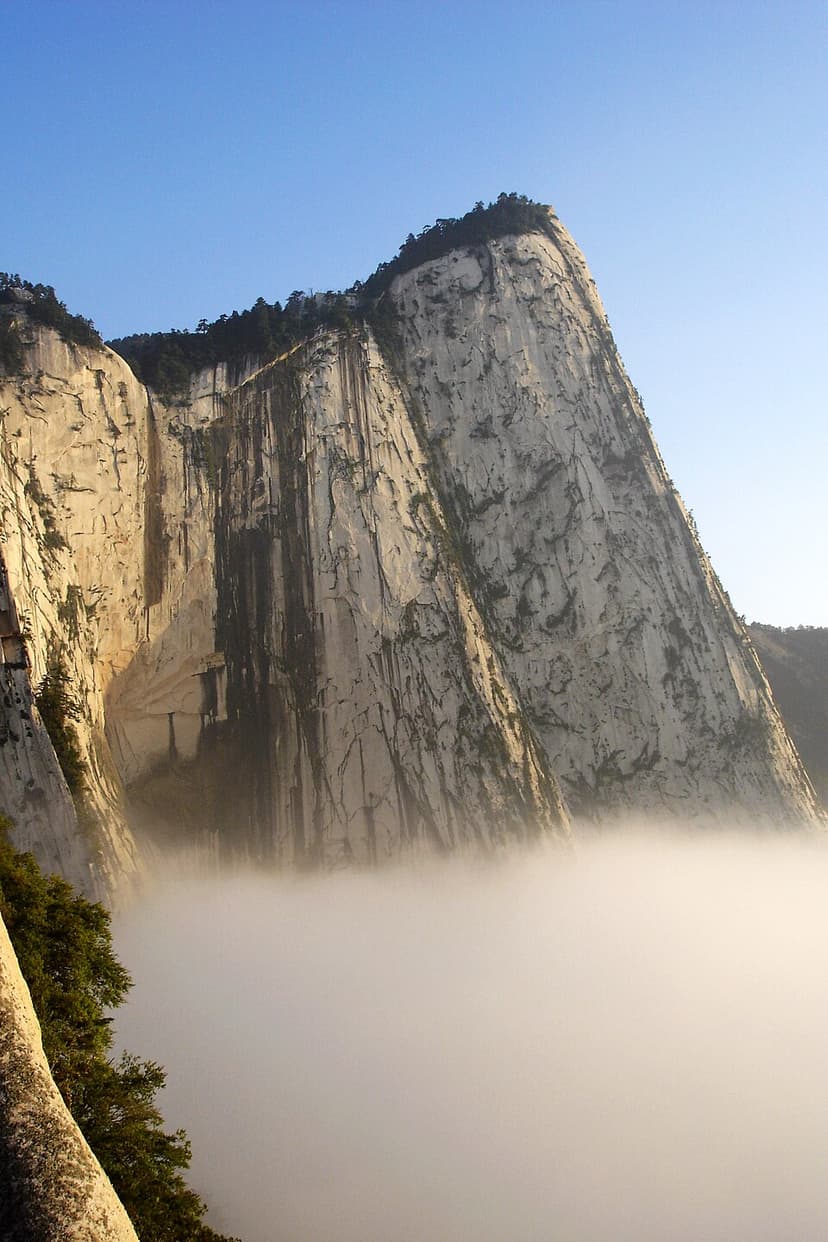
Hua Shan
Mount Hua, also known as Huashan, is a sacred mountain in Shaanxi Province, China, renowned for its dramatic cliffs and religious significance. As one of China's Five Great Mountains, it has been a site of reverence, particularly in Taoism, with a history of pilgrimage and spiritual seeking dating back to the 2nd century BC.
Wudang Shan
The Wudang Mountains are a sacred mountain range in Hubei, China, renowned as a major center for Taoism and the practice of tai chi. They are home to a significant complex of Taoist temples and monasteries, recognized as a UNESCO World Heritage Site for their religious importance and architectural achievements. Historically, Wudang Shan has been a focal point for Taoist pilgrimages and the development of internal martial arts.