
Parasnath Shikharji
Parasnath Shikharji, also known as Sammet Shikhar or Marang Buru, is a sacred mountain peak in Jharkhand, India, revered by Jains as the site where the 23rd Tirthankara, Parshvanatha, attained liberation. It is considered one of the holiest Jain pilgrimage sites, with 20 of the 24 Tirthankaras believed to have achieved nirvana there. The mountain also holds significance for the local Santhal community, who refer to it as Marang Buru.
Key Facts
- ›Attainment of liberation by the 23rd Jain Tirthankara, Parshvanatha, in 772 BCE.
- ›Considered the holiest pilgrimage site in Jainism, with 20 out of 24 Tirthankaras achieving nirvana here.
- ›The highest mountain peak in the Indian state of Jharkhand, standing at 1,365 meters.
- ›Features numerous Jain temples and shrines (gumti or Tonk) dedicated to each Tirthankara.
- ›Also known as Sammet Shikhar by Jains, meaning 'great mountain', and Marang Buru by the Santhal community.
- ›The underlying geology consists of metamorphosed sedimentary rock with granodiorite intrusions.

Sammet Shikhar, Marang Buru, Parasnath Hill
Jainism, Santhal
- Site of Attainment of Nirvana For 20 of the 24 Jain Tirthankaras.
- Named After the 23rd Jain Tirthankara, Parshvanatha.
- Revered As Marang Buru By the Local Santhal Community.
- Historical Site of Jain Pilgrimage Since Ancient Times.
- Offering Nirvana Laddu and Reciting Nirvana Kanda On Moksha Saptami.
- Visiting the Shikharji Jain Temples and Shrines For Each Tirthankara.
- Ascending the Mountain To Reach the Peak Temples.
Parshvanatha
About Parasnath Shikharji
Parasnath Shikharji, also widely known as Sammet Shikhar or Marang Buru, is a sacred mountain peak located in the Parasnath hill range of Jharkhand, India. It holds profound spiritual significance, particularly within Jainism, where it is considered the holiest pilgrimage site. The mountain is revered as the place where the 23rd Jain Tirthankara, Parshvanatha, attained liberation (moksha) in 772 BCE, an event celebrated annually as Moksha Saptami.
Significance in Jainism
For Jains, Parasnath Shikharji is of paramount importance because it is believed that 20 out of the 24 Tirthankaras achieved nirvana on its summit. This makes it a central site for pilgrimage, with numerous Jain temples and shrines, known as gumti or Tonk, dotting the mountain, each dedicated to a Tirthankara. The main temple on the peak, 'Svarna Bhadra koot,' is a significant pilgrimage destination. The earliest literary references to Shikharji as a Jain tirth date back to the 6th century BCE.
Geography and Geology
Standing at 1,365 meters (4,478 feet), Parasnath Shikharji is the highest peak in Jharkhand. Its geological composition includes metamorphosed fine-grained sedimentary rock interspersed with granodiorite igneous intrusions. The mountain offers panoramic views, and under exceptionally clear conditions, it is theoretically inter-visible with Mount Everest.
Santhal Heritage and Community Relations
The mountain is also sacred to the local Santhal community, who refer to it as Marang Buru, their name for both their deity and the mountain. Historically, there have been interactions and sometimes disputes between the Santhal and Jain communities regarding ancestral worship and rights. While Jains maintain that Parasnath has been a Jain pilgrimage site since ancient times, and that Adivasis traditionally assisted in carrying Tirthankaras to the summit, recent conflicts have arisen over issues such as bans on meat and alcohol, which affect Santhal traditions.
Accessibility
Parasnath Shikharji is accessible from the nearby Parasnath railway station, making it a reachable destination for pilgrims and visitors.
Source: Wikipedia ↗
Frequently Asked Questions
What is the significance of Parasnath Shikharji in Jainism?
Parasnath Shikharji is considered the holiest pilgrimage site in Jainism. It is believed that 20 of the 24 Tirthankaras, including Parshvanatha, attained nirvana (liberation) here, making it a place of immense spiritual importance for Jains.
Who was Parshvanatha and why is the mountain named after him?
Parshvanatha was the 23rd Jain Tirthankara. He is historically significant for attaining liberation on this mountain peak in 772 BCE, after which the hill was named in his honor. He is also known as Parasnath or Parsva.
What are the main religious traditions associated with Parasnath Shikharji?
The primary religious tradition is Jainism, which considers it the most sacred pilgrimage site. The local Santhal community also reveres the mountain, calling it Marang Buru, leading to some historical and ongoing disputes over its use and traditions.
What is the elevation of Parasnath Shikharji?
Parasnath Shikharji is the highest mountain peak in Jharkhand, with an elevation of 1,365 meters (4,478 feet) above sea level.
Are there any notable Jain temples on the mountain?
Yes, there are several Jain temples and shrines on the mountain. These include a marble temple known as 'Svarna Bhadra koot' on the peak and a Jal Mandir, along with numerous smaller shrines (gumti or Tonk) dedicated to each Tirthankara.
Related Sacred Mountains
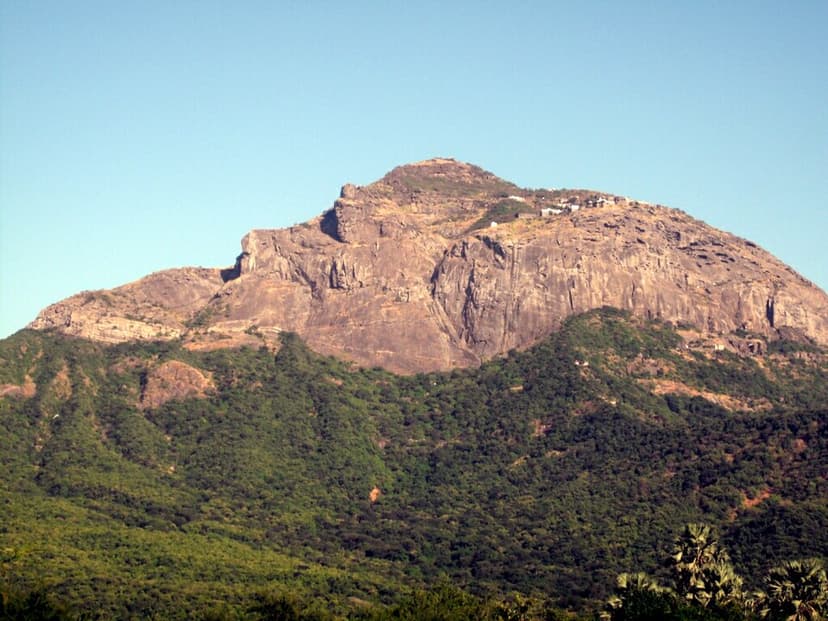
Girnar Parvat
Girnar Parvat, also known as Mount Girnar, is an ancient and sacred hill located in Junagadh, Gujarat, India. It is a pivotal pilgrimage site for Jains, recognized as a Mahatirth where the 22nd Tirthankara, Lord Neminath, attained enlightenment and nirvana. The mountain also holds historical significance with ancient rock edicts and is a complex igneous plutonic formation.
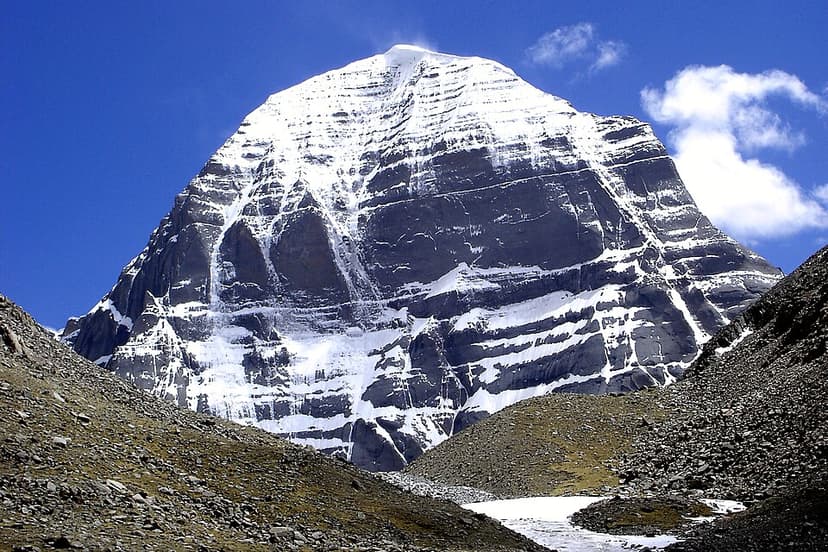
Mount Kailash
Mount Kailash, revered in four major religions, is a sacred peak in Tibet, China, considered the spiritual center of the universe. Its religious significance has led to a prohibition on climbing, preserving its pristine state for pilgrims who undertake arduous circumambulations around its base. The mountain is also a critical source for several major Asian rivers.
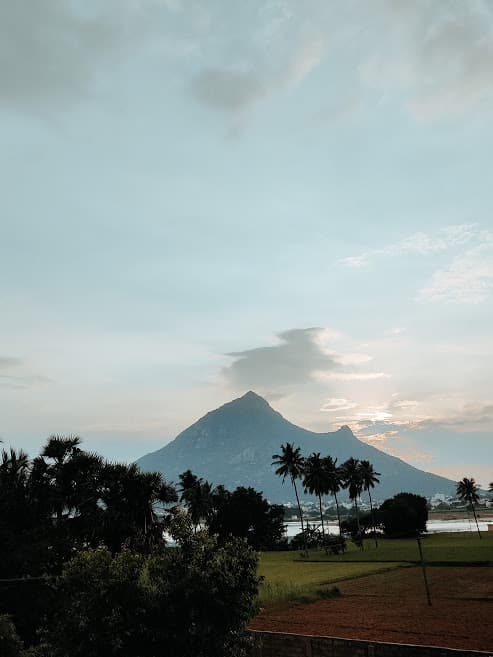
Arunachala
Arunachala is a sacred hill and one of the five main Shaiva holy places in South India, located in Tamil Nadu. It is revered as a manifestation of Lord Shiva and is the site of the Arunachalesvara Temple. The hill holds immense spiritual significance, particularly for devotees of Ramana Maharshi, and is a focal point for annual religious festivals and pilgrimage.