
Girnar Parvat
Girnar Parvat, also known as Mount Girnar, is an ancient and sacred hill located in Junagadh, Gujarat, India. It is a pivotal pilgrimage site for Jains, recognized as a Mahatirth where the 22nd Tirthankara, Lord Neminath, attained enlightenment and nirvana. The mountain also holds historical significance with ancient rock edicts and is a complex igneous plutonic formation.
Key Facts
- ›Girnar is a significant pilgrimage site for Jains, where Lord Neminath achieved omniscience and nirvana.
- ›The mountain is a complex igneous plutonic formation, intruding into basalts from the Deccan Trap period.
- ›Fourteen of Ashoka's Major Rock Edicts, dating to circa 250 BCE, are inscribed on a boulder near Girnar.
- ›Jain texts like the Kalpa Sūtra and Uttaradhyayana Sutra mention Girnar as a sacred place for ascetics and liberation.
- ›The Girnar Jain temples are a group of Śvetāmbara and one Digambara temple, with the earliest dating back to the 13th century.
- ›Asia's longest ropeway provides access to the Ambika Jain temple atop the hill.
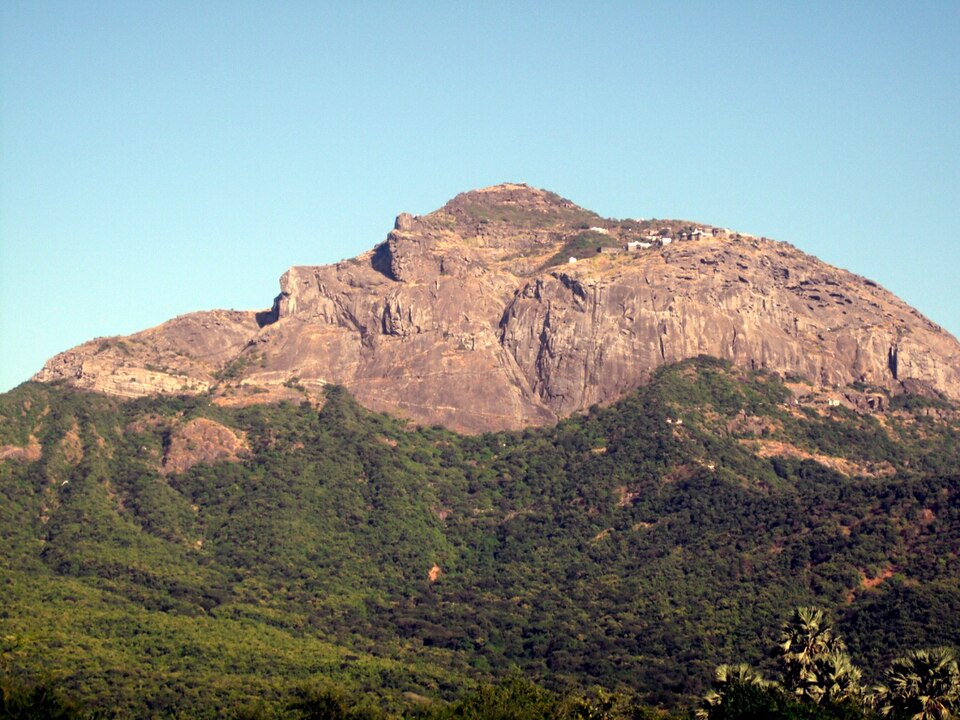
Mount Girnar, Raivataka
- Site of Key Events In the Life of the 22nd Tirthankara, Lord Neminath .
- Location of Ancient Rock Edicts, Including Those of Emperor Ashoka, Providing Historical and Linguistic Insights.
- Mentioned In Ancient Jain Texts As A Place of Great Spiritual Importance and Liberation.
- Associated With the Mythological King Raivataka.
- Climbing the Steps To Reach the Temples and Sacred Sites.
- Worship and Prayer At the Jain Temples.
- Visiting the Ambika Temple.
- Using the Girnar Ropeway For Access To Higher Points.
Lord Neminath, Emperor Ashoka, Rudradaman I, Skandagupta, Vastupala, Tejpala, Ambika
About Girnar Parvat
Girnar Parvat, often referred to as Mount Girnar, is an ancient and highly revered hill located in Junagadh, within the Gujarat state of India. It holds profound spiritual significance, particularly for Jains, who consider it a Mahatirth, or great pilgrimage site. The mountain is famously known as the place where the 22nd Tirthankara, Lord Neminath, attained his omniscience and later achieved nirvana at its highest peak, alongside 533 enlightened sages. These events are well-documented in ancient Jain scriptures such as the Kalpa Sūtra and the Shri Uttaradhyayana Sutra.
Geological and Historical Context
Geologically, Mount Girnar is recognized as a substantial igneous plutonic complex. It intruded into the surrounding basalts during the latter part of the Deccan Trap period, resulting in a diverse rock composition including gabbros, diorites, lamprophyres, alkali-syenites, and rhyolites. Historically, Girnar has been a site of significant human activity and inscription. Fourteen of Emperor Ashoka's Major Rock Edicts, dating to approximately 250 BCE, are inscribed on a boulder near Girnar, offering invaluable insights into ancient Indian history and governance. These edicts are written in the Brahmi script and mark an early chapter in Junagadh's written past. Further inscriptions in Sanskrit from around 150 CE by Mahakshatrap Rudradaman I and from the Gupta emperor Skandagupta (circa 450 CE) add to the historical depth of the site.
Spiritual and Pilgrimage Importance
For Jains, Girnar Parvat is an eternal pilgrimage site from which countless monks have attained liberation. The presence of numerous Jain temples atop the mountain underscores its sacred status. These temples, many of which were built starting in the 13th century, are dedicated to various Tirthankaras, with a central focus on Lord Neminath. The journey to these temples often involves climbing thousands of steps, although the modern Girnar Ropeway offers a more accessible route to the Ambika Jain temple, one of the key shrines on the mountain. The mountain's spiritual significance is also recognized by some Hindu traditions, with a dispute existing over the exact site of Lord Neminath's nirvana and the penance of Dattatreya.
Access and Modern Facilities
While the traditional pilgrimage involves a strenuous climb, the development of the Girnar Ropeway has made access to the upper reaches of the mountain more feasible for a wider range of visitors. This ropeway, one of the longest in Asia, significantly shortens the travel time to the Ambika Jain temple. The mountain is administered by the Junagadh Municipal Corporation, ensuring its upkeep and management as a vital religious and historical landmark.
Source: Wikipedia ↗
Frequently Asked Questions
What is the religious significance of Girnar Parvat for Jains?
Girnar Parvat is considered a Mahatirth for Jains, meaning it is one of the holiest pilgrimage sites. It is where the 22nd Tirthankara, Lord Neminath, attained his omniscience (Kevala Jnana) and subsequently achieved nirvana (moksha) at its highest peak. Ancient Jain scriptures like the Kalpa Sutra and Uttaradhyayana Sutra detail these events and the mountain's sacredness.
What historical inscriptions can be found at Girnar?
Fourteen of Ashoka's Major Rock Edicts, dating to approximately 250 BCE, are inscribed on a large boulder near Girnar. These inscriptions are in the Brahmi script and mark an early point in Junagadh's written history. Additionally, inscriptions in Sanskrit from around 150 CE by Mahakshatrap Rudradaman I and from about 450 CE by Skandagupta are also present.
What is the geology of Mount Girnar?
Mount Girnar is characterized as a major igneous plutonic complex. It intruded into the basalts towards the end of the Deccan Trap period. The rock types found here include gabbros, diorites, lamprophyres, alkali-syenites, and rhyolites, indicating a complex volcanic and intrusive history.
Are there specific Jain temples on Girnar Parvat?
Yes, Girnar Parvat is home to a group of Śvetāmbara Jain temples and one Digambara temple. These temples are dedicated to various Tirthankaras, most notably Lord Neminath. The temples feature intricate carvings and unique architectural styles, with some dating back to the 13th century.
How can one access the temples on Girnar?
Access to the temples on Girnar Parvat can be achieved through climbing a significant number of steps, with one path requiring approximately 10,000 steps. For easier access, Asia's longest ropeway, inaugurated in 2020, transports visitors to the Ambika Jain temple within ten minutes, covering a substantial height above the hill.
What is the significance of the Ambika Temple on Girnar?
The Ambika Temple is dedicated to Ambika Yakshi, an attendant deity of Lord Neminath in Jainism. Historical records suggest the temple may have been built as early as the mid-8th century CE and was restored and renovated by Jain merchants over centuries. It is a significant shrine for Jain pilgrims visiting the mountain.
Related Sacred Mountains

Parasnath Shikharji
Parasnath Shikharji, also known as Sammet Shikhar or Marang Buru, is a sacred mountain peak in Jharkhand, India, revered by Jains as the site where the 23rd Tirthankara, Parshvanatha, attained liberation. It is considered one of the holiest Jain pilgrimage sites, with 20 of the 24 Tirthankaras believed to have achieved nirvana there. The mountain also holds significance for the local Santhal community, who refer to it as Marang Buru.
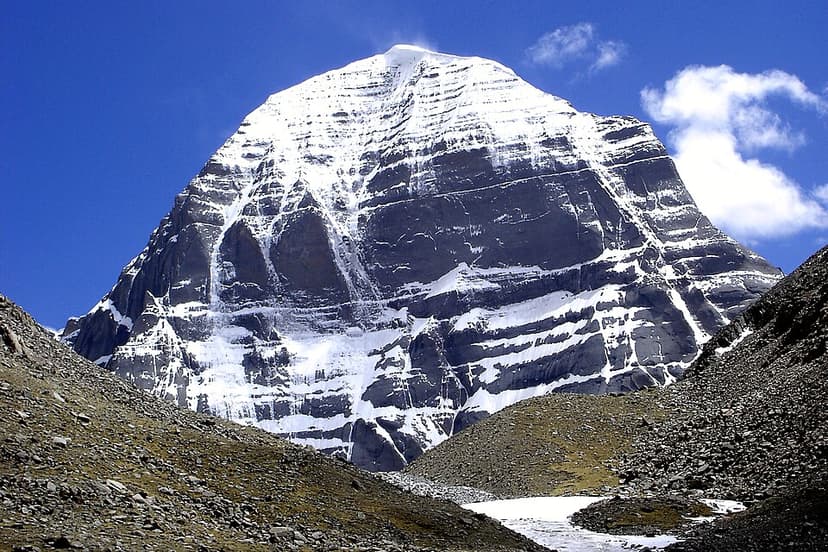
Mount Kailash
Mount Kailash, revered in four major religions, is a sacred peak in Tibet, China, considered the spiritual center of the universe. Its religious significance has led to a prohibition on climbing, preserving its pristine state for pilgrims who undertake arduous circumambulations around its base. The mountain is also a critical source for several major Asian rivers.
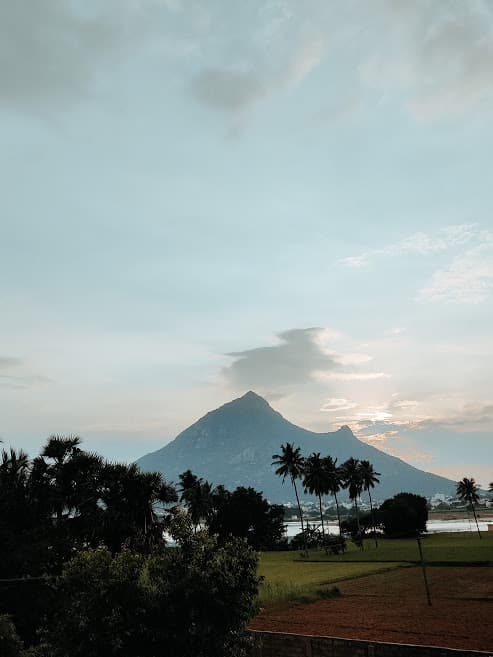
Arunachala
Arunachala is a sacred hill and one of the five main Shaiva holy places in South India, located in Tamil Nadu. It is revered as a manifestation of Lord Shiva and is the site of the Arunachalesvara Temple. The hill holds immense spiritual significance, particularly for devotees of Ramana Maharshi, and is a focal point for annual religious festivals and pilgrimage.