
Govinda
Govinda is a significant epithet primarily associated with the Hindu deity Vishnu and his prominent avatars, most notably Krishna. The name signifies "protector of cows" and also refers to the deity as the "master of the senses" or the supreme being known through the Vedas. Worship of Govinda is believed to help devotees transcend the cycle of birth and death.
Key Facts
- ›Govinda is an epithet for Vishnu and his avatars, particularly Krishna.
- ›The name translates to "protector of cows" and also signifies "master of the senses."
- ›It is the 187th and 539th name in the Vishnu Sahasranama.
- ›Adi Shankara provided four interpretations for the name Govinda.
- ›Worship of Govinda is believed to facilitate liberation from the cycle of reincarnation.
- ›The name is popularly associated with Krishna's youthful activities as a cowherd.
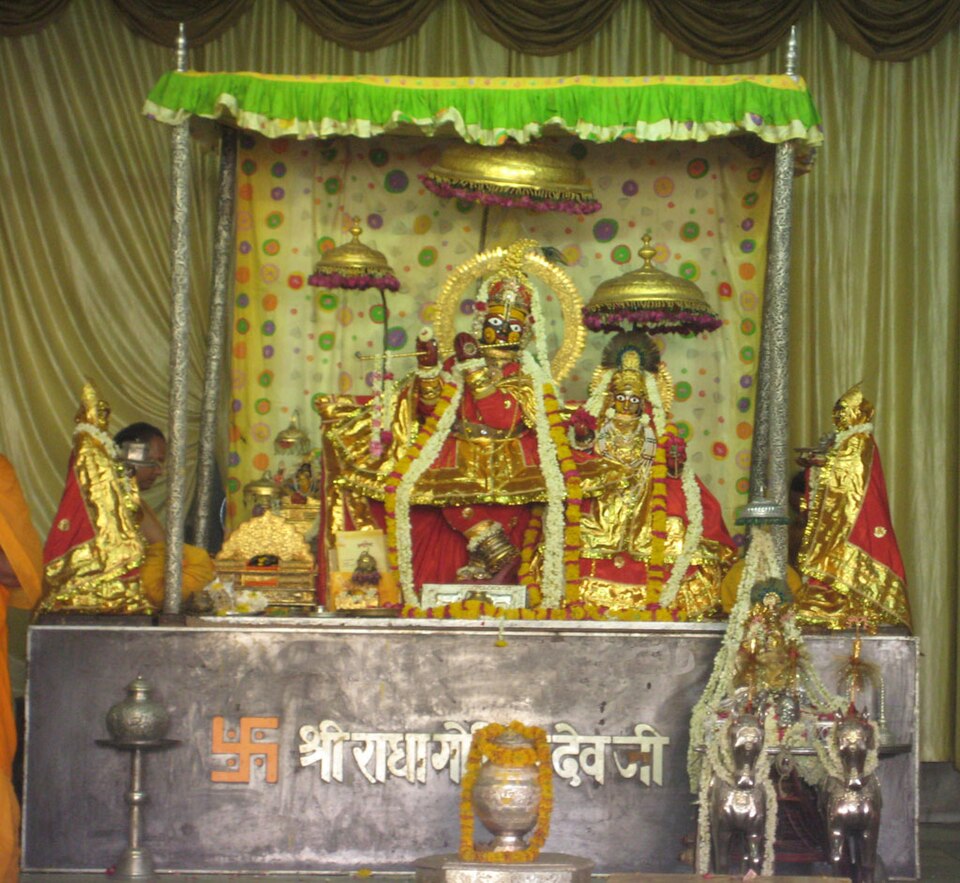
Govind, Gobinda, Gobind
Vishnu Sahasranama, Mahabharata, Harivamsa, Brahma Samhita, Bhagavad-Gita
Cows
About Govinda
Govinda is a widely recognized epithet for the Hindu deity Vishnu and his principal avatars, most notably Krishna. The name is deeply significant, carrying multiple layers of meaning within Hindu traditions. Its most common interpretation translates to "protector of cows," directly referencing Krishna's pastoral upbringing and his compassionate role as a tender of cattle. Beyond this, "Govinda" is also understood to mean the "master of the senses" or the supreme being who can be fully comprehended through the sacred Vedas.
Significance and Interpretations
The name Govinda appears as the 187th and 539th name in the Vishnu Sahasranama, a revered litany of Vishnu's 1,000 names. Different commentators and scriptures offer distinct interpretations of its meaning. According to Adi Shankara's commentary, Govinda can refer to Krishna as he pervades all worlds, giving them power. The Shanti Parva of the Mahabharata states that Vishnu earned the title for restoring the earth from the netherworld, thus being praised as the "protector of the land." Alternatively, it signifies one "who is known by Vedic words alone." The Harivamsa recounts Indra praising Krishna as Govinda for his loving care of the cows he tended as a cowherd. Furthermore, the Brahma Samhita extols Krishna as Govinda, the eternal origin of all beings. Maharishi Mahesh Yogi interprets Govinda as "master of the senses."
Devotional Practice
Govinda holds a central place in Hindu devotional practices. An 8th-century composition, the "Moha Mudgara" attributed to Adi Shankara, emphasizes the spiritual efficacy of worshipping Govinda, stating that such devotion can lead believers to "easily cross this great ocean of birth and death." This reflects the belief that sincere adoration of Vishnu or Krishna, addressed as Govinda, can facilitate liberation from the cycle of reincarnation (samsara) and lead to eternal bliss in Vaikuntha, Vishnu's supreme abode. The name's prominence underscores the value placed on inner devotion to Vishnu in achieving spiritual emancipation.
Source: Wikipedia ↗
Frequently Asked Questions
What does the name Govinda mean?
The name Govinda has multiple meanings. Most commonly, it translates to "protector of cows," referencing Krishna's upbringing as a cowherd. It also signifies the "all-pervading, omnipresent ruler of the sense organs" and the supreme being known through the Vedas.
Who is Govinda associated with?
Govinda is an epithet of Vishnu and is popularly addressed to his avatar, Krishna. He is also referred to as Govinda in the Vishnu Sahasranama, the list of Vishnu's 1,000 names.
What is the significance of Govinda in Hindu prayers?
The 8th-century composition "Moha Mudgara" by Adi Shankara states that worshipping Govinda can help one "easily cross this great ocean of birth and death." This highlights the belief that devotion to Govinda leads to liberation from samsara.
Why is Govinda called the master of the senses?
One interpretation of the name Govinda suggests that 'Govu' means Indriyas (sense organs). Therefore, Govinda signifies the one who has mastery over all the sense organs, or the one who is the ruler of them. Maharishi Mahesh Yogi also stated that Govinda means "master of the senses."
How is Govinda related to Krishna?
Govinda is a widely used epithet for Krishna, particularly in reference to his activities as a young cowherd tending to cows. The Harivamsa mentions Indra praising Krishna as Govinda for his loving leadership of the cows he tended.
Related Hindu deities

Bholenath
Bholenath, meaning 'lord of innocence,' is a popular epithet for the Hindu deity Shiva. This name highlights Shiva's aspect as the benevolent and guileless lord. The epithet is often invoked in narratives emphasizing Shiva's vulnerability and divine protection.

Jyotirlinga
A Jyotirlinga is a devotional representation of the Hindu god Shiva, symbolizing a pillar of light. The concept originates from a legend in the Shiva Purana where Shiva appeared as an infinite pillar of light to settle a dispute between Brahma and Vishnu. The Jyotirlinga shrines are considered sacred sites where Shiva manifested in this form, with twelve particularly auspicious sites.

Madhava
Madhava is a significant epithet primarily associated with the Hindu deities Vishnu and Krishna. The name derives from 'Madhu,' meaning honey, and can refer to Krishna's lineage or his role as the consort of Lakshmi, the mother of the universe. He is invoked in scriptures for protection and is depicted as a powerful deity wielding divine weapons.