
Andal
Female·8th century·India·Sri Vaishnavism
Andal, also known as Kotai and Nachiyar, is a revered Tamil saint and the only female Alvar among the 12 Alvars who championed Vaishnavism during the Bhakti movement. Considered an avatar of the earth goddess Bhumi, an aspect of Lakshmi, she is celebrated for her profound devotion to Lord Vishnu, particularly Krishna, and her poetic compositions, Tiruppavai and Nachiyar Tirumoli.
Key Facts
- ›Andal is the only female Alvar among the 12 Tamil saints who patronized Vaishnavism.
- ›She is considered an avatar of the earth goddess Bhumi, an aspect of Lakshmi.
- ›Andal is credited with composing the Tamil works Tiruppavai and Nachiyar Tirumoli.
- ›Her birthday is celebrated as Adi Puram, and her wedding day as Panguni Uthiram.
- ›She is a prominent figure for women in South India and has inspired women's groups.
- ›Andal is known for her unwavering devotion to Vishnu, whom she spiritually and physically married.
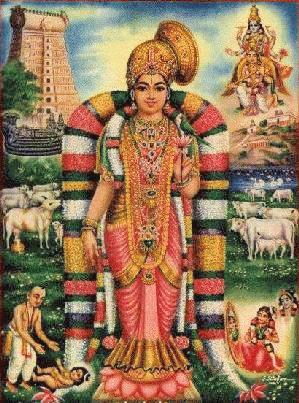
Kotai, Nachiyar, Chudikodutha Sudarkodi, Goda
- Hairstyle Bunned To the Side, Adorned With Jasmine Flowers and Elaborate Jewellery.
- Carries A Hand-Crafted Parrot Made With Fresh Green Leaves, A Pomegranate Flower For A Beak, Bamboo Sticks For Legs, and Pink Oleander Petals For Feathers.
Tiruppavai, Nachiyar Tirumoli
Adopted Daughter of Periyalvar, Avatar of Bhumi, Considered An Aspect of Lakshmi
Adi Puram, Panguni Uthiram, Margazhi Festival Celebrations, Pavai Nonbu, Andal Ranganatha Tirukalyanam, Pagalpattu, Rapattu, Adi TiruviḻA, Srivari Brahmotsavam
Srivilliputhur Andal Temple, Ranganathaswamy Temple, Srirangam, Venkateshvara Temple, Tirumala, Padmavati Temple, Kallalagar Sundaravalli Koyil, Madurai
Parrot
Poet, Devotee
Alvar, Goddess
About Andal
Andal: The Beloved Alvar Saint
Andal, also known by the names Kotai and Nachiyar, stands as a singular and profoundly influential figure in the Bhakti movement of South India. She is one of the twelve Alvars, a group of Tamil saint-poets who passionately patronized Vaishnavism, and notably, the only woman among them. Revered as an avatar of Bhumi, the earth goddess and an aspect of the principal goddess Lakshmi, Andal's life and works are deeply intertwined with devotion to Lord Vishnu.
Life and Devotion
According to tradition, Andal was found as a child under a tulasi plant by Periyalvar, a prominent Alvar himself, in Srivilliputhur. Raised in an environment of deep devotion to Krishna, an avatar of Vishnu, Andal developed an intense personal longing for the divine. Rejecting earthly marriage, she dedicated her life and her desire for union to Vishnu, ultimately marrying him spiritually and, in some accounts, physically as Ranganatha of Srirangam. This unique path has led to her being considered a symbol of spiritual independence and divine love.
Poetic Legacy
Andal's lasting contribution to Hindu literature and devotion lies in her two major Tamil works: Tiruppavai and Nachiyar Tirumoli. The Tiruppavai, a collection of thirty verses, features Andal imagining herself as a gopi participating in religious vows to attain Vishnu's grace. Nachiyar Tirumoli, a longer poem, vividly expresses her passionate yearning for Vishnu, employing rich imagery and classical Tamil poetic conventions. These works are central to Vaishnava worship, particularly during the month of Margazhi, and continue to inspire countless devotees, poets, and dancers.
Significance and Iconography
In South India, Andal is not merely revered as a saint but is often worshipped as a goddess herself, with dedicated shrines in many Vishnu temples. Her iconography often includes distinctive Tamil hairstyles adorned with jasmine and elaborate jewelry, and she is frequently depicted holding a parrot, a symbol in her iconography. Festivals such as Adi Puram and Panguni Uthiram celebrate her life and divine union. Andal's influence extends beyond religious devotion, inspiring feminist interpretations of her choice to marry the divine, thereby forging a unique path of spiritual subjectivity and freedom within a patriarchal society. Her poetic expressions of love and longing for Vishnu remain a powerful testament to the multifaceted nature of Bhakti.
Source: Wikipedia ↗
Frequently Asked Questions
Who is Andal?
Andal, also known as Kotai and Nachiyar, is one of the 12 Alvars, Tamil saints who were devoted to Vaishnavism during the Bhakti movement. She is the only female Alvar and is revered for her deep devotion to Lord Vishnu.
What is Andal known for?
Andal is renowned for her two major Tamil poetic works, Tiruppavai and Nachiyar Tirumoli, which express her intense longing and devotion to Vishnu. She is also celebrated as an avatar of the earth goddess Bhumi and for her unique spiritual marriage to Vishnu.
What is the significance of Tiruppavai and Nachiyar Tirumoli?
Tiruppavai consists of 30 verses where Andal imagines herself as a gopi devoted to Krishna, emphasizing surrender to Vishnu's feet. Nachiyar Tirumoli is a longer poem expressing her intense desire to marry Vishnu, filled with vivid imagery and spiritual longing.
What is Andal's familial connection?
Andal was raised by the Alvar saint Periyalvar, who found her as a child. She is considered an avatar of Bhumi, who is an aspect of Lakshmi, the consort of Vishnu.
When was Andal active?
Historical tradition places Andal's activity in the eighth century CE. Her works are still recited by devotees, and she continues to inspire many.
What are some of the festivals associated with Andal?
Key festivals celebrating Andal include Adi Puram, which marks her adoption by Periyalvar, and Panguni Uthiram, which commemorates her divine wedding and ascension. Her poems are also central to the celebrations during the Tamil month of Margazhi.
Related Hindu deities
Maheshwari
Maheshwari refers to a Hindu caste primarily found in Rajasthan, India, traditionally engaged in commerce. They are part of the wider Bania community and are often known as Marwaris. The Maheshwaris claim a unique origin story tied to their devotion to Shiva, from whom they derive their name.

Gopis
Gopis, also known as Gopikas, are a group of milkmaids from the Braj region of India, revered in Hinduism as devoted consorts of Krishna. They are celebrated in scriptures like the Bhagavata Purana for their unconditional love and devotion (Bhakti) towards Krishna, with Radha being considered the chief among them. The Gopis' devotion and their ecstatic dance with Krishna, known as the Raslila, have significantly inspired art, literature, and performance traditions.

Hanuman
Hanuman is a divine vanara and a devoted companion of Lord Rama in Hinduism, central to the epic Ramayana. Revered for his unwavering devotion, he is considered a chiranjivi (immortal) and is traditionally believed to be the spiritual offspring of the wind-god Vayu. Hanuman embodies a fusion of immense strength, heroic initiative, and loving devotion, and is often depicted as a patron of martial arts and scholarly pursuits.