
Achyuta
Achyuta is a Sanskrit epithet primarily used in Vaishnava traditions to denote the divine quality of being infallible, immutable, or unfallen. It is applied to Vishnu and, notably, to Krishna in various scriptures, including the Bhagavad Gita, where Arjuna addresses Krishna by this name. The name signifies the unchanging nature and divine powers of the deity.
Key Facts
- ›Achyuta means 'the infallible one' in Sanskrit.
- ›It is a significant epithet for Vishnu and Krishna in Hindu traditions, especially Vaishnavism.
- ›The name appears as the 100th and 318th name in the Vishnu Sahasranama.
- ›In the Bhagavad Gita, Arjuna addresses Krishna as Achyuta, signifying his trust in Krishna's constancy.
- ›Theological interpretations emphasize Achyuta's unchanging nature, unaffected by time or illusion.
- ›In Pancharatra texts, Achyuta is described as a divine emanation of Narayana.

Acyuta
Bhagavad Gita, Vishnu Sahasranama, Pancharatra Samhitas
Divine Epithet
About Achyuta
Achyuta: The Infallible Divine
Achyuta (Sanskrit: अच्युत) is an important epithet in Hindu traditions, particularly within Vaishnavism, signifying the divine quality of being 'infallible,' 'immutable,' or 'unfallen.' This epithet is predominantly applied to Vishnu and, in numerous scriptural contexts, to Krishna. Its core meaning reflects a divine nature that is steadfast, unchanging, and eternally perfect, never deviating from its essential essence or divine status.
Etymology and Meaning
The name derives from the Sanskrit prefix 'a-' (not) and the root 'cyuta' (fallen). Thus, Achyuta translates to 'not fallen.' Classical lexicons expand on this to include meanings such as 'firm,' 'fixed,' 'immovable,' and 'imperishable.' This etymological depth underscores the theological understanding of the deity as one who is unaffected by the six transformations of existence, beginning with birth, and who remains constant regardless of time, circumstance, or illusion.
Scriptural Significance
The epithet Achyuta holds significant weight in key Hindu scriptures. It is listed as the 100th and 318th name in the revered Vishnu Sahasranama, a litany of a thousand names of Vishnu. More notably, it appears frequently in the Bhagavad Gita, where Arjuna addresses Krishna by this name. For instance, in a pivotal moment, Arjuna requests Krishna, "O Infallible One, please take my chariot..." (Bhagavad Gita 1.21-22). This usage highlights Krishna's perceived constancy and reliability by his devotee. The Gita also records Arjuna's plea for forgiveness for any disrespect shown to Krishna, acknowledging his "inestimable glory" (Bhagavad Gita 11.41-42), and later, his realization and renewed commitment: "O Infallible One, by Your grace my illusion has been dispelled... I shall act according to Your instructions" (Bhagavad Gita 18.73).
Theological and Devotional Interpretations
Commentarial traditions, such as Adi Shankaracharya's interpretation of the Vishnu Sahasranama, elucidate Achyuta as 'one who will never lose his inherent nature and powers.' This emphasizes the absolute and unchanging nature of the divine. In the Pancharatra Samhitas and related Agamic texts, Achyuta is recognized as one of the divine emanations or 'vyūhas' of Narayana, often accompanied by his consort, Vijaya, an emanation of Lakshmi. In devotional literature and hymns (stotras, kirtanas), Achyuta is a recurring epithet used to evoke the unwavering perfection and steadfastness of Vishnu or Krishna, reinforcing the immutability of the divine in the hearts of followers.
The element 'Achyuta' has also been used as a personal name for historical figures, rulers, and scholars, reflecting its broad cultural resonance as both a divine attribute and a personal identifier.
Source: Wikipedia ↗
Frequently Asked Questions
What does the name Achyuta mean?
Achyuta is a Sanskrit term that literally means 'not fallen' or 'infallible.' It signifies a divine quality of being immutable, unchangeable, and imperishable, indicating that the deity never deviates from their essential nature or divine status.
To which deities is the epithet Achyuta applied?
The epithet Achyuta is primarily applied to Vishnu and also frequently to Krishna in various scriptural and devotional contexts. It highlights their divine attributes of constancy and perfection.
Where does the name Achyuta appear in important Hindu scriptures?
The epithet Achyuta is prominently featured in the Bhagavad Gita, where Arjuna addresses Krishna by this name multiple times. It is also listed among the thousand names of Vishnu in the Vishnu Sahasranama.
How is Achyuta interpreted theologically?
Theologically, Achyuta is understood as 'one who does not fall' from his essential nature, truth, or eternal dharma. Commentators like Adi Shankaracharya explain it as a deity who will never lose inherent nature and powers, remaining unaffected by external influences.
What is the significance of Achyuta in Vaishnava devotional practices?
In Vaishnavism, the name Achyuta is widely used in devotional literature, hymns, and chants to evoke the steadfastness, perfection, and unwavering nature of Vishnu or Krishna. It serves to remind devotees of the deity's eternal and unchanging divine presence.
Related Hindu deities
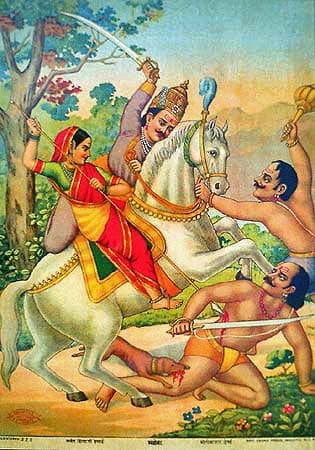
Khandoba
Khandoba is a prominent Hindu deity, primarily worshipped in Maharashtra and Karnataka, often seen as a manifestation of Shiva. He is revered as a family deity (Kuladevata) and the patron deity for various castes, including warriors, farmers, and tribal communities. Khandoba is known for his victory over demons Mani and Malla and his marriages, with his worship reflecting syncretic traditions that include Jain and Muslim influences.

Nataraja
Nataraja is a depiction of the Hindu deity Shiva as the divine cosmic dancer, known for his tandava dance. This iconic form symbolizes Shiva's cosmic functions of creation, preservation, and destruction, and is widely revered as one of the highest forms of Shiva, particularly in Tamil Nadu. The Nataraja sculpture is a significant symbol of Indian culture and Hindu art, representing the interconnectedness of religion and the arts.
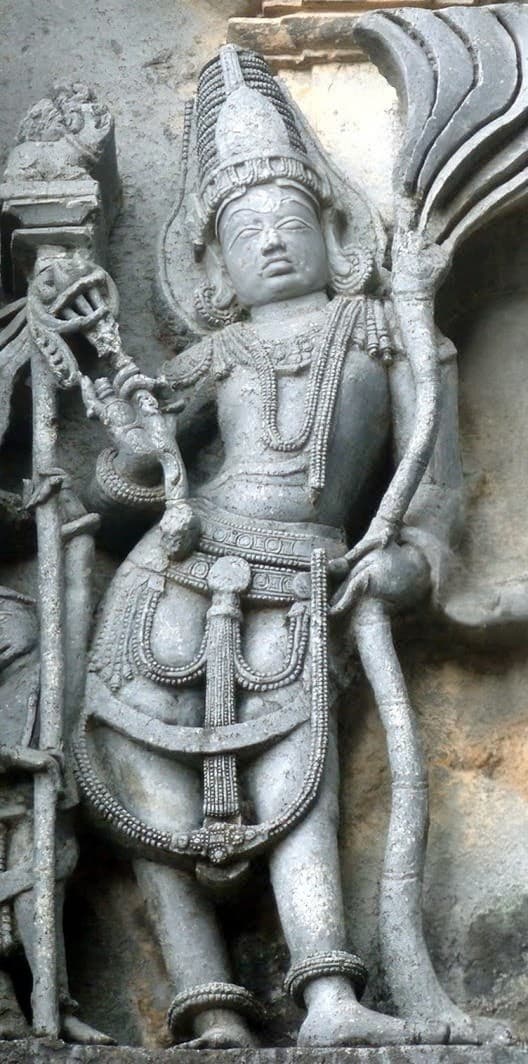
Kamadeva
Kamadeva is the Hindu god of love, attraction, pleasure, and beauty, as well as the personification of kāma (desire). He is depicted as a handsome youth armed with a bow of sugarcane and flower arrows, often accompanied by his consort Rati. Kamadeva's mythology is prominent in the Puranas, where he is known for being incinerated by Shiva's third eye and subsequently reborn as Pradyumna.