
Satan
Abrahamic religions (Judaism, Christianity, Islam)·Theology, Mythology, Demonology, Religious Texts·Middle East (primarily)·Demon, Adversary, Tempter, Fallen Angel/Jinn
Satan, also known as the Devil, is a prominent figure in Abrahamic religions, primarily recognized as the entity that tempts humans into sin and falsehood. While his role varies across traditions, he is often depicted as a fallen angel or jinn who rebelled against God. He is notable for his persistent adversarial role and his influence on human morality and spiritual struggles.
Key Facts
- ›Satan is an entity in Abrahamic religions who entices humans into sin or falsehood.
- ›In Judaism, Satan is often seen as a metaphor for the 'evil inclination' (yetzer hara) and acts as a heavenly prosecutor subservient to God.
- ›In Christianity and Islam, Satan is typically viewed as a fallen angel or jinn who rebelled against God.
- ›The term 'satan' in the Hebrew Bible originally meant 'accuser' or 'adversary' and referred to a heavenly prosecutor.
- ›In Christian tradition, Satan is often identified with the serpent in the Garden of Eden and the Great Red Dragon in the Book of Revelation.
- ›In the Quran, Iblis (Shaitan) is the leader of devils, made of fire, who refused to bow before Adam and was cast out of Heaven.

the Devil, Ha-Satan, Mastema, Satanael, Samael, Iblis, Shaitan, Great Red Dragon, Ancient Serpent
Sin, Falsehood, Temptation, Evil, Illness, Death, Chaos
Enticing Humans Into Sin, Testing Loyalty, Prosecuting In Heavenly Court, Inciting Rebellion, Causing Illness, Possessing Humans, Lying, Deceiving, Waging War
Hebrew Bible, Book of Job, Book of Zechariah, Book of Jubilees, Book of Enoch, New Testament, Synoptic Gospels, Book of Revelation, Quran
God, Michael the Archangel, Jesus Christ, Adam, Abraham, Joshua the High Priest, Angra Mainyu, SemjâZâ, Azazel, Watchers, Nero
Evil, Sin, Rebellion, Deceit, Lying, Pride, Envy, Ignorance
- In Some Jewish Traditions, the Sound of the Shofar Is Intended To 'Confuse the Accuser' and Prevent Him From Litigating Against Jews In the Heavenly Court.
God, Michael the Archangel, Jesus Christ, Holy Spirit, Angels, Prayer, Righteousness
- In Zoroastrianism, Angra Mainyu Shares Dualistic Opposition To the Divine.
- In Some Modern Groups, Satan Is Revered As A Deity Or A Symbol of Liberty and Virtuous Characteristics.
Pitchfork, Serpent, Dragon, Number 666
About Satan
Satan, also known as the Devil, is a central figure in Abrahamic religions, embodying the force that entices humans into sin and falsehood. His conception and role have evolved significantly throughout religious history, from a prosecuting angel in early Judaism to the ultimate adversary of God and humanity in Christianity and Islam.
Origins and Development
The term 'satan' first appears in the Hebrew Bible as a generic noun meaning 'accuser' or 'adversary.' In texts like the Book of Job and Zechariah, he functions as a heavenly prosecutor subordinate to God, testing the loyalty of humans. During the Second Temple period, possibly influenced by Zoroastrianism's Angra Mainyu, the concept of Satan developed into a malevolent entity in dualistic opposition to God. Texts like the Book of Jubilees portray him as 'Mastema,' granted authority to tempt and punish humans.
Roles in Abrahamic Traditions
In Judaism, Satan is often interpreted metaphorically as the 'yetzer hara' (evil inclination) and remains a figure subservient to God. However, Talmudic anecdotes depict him with independent agency, sometimes appearing in disguise to tempt individuals. In Christianity, Satan is widely understood as a fallen angel who rebelled against God, leading other demons. He is identified as the serpent in Eden, the tempter of Jesus in the desert, and the Great Red Dragon in the Book of Revelation, ultimately destined for defeat and eternal punishment.
Islam portrays Satan, or Iblis (Shaitan), as a jinn made of fire who was cast out of Heaven for refusing to bow before Adam. He actively incites humans to sin through 'waswās' (evil suggestions).
Significance and Representation
While Satan's biblical descriptions are scarce, Christian art from the Middle Ages onward has commonly depicted him with features derived from pagan deities, such as horns, hooves, and a tail. His influence grew significantly in the early modern period with increased beliefs in demonic possession and witchcraft. Despite periods of skepticism, such as during the Enlightenment, belief in Satan persists, and he remains a prominent figure in theological discourse, literature, and popular culture.
Source: Wikipedia ↗
Frequently Asked Questions
What is the origin of the name Satan?
The name 'Satan' originates from the Hebrew term 'śāṭān,' which is a generic noun meaning 'accuser' or 'adversary.' It is derived from a verb meaning 'to obstruct' or 'to oppose.'
How is Satan viewed in Judaism?
In Judaism, Satan is often interpreted as a metaphor for the 'yetzer hara,' or 'evil inclination' within humans. He is typically seen as an agent subservient to God, acting as a heavenly prosecutor rather than an independent malevolent force.
What is Satan's role in Christianity?
In Christianity, Satan is widely regarded as a fallen angel who rebelled against God and is the primary tempter of humanity. He is identified as the adversary of God and humanity, the cause of sin, and is depicted as the Great Red Dragon in the Book of Revelation.
How is Satan depicted in Islamic tradition?
In Islam, the figure of Iblis, also known as Shaitan, is the leader of the devils. He is described as being made of fire and was expelled from Heaven for refusing to bow before Adam, subsequently inciting humans to sin.
Does Satan have a specific appearance described in religious texts?
Satan's appearance is not described in the Bible. However, since the ninth century, Christian art has commonly depicted him with horns, cloven hooves, hairy legs, and a tail, often incorporating traits from various pagan deities.
What is the historical development of the concept of Satan?
The concept of Satan evolved from a heavenly prosecutor in the Hebrew Bible to a more malevolent, dualistic opponent of God, particularly influenced by Zoroastrianism during the Second Temple period. This adversarial role solidified in Christian and Islamic theology.
Related Demons
Adrammelech
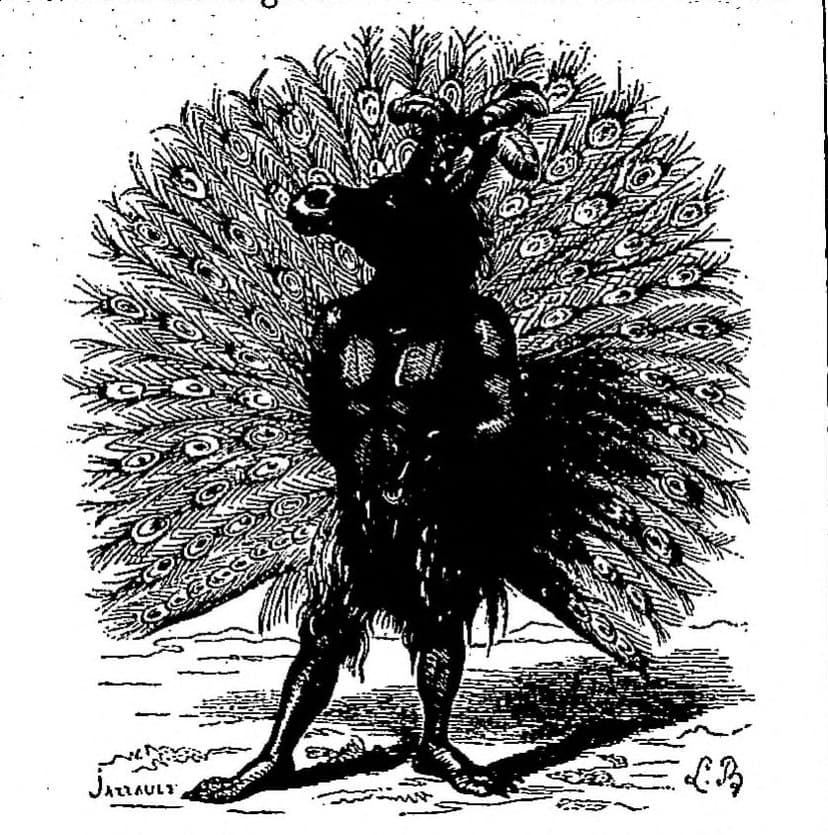
Adrammelech is an ancient Semitic deity associated with the people of Sepharvaim, who, according to biblical accounts, practiced child sacrifice to him and his consort Anammelech. In later Judeo-Christian demonology, Adrammelech is reinterpreted as a fallen angel and a high-ranking demon, often depicted with a hybrid appearance and holding significant positions in Hell.
Arioch
Arioch is a figure appearing in the Book of Genesis as the King of Ellasar, who participated in the Battle of Siddim alongside other Mesopotamian kings. While traditionally understood as a historical figure, modern scholarship often views him as a literary creation, with Ellasar potentially linked to regions like Anatolia, Cyprus, or even a name found in Babylonian records. Arioch has also been adopted in later literature and demonology as a demonic entity and a lord of Chaos.
Asb'el
Watchers are a class of biblical angels, whose name derives from a root meaning "to be awake." While the Book of Daniel refers to "watchers, holy ones" in a positive light, the apocryphal Books of Enoch extensively detail the fall of rebellious Watchers who descended to Earth, lusted after human women, and taught forbidden knowledge. These fallen beings are notable for their role in the origin of the Nephilim and their subsequent binding until Judgment Day.