
Devil
Christianity, Islam, Zoroastrianism·demonology, mythology, theology, folklore, philosophy·Middle Eastern, European·personification of evil, tempter, adversary, demon
The Devil is a personification of evil found across numerous cultures and religious traditions, often conceptualized as a hostile and destructive force. While specific manifestations vary, it is frequently depicted as a tempter who leads humanity into sin, particularly prominent in Christian and Islamic theology. The concept has evolved from ancient dualistic beliefs to complex theological and mythological figures, influencing art, literature, and popular culture.
Key Facts
- ›The word 'devil' originates from the Greek word 'diabolos,' meaning 'slanderer'.
- ›In Christian and Islamic traditions, the Devil is often portrayed as a tempter leading people into sin and commanding other demons.
- ›Zoroastrianism is noted as the first institutionalized belief system to develop a clear demonology headed by a supreme spirit of Evil (Angra Mainyu).
- ›Christian theology often conceptualizes the Devil as a fallen angel, originally created good but who turned evil through his own will.
- ›The serpent in the Garden of Eden, Lucifer, Satan, and the dragon in the Book of Revelation are figures identified with the Devil in Christian tradition.
- ›In the New Testament, the Devil is presented as a tempter who offers Jesus the kingdoms of the earth.

Satan, Lucifer, Beelzebub, Mephistopheles, Iblis, Azazil, DiáBolos
Evil, Sin, Temptation, Destruction, Hostile Forces, Death, Disease
Temptation, Leading Into Sin, Commanding Demons, Offering Worldly Kingdoms, Causing Suffering, Inflicting Pain, Causing Destruction
Bible, Quran, Avesta
Adam, Eve, Jesus Christ, Judas Iscariot, Fallen Angels, Demons, Angra Mainyu, Ahura Mazda, MāRa, Erlik Khan
Evil, Wickedness, Hostility, Destruction, Slander, Lying, Opposition To God, Sin, Temptation
God, Jesus Christ, Angels
- In Zoroastrianism, Angra Mainyu Is A Supreme Spirit of Evil Independent From God. In Judaism, Satan Is Primarily An 'Accuser' Or 'Adversary'. In Christianity, the Devil Is A Fallen Angel and Opponent of God. In Islamic Tradition, Iblis Is A Jinn Who Refused To Bow To Adam. In Buddhism, MāRa Is A Figure Representing Evil and Temptation.
About Devil
The Devil
The Devil is a multifaceted figure representing evil, personified as a hostile and destructive force across diverse cultures and religious traditions. Its conceptualization has evolved significantly throughout history, influenced by theological, mythological, and philosophical developments.
Origins and Early Concepts
Early belief systems often saw evil as an inherent part of nature rather than embodied by a specific entity. Zoroastrianism, emerging around 600 BC, was among the first to develop a clear demonology, positing a supreme spirit of Evil, Angra Mainyu, as a principle independent from God. This dualistic framework, where good and evil were separate forces, profoundly influenced subsequent religions, including Judaism, Christianity, Manichaeism, and Islam.
In ancient Mesopotamia and Egypt, deities could exhibit both benevolent and malevolent traits, and evil was often associated with primordial chaos or actions violating cosmic harmony. Even in early Hebrew thought, negative attributes of God, such as wrath, could be seen as expressions of an 'evil' force.
Development in Abrahamic Traditions
Within Judaism, the term 'Satan' initially functioned as a common noun meaning 'accuser' or 'adversary,' appearing in texts like Job and Zechariah as a heavenly being testing human faith. However, in later Second-Temple Judaism and particularly in Christianity, the concept of a singular, malevolent entity gained prominence.
Christian theology, grappling with the problem of evil and God's omnipotence, largely adopted the idea of the Devil as a created being who turned evil. Influenced by Greek Platonism and Neoplatonism, which distinguished between spirit and matter, and often associated evil with the material realm, Christian scholars conceptualized the Devil as a fallen angel. This angel, originally created good, fell from grace due to pride or rebellion, becoming the primary opponent of God and the tempter of humanity. Figures such as Lucifer, the serpent in Eden, and the dragon in Revelation are often identified with this entity.
In Islamic tradition, the Devil is known as Iblis or Azazil. Iblis is typically described as a jinn (or sometimes an angel) who refused God's command to bow before Adam, leading to his expulsion from paradise and subsequent role as a tempter of humankind.
Manifestations and Symbolism
Across traditions, the Devil is frequently depicted as a tempter who entices humans into sin, a commander of demons, and an adversary to divine will. Its appearance varies, with some traditions describing it as blue, black, or red, and sometimes possessing horns. The Devil is associated with various negative concepts, including chaos, destruction, disease, and the punishment of the damned.
Cultural and Literary Impact
The concept of the Devil has permeated art, literature, and folklore for centuries. From medieval morality plays to modern literature and film, the figure has served as a potent symbol of temptation, rebellion, and the darker aspects of human nature. Its varied interpretations highlight its enduring significance as a personification of evil and a subject of profound theological and philosophical inquiry.
Source: Wikipedia ↗
Frequently Asked Questions
What is the origin of the word 'devil'?
The English word 'devil' comes from the Middle English 'devel,' which in turn is a Germanic borrowing of the Latin 'diabolus.' This Latin word was derived from the Greek 'diabolos,' meaning 'slanderer.'
How is the Devil typically understood in Christian and Islamic traditions?
In Christian and Islamic traditions, the Devil is commonly seen as a tempter who leads people into sin and commands other demons. It is often viewed as the primary opponent of God in Christianity.
What role did Zoroastrianism play in the concept of the Devil?
Zoroastrianism is recognized as the first major belief system to develop a distinct demonology with a supreme spirit of Evil, Angra Mainyu, who represented a principle of evil independent from God. This dualistic concept influenced later religions.
Is the Devil always depicted as a fallen angel?
In Christian theology, the Devil is frequently conceptualized as a fallen angel who was created good but chose to turn to evil. However, this specific origin as a fallen angel is not a universal characteristic across all traditions that feature a devil figure.
What figures are associated with the Devil in the Christian Bible?
Within Christian interpretation, the Devil is identified with several figures, including the serpent in the Garden of Eden, Lucifer, Satan, the tempter of Christ in the Gospels, Leviathan, and the dragon described in the Book of Revelation.
What is the Devil's role in the temptation of Christ?
In the New Testament accounts of the temptation of Christ, the Devil offers Jesus all the kingdoms of the earth, implying they are under the Devil's dominion. While some interpretations suggest this indicates the Devil's power, others argue he was lying.
Related Demons
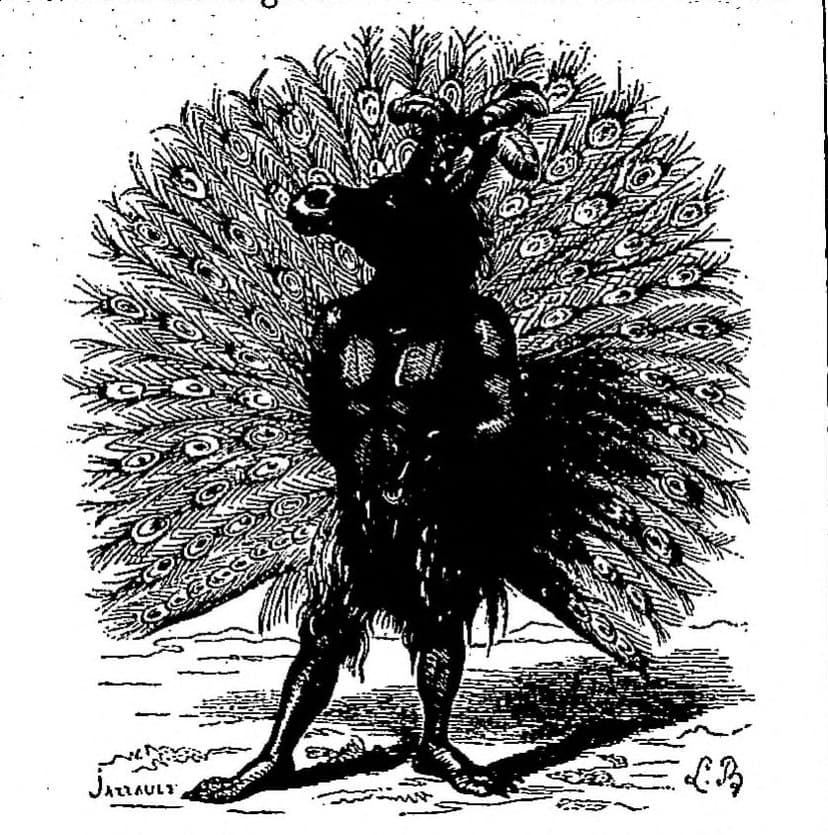
Adrammelech
Adrammelech is an ancient Semitic deity associated with the people of Sepharvaim, who, according to biblical accounts, practiced child sacrifice to him and his consort Anammelech. In later Judeo-Christian demonology, Adrammelech is reinterpreted as a fallen angel and a high-ranking demon, often depicted with a hybrid appearance and holding significant positions in Hell.
Arioch
Arioch is a figure appearing in the Book of Genesis as the King of Ellasar, who participated in the Battle of Siddim alongside other Mesopotamian kings. While traditionally understood as a historical figure, modern scholarship often views him as a literary creation, with Ellasar potentially linked to regions like Anatolia, Cyprus, or even a name found in Babylonian records. Arioch has also been adopted in later literature and demonology as a demonic entity and a lord of Chaos.
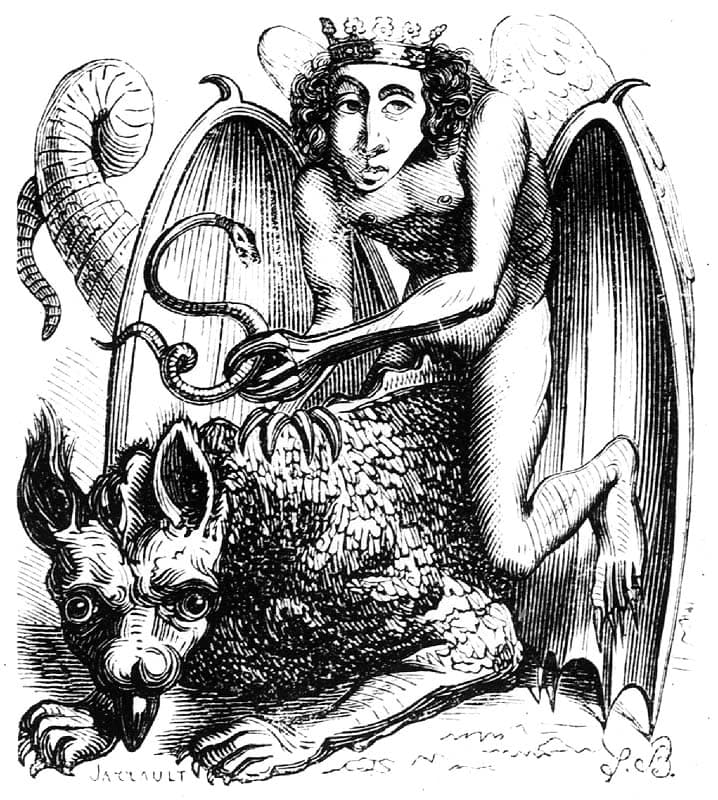
Astaroth
Astaroth is an arch-demon and Great Duke of Hell in demonology, notable for his origins as a demonized ancient Near Eastern goddess. His transformation reflects the historical process of demonizing pagan deities within Abrahamic religious traditions, particularly Christianity and Kabbalah.