
Salpsan
Christian Apocrypha·Demonology·Late Antiquity/Early Medieval Christian world·Demon
Salpsan is a figure introduced in the Greek text of the "Questions of Bartholomew," a Christian apocryphal work. He is presented as the direct son of Satan (also referred to as Beliar) and is unique to this particular text, absent from its Latin counterpart. Salpsan's appearance is notable as he is brought by Satan to "counsel" on how to deceive humanity, potentially mirroring the Christian concept of the Father and Son.
Key Facts
- ›Salpsan is identified as the son of Satan (Beliar).
- ›He appears only in the Greek version of the "Questions of Bartholomew."
- ›Salpsan is absent from the Latin translation of the work.
- ›His role is described as Satan taking him "to counsel" on deceiving humanity.
- ›He has been interpreted as a parallel to the Christian Father and Son relationship.
- ›Some scholars link Salpsan to the Enochian tradition of the Watchers and their offspring.

Son of Satan, Son of Beliar
Deception
Ability To Counsel Satan
Questions of Bartholomew
Satan, Bartholomew the Apostle, Jesus
Deception, Adversary To Divine Fatherhood
About Salpsan
Salpsan is a figure introduced in the "Questions of Bartholomew," an apocryphal Christian text that details a dialogue between Jesus and Bartholomew the Apostle. He is presented as the direct son of Satan, also referred to as Beliar in the text.
Origins and Attestation
The "Questions of Bartholomew" exists in various manuscript traditions, including Greek, Latin, and Old Church Slavonic. Salpsan, however, is a unique character who appears exclusively in the Greek version of this work. He is entirely absent from the Latin translation, making his presence a specific element of the Greek textual tradition.
Role and Interpretation
Within the narrative, Satan awakens Salpsan to counsel him on how to deceive humanity, specifically "the man on whose account I was cast out of the heavens." This suggests a role for Salpsan in the ongoing cosmic conflict between good and evil. The relationship between Satan and Salpsan has been interpreted by scholars as a deliberate parallel or counterpoint to the Christian theological concept of the Father and Son.
Furthermore, Salpsan has been linked to other traditions. While some earlier considerations suggested a connection to the Antichrist, more recent scholarship has drawn parallels between Salpsan and the Enochian tradition, particularly the Watchers and their monstrous offspring. He is also compared to Cain in narratives where the latter is depicted as being sired by the fallen angel Samael after seducing Eve. These associations highlight a complex web of influences and interpretations surrounding this unique demonic figure.
Source: Wikipedia ↗
Frequently Asked Questions
Who is Salpsan?
Salpsan is a figure introduced in the "Questions of Bartholomew," an apocryphal Christian text. He is identified as the son of Satan (Beliar).
Where does Salpsan appear?
Salpsan is mentioned specifically within the Greek text of the "Questions of Bartholomew." He is notably absent from the Latin version of the same work.
What is Salpsan's role in the "Questions of Bartholomew"?
In the text, Satan awakens Salpsan to counsel him on how to deceive humanity. This role has led to interpretations of Salpsan as a counterpart to the Christian concept of the Son.
Are there any other traditions that mention Salpsan?
Salpsan is unique to the "Questions of Bartholomew" and is not found in other major demonological or mythological traditions. However, some scholars have drawn parallels between him and figures from the Enochian tradition.
Related Demons
Aamon/Amon
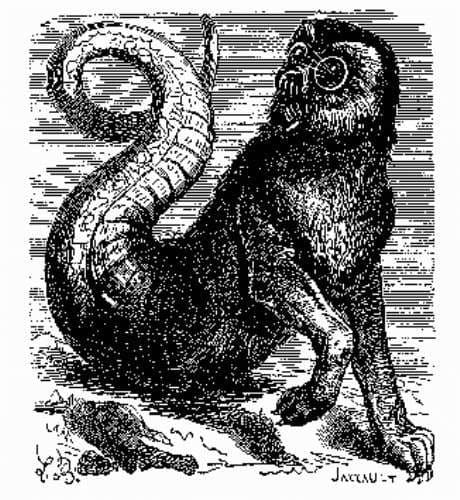
Aamon, also known as Amon, is a Grand Marquis of Hell in demonology, commanding 40 infernal legions according to the Ars Goetia. He is notable for his knowledge of the past and future, his ability to reconcile friends and foes, and his association with life and reproduction. His origins are linked to ancient Libyan and Punic deities.
Abezethibou
Abezethibou is a demon and fallen angel prominently featured in the pseudepigraphal Testament of Solomon. He is notable for his role as a strategist and advisor to Beelzebub, his opposition to Moses and the Israelites during the Exodus, and his eventual imprisonment in the Red Sea. His story contributes to the demonological understanding of fallen angels and their influence.
Aeshma
Aeshma is the demon of "wrath" in Zoroastrianism, known by the epithet "of the bloody mace." As a hypostatic entity, he represents fury and rage, and is a significant adversary within the Zoroastrian cosmology. He is notably opposed by Sraosha, the principle of religious obedience, and is considered a messenger of Angra Mainyu, the destructive spirit.