
Aamon/Amon
Aamon, also known as Amon, is a Grand Marquis of Hell in demonology, commanding 40 infernal legions according to the Ars Goetia. He is notable for his knowledge of the past and future, his ability to reconcile friends and foes, and his association with life and reproduction. His origins are linked to ancient Libyan and Punic deities.
Key Facts
- ›Aamon is a Grand Marquis of Hell, governing 40 infernal legions.
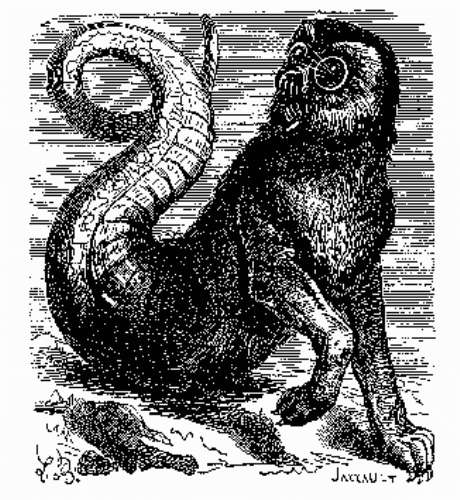
- ›He is described as having the face of a wolf with a serpent's tail, vomiting flames, and in human form, an owl-like head with canine teeth.
- ›Aamon possesses knowledge of past and future events.
- ›He is known for reconciling friends and foes and procuring love.
- ›Attested in demonological texts such as Johann Weyer's Pseudomonarchia Daemonum and the Lesser Key of Solomon.
Amon
Life, Reproduction, Reconciliation, Love, Past and Future Knowledge
- Knowledge of Past and Future
- Reconciles Friends and Foes
- Procures Love
- Vomits Flames
- Summoning and Interrogating Spirits of Those Drowned At Sea
Pseudomonarchia Daemonum, the Lesser Key of Solomon, Dictionnaire Infernal
Baal Hammon, Amun
Reconciliation, Love, Knowledge
- Can Enable the Magician To Summon and Interrogate the Spirits of Those Who Drowned At Sea.
- Linked To the Libyan God Amun and the Punic God Baal Hammon.
- the Egyptian Supreme God Amon/Amoun Is Considered A Parallel.
Wolf, Serpent, Owl, Raven, Dog's Teeth
About Aamon/Amon
Aamon, also widely known as Amon, is a significant figure in demonology, holding the rank of Grand Marquis of Hell. He is recognized as the seventh spirit listed in the Ars Goetia, a prominent text within the Lesser Key of Solomon, and is said to govern forty infernal legions. Aamon's primary associations are with life, reproduction, and the reconciliation of disputes.
Description and Origins
Descriptions of Aamon's appearance vary, but he is frequently depicted with the head of a wolf and the tail of a serpent, often shown vomiting flames. When assuming a human form, he may possess a man's body with an owl-like head featuring sharp canine teeth, or a man with a raven's head. The origins of his name are traced to ancient deities, specifically the Libyan god Amun of the Siwa Oasis and the Punic god Baal Hammon of Carthage. The ancient Egyptians also revered a supreme deity named Amon or Amoun, often depicted in human form with blue skin.
Powers and Influence
Aamon is attributed with a profound understanding of all things past and future, making him a source of prophetic knowledge. His role extends to mediating conflicts, capable of reconciling estranged friends and fostering love between individuals. He is considered one of the most powerful princes among demons. His influence is also noted in his ability to summon and question the spirits of those lost at sea, as detailed in some manuscript versions of The Lesser Key of Solomon.
Historical and Literary Attestations
This demon is documented in significant demonological works, including Johann Weyer's Pseudomonarchia Daemonum, published in 1583, and later in The Goetia: The Lesser Key of Solomon the King, compiled by S. L. MacGregor Mathers and Aleister Crowley. Collin de Plancy's Dictionnaire Infernal also includes an entry for Amon, further solidifying his place in occult and demonological literature.
Modern Appearances
In contemporary popular culture, Aamon has appeared in various media. He is featured in the video game Mobile Legends: Bang Bang as a character, and has made appearances in television shows such as The Rookie. He has also been a central antagonist in films like The Cleansing Hour and has been depicted in manga and anime series such as Amon: The Dark Side of the Devilman and its OVA adaptation.
Source: Wikipedia ↗
Frequently Asked Questions
What is Aamon's appearance?
Aamon is depicted with the face of a wolf and a serpent's tail, often shown vomiting flames. When he takes human form, he may have a man's body with an owl-like head featuring reckless canine teeth, or a man with a raven's head. He is also described as having dog's teeth.
What are Aamon's primary roles and abilities?
Aamon is a demon of life and reproduction. He is known for his ability to know all things past and to come, reconcile feuds between friends and foes, and procure love for those who seek it. He commands 40 legions of spirits.
Where does the name Aamon come from?
The names Aamon and Amon are believed to derive from the Libyan god Amun of the Siwa Oasis or the Punic god Baal Hammon of Carthage. The Egyptians also revered a supreme God named Amon or Amoun.
In which historical texts is Aamon mentioned?
Aamon is documented in demonological works such as Johann Weyer's Pseudomonarchia Daemonum (1583) and S. L. MacGregor Mathers' and A. Crowley's The Goetia: The Lesser Key of Solomon the King. He is also referenced in Collin de Plancy's Dictionnaire Infernal.
Does Aamon have any connection to the Egyptian god Amun?
Yes, the names Aamon and Amon are linked to the ancient Egyptian supreme God Amun or Amoun. The Egyptians represented Amun in a fairly human form with blue skin and considered him their supreme deity.
Related Demons
Andras
Bael is recognized as the first King of Hell and the head of infernal powers in various demonological texts, most notably the Ars Goetia and Pseudomonarchia Daemonum. He is notable for his multifaceted appearance, commanding significant legions of demons, and his ability to teach invisibility. Bael is also potentially equivalent to Baalzebub, a prominent figure among the Seven Princes of Hell.

Marbas
Marbas is a demon listed as a Great Duke of Hell in various demonological texts, notably the Ars Goetia. He is known for his ability to reveal hidden things, teach sciences, and cause love. His appearance is often described as a lion with a human face or a griffin-winged bull, and he commands a significant number of legions.

Lucifer
Lucifer is a prominent figure in Christian theology, often identified as a fallen angel and the Devil. He is traditionally associated with the sin of pride and the act of rebelling against God, leading to his expulsion from heaven. The concept of Lucifer has roots in ancient Near Eastern myths and the personification of the planet Venus, evolving through scriptural interpretation and theological development into a key antagonist in Christian belief.