
Chort
A chort is an anthropomorphic malign spirit or demon found in Slavic folk tradition, often depicted with Christian devil-like features such as horns, hooves, and a tail. In some traditions, a singular chort is considered a son of the god Chernobog and goddess Mara, and in folk Christianity, they are seen as lesser minions of Satan. The term also appears in various Russian curses and expressions denoting frustration or misfortune.
Key Facts
- ›Chorts are anthropomorphic malign spirits or demons in Slavic folk tradition.
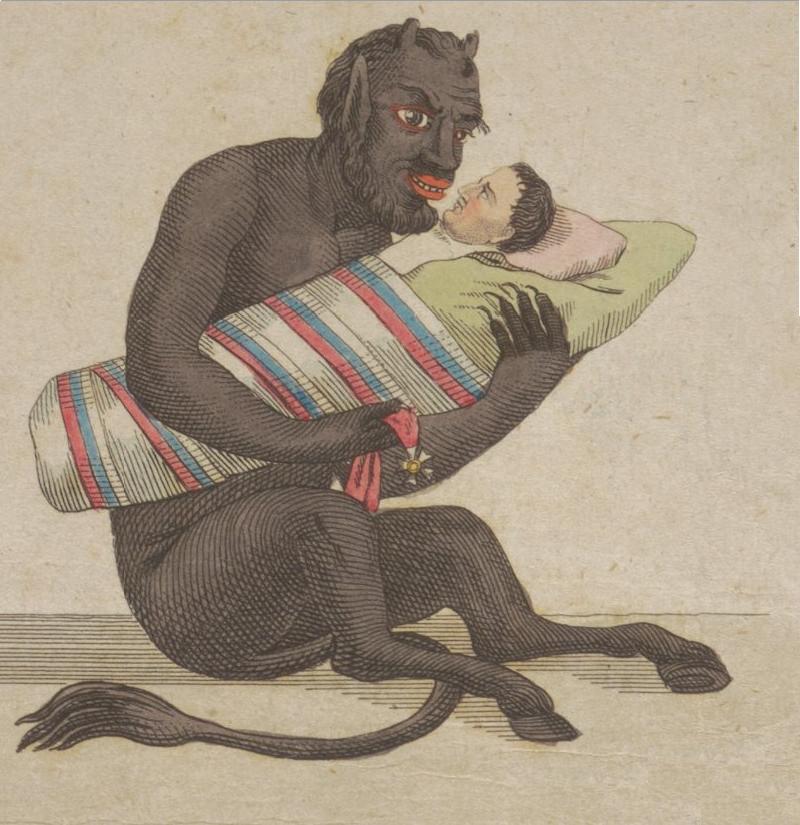
- ›They are often depicted with horns, hooves, and a skinny tail, similar to Christian devils.
- ›In some Slavic mythology, a chort is identified as a son of Chernobog and Mara.
- ›In folk Christianity, they are considered lesser minions of Satan.
- ›The word 'chort' is used in various Russian expressions as a curse or exclamation of frustration.
- ›In Czech and Slovak folklore, čert can sometimes act as a trickster or even a helpful figure, outsmarted by heroes or assisting them.
чёрт, чорт, čOrt, čRt, Czart, Czort, čErt, Haspyda, Didko, Irod, Kutsyi, çOr, Chor, çOrabaş, ArçUra, BiçUra
Misfortune, Temptation, Unclean Forces, Chaos
Shapeshifting, Tricking Humans, Causing Misfortune, Interacting Physically, Creating Things, Granting Magical Items and Treasures
Slavic Folk Tradition, Folk Christianity, Czech and Slovak Folk Tales, Ukrainian Folklore, Turkic Folklore, Pre-Islamic Turkic Texts
Chernobog, Mara, Satan, Lucifer, Archdevils, Aridnyk, Orman Iyesi, Ev Iyesi
Evil, Temptation, Misfortune, Deception, Uncleanliness
- Wards Against Chorts Are Prayer and A Cross.
- Braiding Wolfsbane and Rue Into Hair Is Used To Ward Away False Suitors.
- A Chort Can Be Tamed and Trained To Be A Servant Known As A 'Khovanets'.
Prayer, Cross, Wolfsbane, Rue, Heroes
- In Czech and Slovak Culture, čErt Can Be A Trickster Or Even Helpful, Sometimes Outsmarted By Heroes.
- In Turkic Culture, 'çOr' Or 'Chor' Are Spiritual Creatures, Possibly Influenced By Islamic Jinn, and Can Be Good, Evil, Or Neutral.
- Ukrainian Chorts Are Often Seen As Failed Demons, Credited With Creating Negative Things Like Vodka and Tobacco.
Horns, Hooves, Tail, Fur, Snout, Animal-Like Legs, Claws
About Chort
A chort is a figure from Slavic folk tradition, generally understood as an anthropomorphic malign spirit or demon. These beings are frequently depicted with features strikingly similar to the Christian devil, including horns, hooves, and a slender tail. Within certain Slavic mythologies, a solitary chort is sometimes identified as the offspring of the god Chernobog and the goddess Mara. In the context of folk Christianity, chorts are often relegated to the status of lesser minions serving Satan.
The term "chort" also permeates various Russian expressions and curses, such as "chort poberi," which translates to "may the demon take it," used to convey frustration or pain, akin to English exclamations like "darn!" or "shit!" The word itself, Proto-Slavic *čьrtъ, has several proposed etymologies, with theories linking it to concepts of "bewitchment," "to cut," or "to draw a line," suggesting potential ancient associations with fate or physical impairment.
Across different Slavic cultures, the chort's role can vary significantly. In Czech and Slovak folklore, the čert is not always portrayed as purely evil; it often acts as a trickster, attempting to barter souls for worldly gains, but is frequently outsmarted by heroes or even assists them in modern tales. Ukrainian folklore often views the chort as a "failed demon" rather than an inherently malevolent force, credited with the creation of undesirable elements like tobacco and vodka, or even helping to create horses that can sense evil. Turkic traditions feature a similar entity known as "Çor" or "Chor," described as spiritual creatures made of fire who can interact physically with humans and possess varying moral alignments.
Chorts are typically described as having fur, a snout, a tail, horns, animal-like legs, hooves, and claws, with eyes and tongues of a "hellish" hue. They are adept shapeshifters, often disguising themselves as humans to deceive or tempt individuals. These spirits are commonly found in spiritually "unclean" locations such as cemeteries, swamps, abandoned areas, and crossroads.
Despite their often unsettling nature, chorts are not invincible. In Ukrainian beliefs, prayer and the sign of the cross are considered the most effective wards against them. Other protective measures include braiding wolfsbane and rue into hair to ward off unwanted attention. Intriguingly, some Hutsul beliefs suggest that a chort can be tamed and trained, serving as a domestic helper known as a "Khovanets."
Source: Wikipedia ↗
Frequently Asked Questions
What is a chort in Slavic folklore?
A chort is an anthropomorphic malign spirit or demon originating from Slavic folk tradition. They are commonly depicted with features resembling Christian devils, such as horns, hooves, and a tail.
Are chorts considered evil spirits?
While generally considered malign spirits, their portrayal can vary. In some Slavic traditions, they are seen as lesser minions of Satan, but in Czech and Slovak folklore, they can sometimes act as tricksters or even assist heroes, often being outsmarted themselves.
What is the origin of the word 'chort'?
The etymology of the Proto-Slavic word *čьrtъ is debated. Theories suggest it may relate to 'bewitchment,' 'to cut,' or 'to draw a line,' possibly linking the demon to fate or a limping gait.
How are chorts depicted?
Chorts are typically depicted as anthropomorphic beings with horns, hooves, and a tail. They can also be described as hairy, with animal-like legs, claws, and 'hellish' colored eyes and tongues, though they are also known shapeshifters.
Are chorts mentioned in any modern languages?
Yes, the word 'chort' and its variations appear in several Slavic languages, including Russian (чёрт), Ukrainian (чорт), Polish (czart), and Czech/Slovak (čert). It is also found in Russian curses and expressions.
Related Demons

Rusalka
The Rusalka is a female entity from Slavic folklore, commonly associated with water and often depicted as malicious towards mankind. Originally believed to be benevolent spirits tied to fertility and the nurturing of crops, their image evolved by the 19th century to represent the "unclean spirit," particularly the souls of young women who died tragically by drowning. They are notable for their seductive nature, luring men to their deaths, and their distinctive loose hair.
Bukavac
The Bukavac is a demonic mythical creature found in Slavic mythology, particularly in the region of Syrmia. It is depicted as a monster that emerges from lakes and pools at night to make loud noises and attack people and animals by strangling them.
Lechies
The Leshy is a tutelary spirit of the forest in pagan Slavic mythology, embodying the wilderness and its resources. While often depicted as a masculine humanoid, the Leshy can change its appearance and size, and its attitude towards humans varies greatly depending on their behavior towards the forest. It is notable for its role as both a protector and a trickster, capable of misguiding wanderers or abducting children.