
Rusalka
The Rusalka is a female entity from Slavic folklore, commonly associated with water and often depicted as malicious towards mankind. Originally believed to be benevolent spirits tied to fertility and the nurturing of crops, their image evolved by the 19th century to represent the "unclean spirit," particularly the souls of young women who died tragically by drowning. They are notable for their seductive nature, luring men to their deaths, and their distinctive loose hair.
Key Facts
- ›The term 'Rusalka' derives from the Latin 'Rosalia,' a festival associated with spirits.
- ›Originally, rusalki were seen as benevolent spirits linked to fertility and the life-giving moisture for crops.
- ›By the 19th century, they were often depicted as the souls of young women who died by suicide or were violently drowned.
- ›Their primary role is to lure young men to watery depths, often by their beauty or voice.
- ›Rusalki are characterized by their loose, unbraided hair, which can be various colors including green.
- ›They were believed to be most dangerous during 'Rusalka week' in early June, when they would leave their watery homes.

Vodyanitsa, Vodyanikha, Vodyantikha, Kupalka, Shutovka, Loskotukha, Shchekotukha, Shchekotunya, Mavka, Navki, Boginka, DziwożOna
Water, Drowning, Seduction, Death, Fertility
Seduction, Luring Victims, Entangling With Hair, Submerging Victims, Tickling To Death, Changing Appearance, Transforming Into A Swan, Controlling Sea Winds
- Vladimir Propp's Theories On Folklore
- Dmitry Zelenin's Studies On Russian Mythology
- Dal's Explanatory Dictionary
- Orest Somov's "Rusalka"
- Mikhail Lermontov's "Rusalka"
- Alexander Dargomyzhsky's "Rusalka"
- AntoníN DvořáK's "Rusalka"
- Lesya Ukrainka's "the Forest Song"
- Andrzej Sapkowski's "the Witcher" Series
- Modern Folklore Collections and Academic Studies
Melusine, Nixie, Dana, Kostroma, Kupalo, Marina, Volnok, Moryana, Morskoy Tsar, Vila
Unrequited Love, Abuse, Unhappy Marriage, Tragic Death, Female Vengeance, the Dangers of Water, Female Sexuality
- A Ritual Banishment Or Burial of Rusalki Was Performed At the End of Rusalka Week.
- This Ritual Remained As Entertainment In Russia, Belarus, and Ukraine Until the 1930s.
- In Ukraine, Rusalki Were Known As Mavki and Were Often Linked With Water.
- In Belarus, They Were Linked With the Forest and Field.
- Some Polish Folklore Considers 'Rusalka' As An Umbrella Term For Entities Like Boginka and DziwożOna.
- In Modern Depictions, They Are Often Portrayed As Mermaids, Though With Legs Rather Than Fish Tails.
Loose, Unbraided Hair, Combs, Birch and Willow Trees, Waterways, Green Color
About Rusalka
In Slavic folklore, the Rusalka is a female entity, often depicted as a water spirit with a complex and evolving mythology. While early interpretations from Slavic paganism viewed them as benevolent beings associated with fertility and the nurturing of the land, by the 19th century, their image shifted significantly. They became known as dangerous, unquiet spirits, often representing the souls of young women who met tragic ends by drowning, whether through suicide stemming from unhappy marriages or violent deaths.
Origins and Evolution
The name 'Rusalka' is believed to originate from the Latin 'Rosalia,' a festival associated with spirits, which entered Slavic languages via Byzantine Greek. Initially, these beings were thought to emerge from the water in spring to bring life-giving moisture to the fields, aiding crop growth. However, with the influence of later Christian beliefs, they became associated with the 'unclean spirit.' Dmitry Zelenin's studies indicate that rusalki were often the spirits of young women who drowned due to circumstances like unhappy marriages, abuse, or unwanted pregnancies, forced to linger on Earth.
Appearance and Nature
Rusalki are typically described as beautiful, often naked maidens with loose, unbraided hair, a symbol in Slavic tradition of unwedded status. Their hair could be fair, black, greenish, or entirely green. They are known for their seductive powers, luring young men into the water with their beauty or voices. Once a victim is drawn in, a rusalka might entangle their feet with her long hair, making them too slippery to escape and causing them to drown. In some accounts, they would tickle their victims to death with laughter. While generally feared and respected for their beauty, some stories suggest they could alter their appearance to suit the tastes of their prey.
Regional Variations and 'Rusalka Week'
Specific beliefs and characteristics of rusalki varied across different Slavic regions. While most were tied to water, some Belarusian folklore associated them with forests and fields. Their appearance could range from beautiful maidens to hideous, hairy figures. A notable period in their folklore is 'Rusalka week,' typically in early June, when they were believed to be most active and dangerous, leaving their watery abodes to swing on trees. Swimming during this time was strictly forbidden. This week often concluded with rituals of banishment or burial for the rusalki, which persisted as folk entertainment in some areas until the mid-20th century.
Modern Depictions
In contemporary popular culture, particularly in Slavic-speaking countries, rusalki are frequently portrayed similarly to mermaids, though often with legs. This modern interpretation has been influenced by literature, presenting them as seductive or seduced women. However, folklorists note that their earlier image was more complex, resembling nature spirits found in various natural settings, akin to the vila. They have appeared in numerous literary works, operas, films, and video games, solidifying their presence in modern storytelling.
Source: Wikipedia ↗
Frequently Asked Questions
What is a Rusalka?
A Rusalka is a female entity from Slavic folklore, primarily associated with water. While originally seen as benevolent spirits, they evolved to become dangerous beings, often representing the souls of drowned women who lure men to their deaths.
What is the origin of the Rusalka's name?
The name 'Rusalka' is believed to derive from the Latin word 'Rosalia,' which referred to a festival. This festival was historically linked with spirits, and the name became associated with these water beings in Slavic languages.
How did the depiction of Rusalki change over time?
Initially, in pagan Slavic traditions, rusalki were viewed as benevolent spirits connected to fertility and crop growth. By the 19th century, influenced by Christian demonology, they became associated with the 'unclean spirit' and depicted as the souls of women who died tragically by drowning.
What are the typical characteristics and abilities of a Rusalka?
Rusalki are generally depicted as beautiful, naked maidens with loose, often unbraided hair. They are known for their seductive nature, luring men with their looks or voices, and then drowning them or tickling them to death.
When were Rusalki considered most dangerous?
Rusalki were believed to be at their most dangerous during 'Rusalka week,' which occurred in early June. During this period, they were thought to leave their watery abodes to roam by trees, and swimming was strictly forbidden.
Are there regional differences in Rusalka folklore?
Yes, regional variations exist. In northern Russia, they had names like 'vodyanitsa' or 'kupalka.' Ukrainian lore called them 'mavka,' while Belarusian folklore linked them to forests and fields, rather than solely water. Their appearance and specific behaviors also varied.
Related Demons
Chort
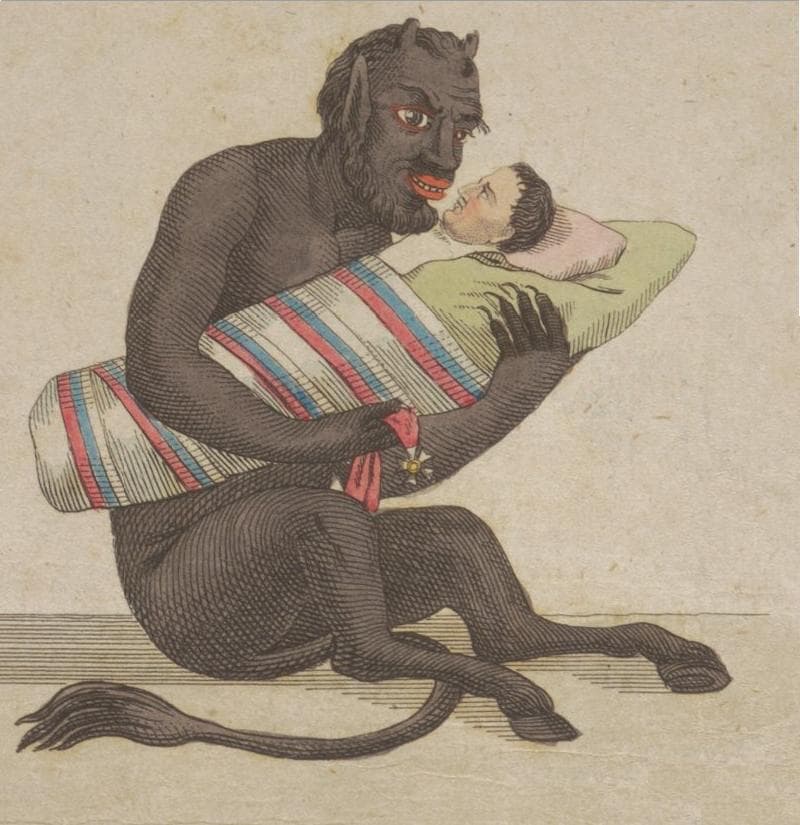
A chort is an anthropomorphic malign spirit or demon found in Slavic folk tradition, often depicted with Christian devil-like features such as horns, hooves, and a tail. In some traditions, a singular chort is considered a son of the god Chernobog and goddess Mara, and in folk Christianity, they are seen as lesser minions of Satan. The term also appears in various Russian curses and expressions denoting frustration or misfortune.
Bukavac
The Bukavac is a demonic mythical creature found in Slavic mythology, particularly in the region of Syrmia. It is depicted as a monster that emerges from lakes and pools at night to make loud noises and attack people and animals by strangling them.
Lechies
The Leshy is a tutelary spirit of the forest in pagan Slavic mythology, embodying the wilderness and its resources. While often depicted as a masculine humanoid, the Leshy can change its appearance and size, and its attitude towards humans varies greatly depending on their behavior towards the forest. It is notable for its role as both a protector and a trickster, capable of misguiding wanderers or abducting children.