
Lechies
The Leshy is a tutelary spirit of the forest in pagan Slavic mythology, embodying the wilderness and its resources. While often depicted as a masculine humanoid, the Leshy can change its appearance and size, and its attitude towards humans varies greatly depending on their behavior towards the forest. It is notable for its role as both a protector and a trickster, capable of misguiding wanderers or abducting children.
Key Facts
- ›The Leshy is a tutelary deity of the forest in Slavic mythology.
- ›It can appear in various forms, including human, animal, plant, or spirit.
- ›The Leshy is known to misguide and abduct humans, particularly children.
- ›Its disposition towards humans depends on their respect for the forest.
- ›The Leshy is associated with hunting, and its success can be influenced by agreements made with it.
- ›It is believed to be a protector of woodland creatures and the forest itself.
Leshy, Leshi, Borovoi, Borowy, Gayevoi, Gajowy, Leshak, LešAk, LešIj, Lesnik, LeśNik, Lesovik, Lesovoi, Lesun, LyašUn, MežAinis, MišKinis, MišKo Velnias, Vir'Ava, He, He Himself, Les Chestnoi, Les Pravedniy, Lesnoi Dedushka, Ded, Dedushka-Lesovoi, Lyasny Dziad, LeśNy Dziad, Lesnoi Dukh, LeśNy Duch, Lesnoi Dyadya, Lesnoi Khozyain, Lesnoi Zhitel', Lesnoi Muzhik
Forest, Hunting, Woodland Creatures, Navigation, Child Abduction
Shapeshifting, Size Alteration, Misguiding Wanderers, Abducting Children, Creating Noise and Humming Sounds, Causing Trees To Split, Whisking Away Children, Mimicry, Invisibility, Controlling Weather Phenomena, Imparting Fear, Transforming Into A Whirlwind, Whipping Humans With Twigs, Possessing Incredible Strength and Weight
Slavic Mythology Folklore Collections
Porewit, Chort, Leshachikha, Leszachka, Lesovikha, Kikimora of the Swamp, Leshonki, Leszony
- Respect For Nature
- Consequences of Disrespecting the Forest
- Wildness
- the Unknown and Perilous Aspects of the Forest
- Agreements Were Made With the Leshy By Shepherds and Hunters On Specific Calendar Dates, Such As Easter and Ivan Kupala Night, To Ensure Success.
- Peasants Would Guard Wheat Sheaves From the Leshy At Night By Walking In Circles With A Poker.
- It Was Customary To Pray and Ask Permission From the Leshy Before Entering the Forest and To Seek Its Consent For Any Activity Within It.
Prayers, Magic
- In Latvian Mythology, MežAinis Is A Similar Forest Spirit.
- In Lithuanian Mythology, MišKinis and MišKo Velnias Are Forest-Related Entities.
- In Erzya Mythology, Vir'Ava Is A Forest Mother Figure.
Trees, Bushes, Stumps, Leaves, Mushrooms, Lichen, Bark, Twigs, Animal Pelts, Bast Shoes, Staff, Whip, Lash, Cudgel, Basket, Black Dog, Small Black Goat, White Wolf
About Lechies
Leshy
The Leshy is a prominent figure in pagan Slavic mythology, serving as the tutelary deity and guardian of the forest. This powerful spirit embodies the wild essence of the woods, governing its flora, fauna, and the very paths within it. The Leshy's nature is multifaceted, capable of both protection and mischief, reflecting the dual relationship humans historically had with the vast, often perilous, forest.
Nature and Appearance
The Leshy's appearance is highly variable, a testament to its deep connection with the natural world. It can manifest as a masculine humanoid, often described with features mimicking plants and animals—such as skin like bark, a beard of lichen, or hair resembling tangled branches. Its size is also mutable, able to grow into a giant that spans rivers or shrink to the size of a blade of grass, often adapting its stature to the surrounding vegetation. Alternatively, the Leshy can assume the forms of various animals, whirlwinds, or even blend seamlessly with the forest itself, making its true form elusive and feared.
Role and Influence
As the "master of the forest," the Leshy holds dominion over all woodland creatures and resources. Its attitude towards humans is contingent on their behavior; those who show respect for the forest and its inhabitants might receive aid, such as guidance or help in gathering sustenance. Conversely, the Leshy is known to punish those who disrespect its domain by misguiding them, causing them to become lost, or even abducting children, particularly those mistreated by their families. This duality positions the Leshy as a temperamental, fairy-like entity, whose actions serve to maintain a balance within the natural order.
Cultural Significance
The Leshy is known by numerous names across various Slavic regions, including "Borovoi" (of the pine barrens), "Gayevoi" (of the grove), and "Lesnik" (forester), often accompanied by euphemistic titles like "forest grandfather" or "forest master." Its presence is deeply woven into the fabric of Slavic folklore, influencing rituals and beliefs surrounding hunting, forest travel, and the overall respect due to the natural world. The Leshy's stories highlight the ancient human understanding of the forest as a living, sentient entity, demanding deference and adherence to its unwritten laws.
Source: Wikipedia ↗
Frequently Asked Questions
What is the Leshy?
The Leshy is a tutelary deity of the forest in pagan Slavic mythology. It is considered the ruler of the forest and its inhabitants, embodying the wildness and power of nature.
What does the Leshy look like?
The Leshy can take on many forms, often appearing as a masculine humanoid with woodland features such as bark-like skin or mossy beards. It can also transform into animals, plants, or even whirlwinds, and can change its size at will.
What is the Leshy's relationship with humans?
The Leshy's relationship with humans is complex; it can be benevolent, helping those who respect the forest, or malevolent, tricking, misguiding, or abducting those who disrespect it or its domain.
Why is the Leshy notable?
The Leshy is notable for its dual nature as both a protector of the forest and its creatures, and a dangerous entity that can lead travelers astray or punish those who offend it. Its ability to shapeshift and its deep connection to the natural world make it a significant figure in Slavic folklore.
What are some other names for the Leshy?
The Leshy is known by many names across Slavic cultures, including Borovoi, Gayevoi, Leshak, Lesnik, Lesovik, Lesun, and Mežainis. Euphemistic titles like 'forest grandfather' or 'forest master' are also used.
Related Demons
Bukavac
The Bukavac is a demonic mythical creature found in Slavic mythology, particularly in the region of Syrmia. It is depicted as a monster that emerges from lakes and pools at night to make loud noises and attack people and animals by strangling them.
Boruta
Boruta is a fictional character from Polish mythology and folklore, most notably associated with the town of Łęczyca. Originally a pagan Slavic leshy, he transformed in post-Christianization times and is often depicted as a nobleman whose primary role was to corrupt other nobles. His depiction as a nobleman is debated by ethnologists, with some suggesting it is a 19th-century fakelore.
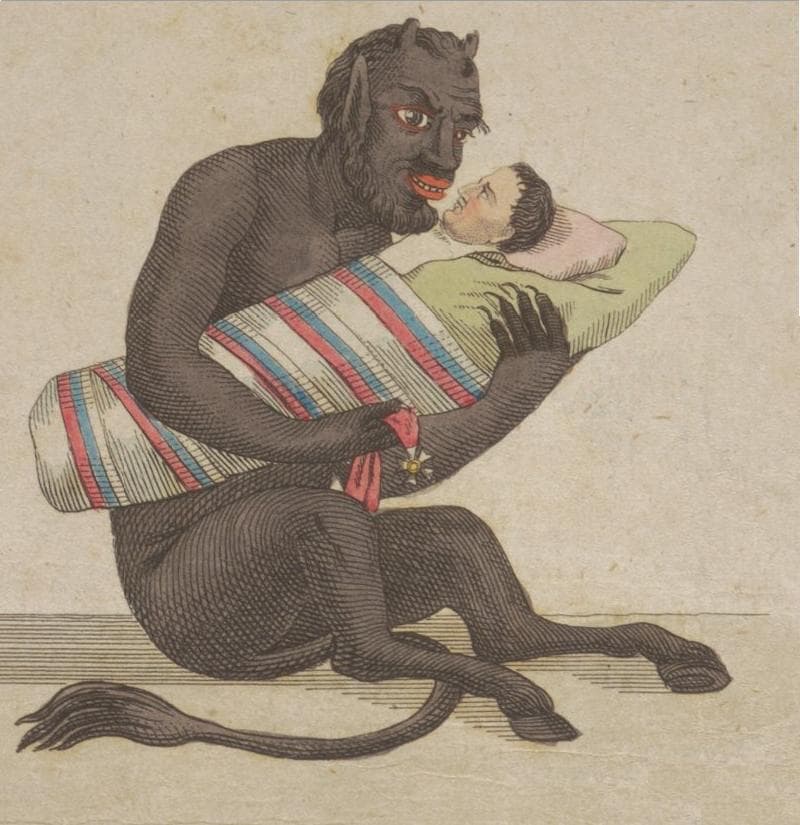
Chort
A chort is an anthropomorphic malign spirit or demon found in Slavic folk tradition, often depicted with Christian devil-like features such as horns, hooves, and a tail. In some traditions, a singular chort is considered a son of the god Chernobog and goddess Mara, and in folk Christianity, they are seen as lesser minions of Satan. The term also appears in various Russian curses and expressions denoting frustration or misfortune.