
Mara
Buddhism·Buddhist mythology·Indian subcontinent·deva
Mara is a significant figure in Buddhism, representing any force that hinders enlightenment, including both demonic and celestial beings. Associated with death, desire, and the cycle of rebirth, Mara is often depicted as a powerful deva who tempted Prince Siddhartha, the future Buddha, with his army and beautiful maidens. His name etymologically signifies 'causing death' or 'killing,' and he is seen as the personification of forces antagonistic to spiritual liberation.
Key Facts
- ›Mara is a Buddhist concept representing forces that obstruct enlightenment, including lust, hatred, and delusion.
- ›He is depicted as a deva who attempted to prevent Prince Siddhartha from achieving enlightenment.
- ›Mara is associated with death, rebirth, desire, and the cyclical nature of existence (Saṃsāra).
- ›His name derives from the Sanskrit root 'Mṛ,' meaning 'to die' or 'to kill.'
- ›Traditional Buddhism outlines four metaphorical forms of Mara: Kleśa-Māra (unskillful emotions), Mṛtyu-Māra (death), Skandha-Māra (conditioned existence), and Devaputra-Māra (the tempter deva).

Mrtyu, Agha Mara, Papiyan
Death, Rebirth, Desire, Illusion, Hindrance To Enlightenment
Seduction, Illusion Casting, Commanding Celestial Armies, Inspiring Lust, Hesitation, and Fear
Atharva Veda, Samyutta Nikaya, Brahmanimantanika Sutta, Jingde Record of the Transmission of the Lamp, Denkoroku
Gautama Buddha, Prince Siddhartha, Yama, Baka Brahma, Upagupta, TaṇHā, Arati, RāGa
Greed, Hatred, Delusion, Sorrow, Pain, Misfortune, Attachment, Craving, Aversion
- the 'Buddha Defying Mara' Pose In Sculptures, Known As the BhūMisparśA 'Earth-Witness' Mudra, Symbolizes Overcoming Mara and Achieving Enlightenment.
Gautama Buddha, the Three Jewels
- Mara's Origins Are Linked To Hindu Myths About Asuras, But the Symbolic Development of Mara Was Spread By Buddhism.
- In Some Sri Lankan Traditions, Mara's Mount Is A Gargantuan Elephant Named Girimekhala.
Girimekhala
About Mara
Mara: The Buddhist Tempter
Mara is a central figure in Buddhist traditions, representing the forces that actively hinder the attainment of enlightenment. He is not solely a malevolent demon but encompasses any form of obstruction, whether internal psychological states or external temptations. Mara is deeply intertwined with the cycle of death and rebirth (Saṃsāra), embodying desire, attachment, and ignorance – the very elements that keep beings bound to suffering.
Origins and Etymology
Mara's name originates from the Sanskrit root mṛ, meaning 'to die' or 'to kill,' reflecting his association with death and mortality. Early mentions in texts like the Atharva Veda link him to concepts of death and evil. While his name's roots suggest a potential connection to Hindu concepts, his symbolic development and prominent role are primarily within Buddhist cosmology.
Role in Buddhist Narrative
Mara is most famously known for his confrontation with Prince Siddhartha, the future Buddha, on the eve of his enlightenment. As a powerful deva, Mara unleashed his celestial army and his alluring daughters – Taṇhā (Craving), Arati (Aversion), and Rāga (Attachment) – in an attempt to break Siddhartha's concentration. Siddhartha's steadfastness and realization of the impermanent nature of these temptations led to his ultimate victory. This encounter is frequently depicted in Buddhist art through the bhūmisparśa or 'earth-witness' mudra, where the Buddha touches the earth to call it as his witness against Mara.
Metaphorical Forms
Traditional Buddhist teachings elaborate on Mara through four metaphorical aspects:
- Kleśa-māra: Represents the embodiment of all unskillful emotions, such as greed, hatred, and delusion.
- Mṛtyu-māra: Symbolizes death itself and the fear it invokes.
- Skandha-māra: Refers to the impermanence and conditioned nature of existence, the aggregates that constitute sentient beings.
- Devaputra-māra: This is the celestial being, the deva who directly attempted to tempt Siddhartha, embodying the allure of worldly pleasures and power.
Influence Beyond the Sensual Realm
Mara's influence is understood to extend even to the celestial realms of Brahma. While these beings are free from sensual desires, they can still be ensnared by the craving for eternal existence and ignorance of impermanence, aligning them with Mara's delusions. This aspect critiques pre-Buddhist Brahmanical theistic beliefs by suggesting even gods can be subject to Mara's influence.
Later Traditions and Popular Culture
Later Buddhist traditions, such as those found in the Jingde Record of the Transmission of the Lamp and the Denkoroku, recount stories of Mara's conversion to Buddhism under the guidance of the monk Upagupta. Mara has also found a place in modern popular culture, appearing in literature and video games, often retaining his role as an antagonist or a symbol of temptation.
Source: Wikipedia ↗
Frequently Asked Questions
Who is Mara in Buddhism?
In Buddhism, Mara refers to any malicious force or being that obstructs the path to enlightenment. This can manifest as internal defilements like greed and hatred, or external temptations and obstacles.
What is Mara's role in the story of Buddha's enlightenment?
Mara is famously depicted as the tempter who tried to prevent Prince Siddhartha from achieving enlightenment. He used his celestial army, illusions, and his daughters to seduce Siddhartha, but Siddhartha ultimately overcame these temptations.
What does the name Mara mean?
The name Mara comes from the Sanskrit word meaning 'causing death' or 'killing.' It is related to words for death, such as 'maraṇa' and 'mṛtyu' (personified death).
What are the different types of Mara?
Traditional Buddhist teachings describe four metaphorical forms of Mara: Kleśa-māra (embodiment of unskillful emotions), Mṛtyu-māra (death), Skandha-māra (conditioned existence), and Devaputra-māra (the deva who tempted Buddha).
What are Mara's daughters associated with?
Mara's three daughters are often identified as Taṇhā (Thirst/Craving), Arati (Aversion/Discontentment), and Rāga (Attachment/Desire/Greed). They represent the seductive aspects of worldly desires that hinder spiritual progress.
Is Mara a literal being or a metaphor?
Mara can be interpreted both literally as a powerful deva and psychologically as the personification of inner hindrances to enlightenment. Early Buddhism acknowledged both interpretations.
Related Demons

Asura
Asura are a class of powerful, often adversarial, beings in Indian religions, primarily Hinduism and Buddhism. Initially described in Vedic texts as divine lords with good or bad intentions, their role evolved to represent malevolent forces opposing the benevolent Deva (gods). They are notable for their complex dualistic symbolism, representing inner struggles and the forces of darkness or ego.

Rakshasa
Rakshasas are a race of powerful, often malevolent beings prominent in Hindu, Buddhist, and Jain traditions, known for their supernatural abilities, shape-shifting, and illusionary powers. While frequently depicted as antagonists and man-eaters, some Rakshasas are portrayed as morally upright or even heroic figures, and they retain a significant presence in various mythologies and modern fiction.
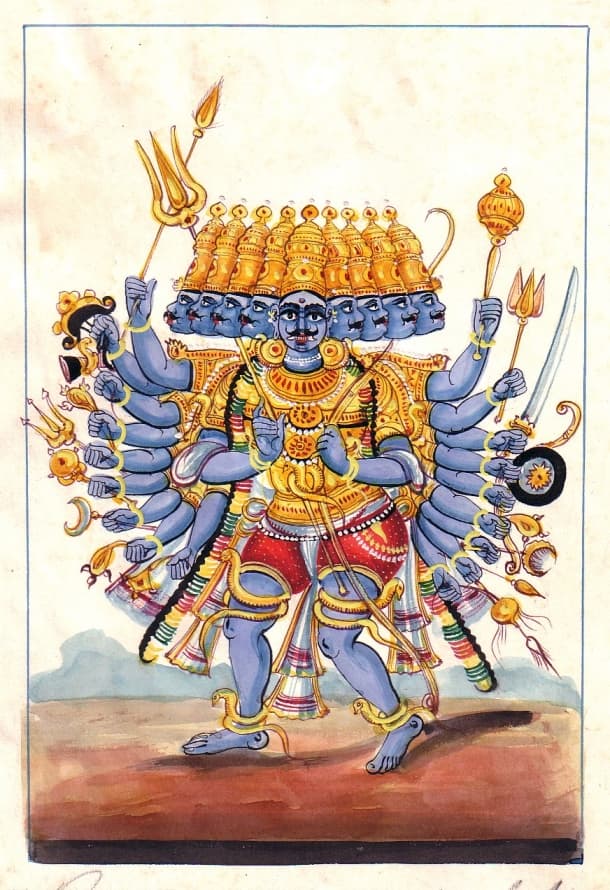
Ravana
Ravana is the primary antagonist in the ancient Hindu epic Ramayana, depicted as a ten-headed rakshasa (demon) king of Lanka. He is known for abducting Sita, the wife of Rama, and for his scholarly prowess in Vedic texts and devotion to Shiva. Ravana's defeat by Rama is a central theme in the Ramayana and is commemorated annually during the Hindu festival of Dussehra.