
Rakshasa
Rakshasas are a race of powerful, often malevolent beings prominent in Hindu, Buddhist, and Jain traditions, known for their supernatural abilities, shape-shifting, and illusionary powers. While frequently depicted as antagonists and man-eaters, some Rakshasas are portrayed as morally upright or even heroic figures, and they retain a significant presence in various mythologies and modern fiction.
Key Facts
- ›Rakshasas are supernatural beings originating from Hindu, Buddhist, and Jain traditions.
- ›They are often depicted as monstrous, shape-shifting creatures with sharp claws, fangs, and sometimes flaming red eyes.
- ›Rakshasas possess magical powers, including illusion (maya), which allows them to change form and create deceptive appearances.
- ›While often antagonists who disrupt sacrifices and consume humans, some Rakshasas are depicted as virtuous or fight alongside good forces.
- ›Prominent Rakshasas in epics like the Ramayana and Mahabharata include Ravana, Hidimba, Ghatotkacha, and Bakasura.
- ›In Buddhism, Rakshasas are known as luosha (Chinese) or rasetsu (Japanese) and are sometimes depicted as protectors of the Dharma.

RāKṣAsa, RāKṣAsī, Luosha, Rasetsu
Disruption of Vedic Sacrifices, Eating Humans, Illusion, Chaos
Shape-Shifting, Illusion, Supernatural Strength, Flight, Vanishing
Ramayana, Mahabharata, Puranas, Lotus Sutra, Lankavatara Sutra
Brahma, Rama, Sita, Ravana, Vibhishana, Tataka, Maricha, Bhima, Hidimba, Hidimbi, Ghatotkacha, Bakasura, Kirmira, Jatasura, Alamvusha, Arjuna, Abhimanyu, Iravan, Ulupi, Buddha, Padmasambhava, Yeshe Tsogyal, Merlin
Evil, Foulness, Hunger, Anger, Greed, Violence, Deception
- In Buddhism, Rakshasa Daughters Swear To Uphold and Protect the Lotus Sutra and Teach Magical DhāRaṇīS.
- Rakshasas Are Part of Mahakala's Retinue In Buddhist Traditions.
- In Indonesian Folk Islam, Rakshasas Are Seen As Humans Possessed By Devil Spirits.
Rama, Bhima, Arjuna, Buddha
- In Indonesian and Malaysian Malay, 'Raksasa' Means 'Giant' Or 'Huge and Strong', Or 'Monster'.
- Jain Literature Describes Rakshasa As A Kingdom of Civilized, Vegetarian Vidyadharas, Devotees of Tirthankara, Differing From Hindu Accounts.
- In Japanese Buddhism, They Are Known As Rasetsu.
Fangs, Claws, Red Eyes, Human Skulls, Chariots, Serpents
About Rakshasa
What is Rakshasa?
Rakshasa (Sanskrit: राक्षस) refers to a race of supernatural beings central to Hindu, Buddhist, and Jain traditions, also appearing in Indonesian folk Islam. They are typically characterized as powerful, often malevolent entities possessing supernatural abilities, including shape-shifting and the mastery of illusion (maya). While frequently depicted as antagonists who disrupt religious rituals and consume humans, the portrayal of Rakshasas is not uniformly negative, with some texts featuring them as morally upright or even heroic figures.
Origins and Descriptions
The concept of Rakshasas is deeply embedded in ancient Indian literature. According to Hindu Puranic texts, they were created by Brahma from a form associated with foulness, born of hunger and anger. Descriptions of Rakshasas commonly portray them as monstrous, fierce-looking creatures with fangs, sharp claws, and sometimes fiery eyes, capable of assuming any form. This ability to change appearance and create illusions made them formidable adversaries, as seen in their roles in major Hindu epics.
Roles in Epics and Scriptures
In the Ramayana and Mahabharata, Rakshasas constitute a significant population and often serve as warriors on both sides of conflicts. They are antagonists to the protagonists, such as Rama, who slays many Rakshasas, including the paramount antagonist Ravana. Ravana notably uses his illusionary powers to abduct Sita, driving much of the epic's narrative. However, even within these epics, some Rakshasas, like Vibhishana, are depicted as virtuous and loyal. In Buddhism, Rakshasas appear in scriptures like the Lotus Sutra, where Rakshasa daughters pledge to protect the Dharma, and in the Lankavatara Sutra, with Ravana being a notable figure. Jain traditions offer a contrasting view, describing Rakshasa as a kingdom of civilized, vegetarian people.
Cultural Significance and Modern Depictions
Rakshasas have permeated artistic and folkloric traditions, notably in Cambodian art at Angkor, where figures like Ravana are frequently depicted in stone sculptures and bas-reliefs. In modern popular culture, Rakshasas are a recurring element in fantasy genres, particularly in role-playing games like Dungeons & Dragons, where they are often portrayed as formidable, magic-wielding humanoids. Their name has also evolved in some languages, such as Indonesian and Malay, to mean 'giant' or 'monster', reflecting their imposing stature and power.
Source: Wikipedia ↗
Frequently Asked Questions
What are Rakshasas?
Rakshasas are a race of supernatural beings primarily found in Hindu, Buddhist, and Jain mythology. They are often described as powerful, malevolent entities with supernatural abilities.
What are Rakshasas known for?
Rakshasas are known for their fierce appearance, shape-shifting abilities, and use of illusion (maya). They are often depicted as disruptors of religious rituals and man-eaters, though their roles can vary.
Are all Rakshasas evil?
No, while many Rakshasas are portrayed as antagonists, some traditions and stories feature Rakshasas who are moral, virtuous, or even allies to heroic figures. For example, Vibhishana in the Ramayana is a Rakshasa who sides with Rama.
Where do Rakshasas appear in literature?
Rakshasas are prominent figures in Hindu epics like the Ramayana and Mahabharata. They also appear in Buddhist scriptures and Jain literature, as well as in modern fiction such as Dungeons & Dragons.
What do Rakshasas look like?
Rakshasas are typically depicted as monstrous and fierce-looking, often with sharp fangs, claw-like fingernails, and sometimes flaming red eyes. They are also described as shape-shifters capable of assuming various forms.
Related Demons
Ravana
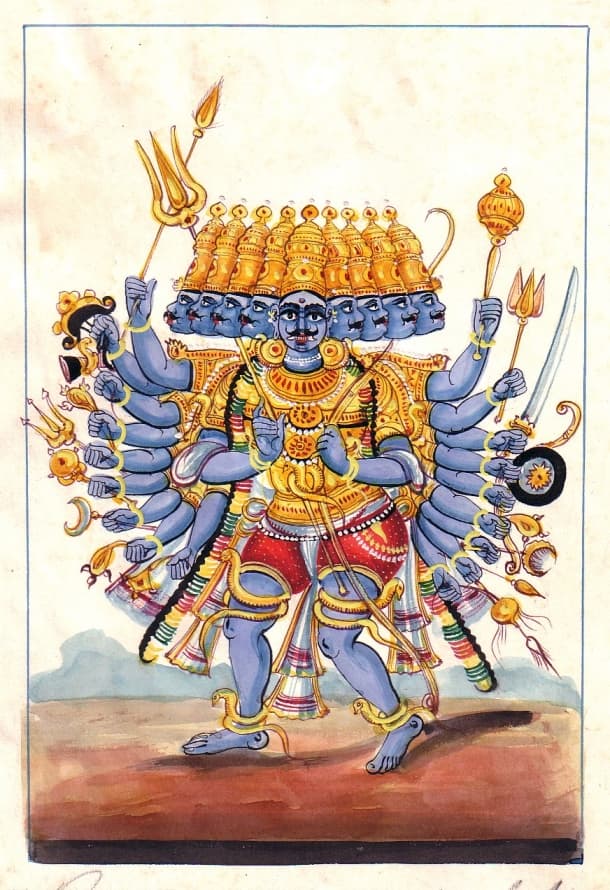
Ravana is the primary antagonist in the ancient Hindu epic Ramayana, depicted as a ten-headed rakshasa (demon) king of Lanka. He is known for abducting Sita, the wife of Rama, and for his scholarly prowess in Vedic texts and devotion to Shiva. Ravana's defeat by Rama is a central theme in the Ramayana and is commemorated annually during the Hindu festival of Dussehra.

Asura
Asura are a class of powerful, often adversarial, beings in Indian religions, primarily Hinduism and Buddhism. Initially described in Vedic texts as divine lords with good or bad intentions, their role evolved to represent malevolent forces opposing the benevolent Deva (gods). They are notable for their complex dualistic symbolism, representing inner struggles and the forces of darkness or ego.

Mara
Mara is a significant figure in Buddhism, representing any force that hinders enlightenment, including both demonic and celestial beings. Associated with death, desire, and the cycle of rebirth, Mara is often depicted as a powerful deva who tempted Prince Siddhartha, the future Buddha, with his army and beautiful maidens. His name etymologically signifies 'causing death' or 'killing,' and he is seen as the personification of forces antagonistic to spiritual liberation.