
Ravana
Hinduism·Mythology·Indian subcontinent·Rakshasa (demon)
Ravana is the primary antagonist in the ancient Hindu epic Ramayana, depicted as a ten-headed rakshasa (demon) king of Lanka. He is known for abducting Sita, the wife of Rama, and for his scholarly prowess in Vedic texts and devotion to Shiva. Ravana's defeat by Rama is a central theme in the Ramayana and is commemorated annually during the Hindu festival of Dussehra.
Key Facts
- ›Ravana is the ten-headed rakshasa king of Lanka and the principal antagonist of the Ramayana.
- ›He was the eldest son of sage Vishrava and Kaikasi, and an ardent devotee of Shiva.
- ›Ravana abducted Sita, Rama's wife, leading to the epic war in Lanka.
- ›He was a great scholar, well-versed in the six shastras and four Vedas, and is credited with composing hymns and texts on astrology and Ayurveda.
- ›Ravana is sometimes depicted as a reincarnation of Vishnu's cursed doorkeeper, Jaya.
- ›His defeat and effigy burning during Dussehra symbolize the triumph of good over evil.
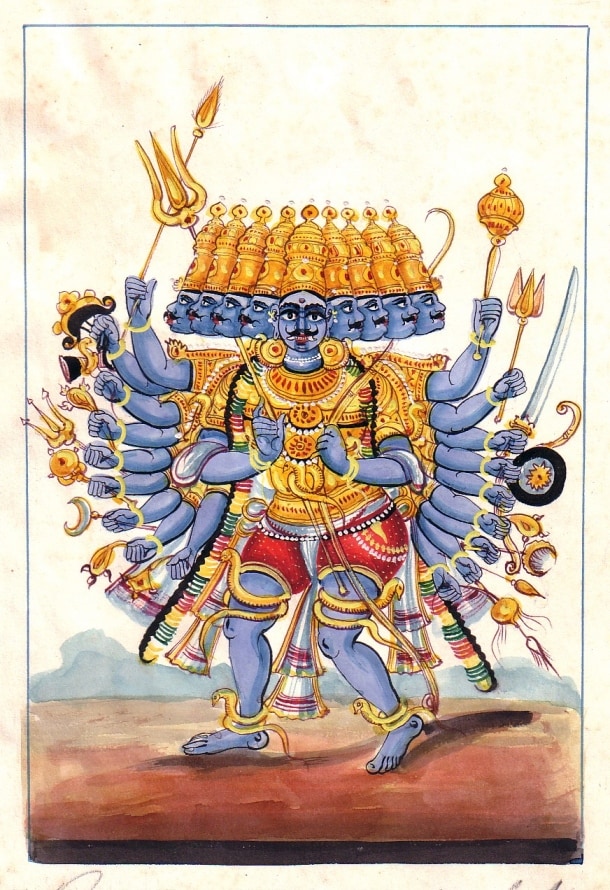
RāVaṇA, DashāNana, Ravula, Lankapati, Lankeshwara, Ravanasura, Ravanaeshwara, DasīS Ravana, DasīS Sakvithi Maha Ravana, DaśAkaṇṭHa
Lust, Arrogance, Scholarship, Devotion
Ten Heads, Shapeshifting, Possession of Weapons and A Chariot, Invincibility To Most Creations of Brahma, Magical Tricks
Ramayana, LaṅKāVatāRa SūTra, Buddhist Jatakas, Jain Ramayanas, Bhagavata Purana, Shiva Tandava Stotra, Ravana Samhita, Arka Prakasha
Rama, Sita, Shiva, Vishnu, Lakshmana, Sugriva, Kaikasi, Vishrava, Kumbhakarna, Vibhishana, Mandodari, Meghanada, Jaya and Vijaya, Brahma, Kubera
Evil, Arrogance, Lust, Scholarship, Devotion, Pride, Materialism
- the Burning of Ravana's Effigy During Dussehra Symbolizes Rama's Triumph Over Evil.
- Some Communities Worship Ravana As A Devotee of Shiva, With Temples Dedicated To Him.
- the Sachora Brahmins of Gujarat Claim Descent From Ravana.
- the Gondi People of Central India Revere Ravana As An Ancient King and Divine Teacher.
Rama, Vishnu, Shiva, Brahma's Weapon
- In Buddhist Traditions, Ravana Can Appear In Texts Like the LaṅKāVatāRa SūTra and Jatakas.
- Jain Ramayanas Portray Rama and Ravana As Devout Jains, With Lakshmana Killing Ravana.
- In Thai Buddhist Texts , He Is Known As Thotsakan and Depicted With Green Skin.
- Tibetan Ramayanas Prophesy His Return As A Buddha Incarnation.
- In Some Modern Reinterpretations, Ravana Is Depicted As A Hero Or A Human-Like Figure.
Ten Heads, Veena, Linga, Pushpaka Vimana
About Ravana
Ravana is a central figure in ancient Hindu mythology, most notably serving as the principal antagonist in the epic Ramayana. He is traditionally depicted as a powerful and learned ten-headed rakshasa (demon) king of Lanka. His lineage traces back to the sage Vishrava and the Daitya princess Kaikasi, making him a descendant of both Brahmin sages and Rakshasa royalty. Ravana is renowned for his immense scholarly achievements, being well-versed in the six shastras and the four Vedas, and is also recognized as a profound devotee of Lord Shiva, often depicted playing the veena to appease the deity.
Life and Traditions
The narrative of Ravana's life is primarily defined by his abduction of Sita, the wife of Lord Rama, and her subsequent imprisonment in his kingdom. This act of transgression led to a massive war between Rama's forces and Ravana's rakshasa army. Despite his immense power, gained through boons from Brahma that rendered him invincible to all but humans, Ravana was ultimately defeated and slain by Rama. This epic confrontation and Ravana's downfall are annually celebrated across India during the Hindu festival of Dussehra, where effigies of the ten-headed demon are burned to symbolize the triumph of good over evil.
Beyond the Ramayana, Ravana appears in various other religious and cultural traditions. He is mentioned in Buddhist texts such as the Laṅkāvatāra Sūtra and Buddhist Jatakas, and in Jain Ramayanas, where his character and the events of the epic are often reinterpreted. In some Vaishnava scriptures, he is identified as one of Vishnu's cursed doorkeepers, Jaya, who chose to be born as an enemy of Vishnu three times rather than seven times as a mortal devotee. Ravana is also revered in certain traditions for his contributions to medicine and astrology, being credited with works on Ayurveda and astrology, and is worshipped in some Shiva temples by those who recognize his deep devotion to the god.
Source: Wikipedia ↗
Frequently Asked Questions
Who is Ravana?
Ravana is the ten-headed rakshasa king of Lanka and the main antagonist in the Hindu epic Ramayana. He is depicted as a powerful and learned being, devoted to Lord Shiva.
What is Ravana most famous for?
Ravana is most famous for abducting Sita, the wife of Lord Rama, and holding her captive in his kingdom of Lanka. This act initiates the central conflict of the Ramayana.
What were Ravana's scholarly achievements?
Ravana was a profound scholar, mastering the six shastras and the four Vedas. He is also credited with authoring texts on Hindu astrology (Ravana Samhita) and pioneering pharmaceutical science in Ayurveda.
What is Ravana's connection to Lord Shiva?
Ravana is portrayed as an ardent devotee of Lord Shiva. He is often depicted playing the veena to appease Shiva and is revered in some Shiva temples.
How is Ravana defeated?
Ravana was eventually defeated and slain by Lord Rama in a great battle in Lanka. This victory is celebrated annually during the Hindu festival of Dussehra by burning effigies of Ravana.
Are there other traditions that mention Ravana?
Yes, Ravana also appears in Buddhist texts such as the Laṅkāvatāra Sūtra and Buddhist Jatakas, as well as in Jain Ramayanas, though often with variations in his portrayal and role.
Related Demons

Rakshasa
Rakshasas are a race of powerful, often malevolent beings prominent in Hindu, Buddhist, and Jain traditions, known for their supernatural abilities, shape-shifting, and illusionary powers. While frequently depicted as antagonists and man-eaters, some Rakshasas are portrayed as morally upright or even heroic figures, and they retain a significant presence in various mythologies and modern fiction.

Asura
Asura are a class of powerful, often adversarial, beings in Indian religions, primarily Hinduism and Buddhism. Initially described in Vedic texts as divine lords with good or bad intentions, their role evolved to represent malevolent forces opposing the benevolent Deva (gods). They are notable for their complex dualistic symbolism, representing inner struggles and the forces of darkness or ego.

Mara
Mara is a significant figure in Buddhism, representing any force that hinders enlightenment, including both demonic and celestial beings. Associated with death, desire, and the cycle of rebirth, Mara is often depicted as a powerful deva who tempted Prince Siddhartha, the future Buddha, with his army and beautiful maidens. His name etymologically signifies 'causing death' or 'killing,' and he is seen as the personification of forces antagonistic to spiritual liberation.