
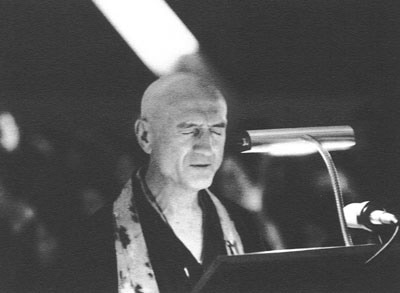
Philip Kapleau
Usa·Harada–Yasutani tradition (Sōtō/Rinzai koan study)·Male·20th century
Philip Kapleau was an American Zen Buddhist teacher and author who played a significant role in introducing Zen to the West. He established the influential Rochester Zen Center and authored "The Three Pillars of Zen," a foundational text for Western practitioners. Kapleau trained in the Harada-Yasutani tradition, incorporating elements of both Sōtō and Rinzai schools.
Key Facts
- ›Trained in the Harada-Yasutani tradition of Zen Buddhism.
- ›Authored the influential book "the three Pillars of Zen" in 1965.
- ›Founded the Rochester Zen Center in 1966, which became a major Western Zen community.
- ›Advocated for Buddhist vegetarianism, exploring the principle of non-harmfulness in his book "to Cherish all Life."
- ›His teachings emphasized that insight and enlightenment are accessible to all, not just monastics.
- ›He initiated modifications to Japanese Zen traditions, such as chanting sutras in local languages.
Important Relationships
- Hakuun Yasutani (teacher)
- Soen Nakagawa (teacher)
- Daiun Harada (teacher)
- Eido Shimano (former associate)
- Yamada Koun Roshi (correspondent)
- James Ishmael Ford (commentator)
- Andrew Rawlinson (commentator)
- Bodhin Kjolhede (dharma heir)
- the Three Pillars of Zen
- To Cherish All Life: A Buddhist Case For Becoming Vegetarian
- Awakening To Zen
- Straight To the Heart of Zen
- the Wheel of Death
- the Zen of Living and Dying: A Practical and Spiritual Guide
- Zen: Dawn In the West
- Zen: Merging of East and West
New Haven, Connecticut, Rochester, New York, Hosshin-Ji, Sugamo Prison
Soen Nakagawa, Daiun Harada, Hakuun Yasutani, D.T. Suzuki, Karlfried Graf DüRckheim, Eihei Dogen
English
Priest Ordination
About Philip Kapleau
Philip Kapleau (1912 – 2004)
Philip Kapleau was a pivotal American Zen Buddhist teacher and author who significantly contributed to the spread and understanding of Zen in the Western world. He is best known for his influential book "The Three Pillars of Zen" and for establishing the Rochester Zen Center, which became a leading institution for Zen practice in the United States.
Life and Historical Context
Born in New Haven, Connecticut, Kapleau initially pursued a career in law and court reporting. His professional work led him to Japan, where he served as a chief Allied court reporter for the International Military Tribunal for the Far East (Tokyo War Crimes Trials). It was during this period that he developed an interest in Zen Buddhism, initially encountering it through lectures by D.T. Suzuki. Discontent with a purely intellectual approach, Kapleau moved to Japan in 1953 to engage in deep Zen training.
Zen Training and Teaching
Kapleau trained rigorously under Soen Nakagawa and later under Daiun Harada at Hosshin-ji temple. He eventually became a disciple of Hakuun Yasutani, a dharma heir of Harada. After thirteen years of dedicated practice, Kapleau was ordained as a priest by Yasutani in 1965, receiving permission to teach. He trained in the Harada-Yasutani tradition, which combined Sōtō fundamentals with Rinzai koan study.
Major Contributions
Kapleau's seminal work, "The Three Pillars of Zen" (1965), was groundbreaking in its presentation of Zen as a living, pragmatic path rather than an abstract philosophy. Translated into twelve languages, it remains a foundational text for many Western practitioners.
In 1966, Kapleau founded the Rochester Zen Center in New York, which rapidly grew into one of the most influential Zen communities in the West. He also introduced adaptations to traditional Zen practices, such as chanting sutras in vernacular languages, emphasizing Zen's adaptability to different cultures while cautioning against losing sight of its core essence.
Kapleau was also a vocal advocate for Buddhist vegetarianism, arguing that it aligns with the Buddhist principle of non-harmfulness, as detailed in his book "To Cherish All Life."
Break with Yasutani and Lineage
Kapleau formally ended his association with Hakuun Yasutani in 1967 due to disagreements over teaching methods and concerns regarding the conduct of another student, Eido Shimano. While Kapleau did not receive formal dharma transmission from Yasutani, he was granted permission to teach and subsequently established his own Zen lineage. He appointed several dharma heirs who continue to teach and lead Zen centers worldwide.
Later Life and Death
Philip Kapleau passed away on May 6, 2004, at the Rochester Zen Center, surrounded by disciples and friends. He had lived with Parkinson's disease for several years prior to his death.
Source: Wikipedia ↗
Frequently Asked Questions
Who was Philip Kapleau?
Philip Kapleau (1912-2004) was an American Zen Buddhist teacher and author. He is widely recognized for his role in popularizing Zen Buddhism in the West, particularly through his book "The Three Pillars of Zen" and the founding of the Rochester Zen Center.
What is "The Three Pillars of Zen"?
"The Three Pillars of Zen" is a seminal book written by Philip Kapleau, published in 1965. It presents Zen Buddhism as a pragmatic path of training and living, rather than solely a philosophy. The book has been translated into many languages and remains a key resource for Western Zen students.
What is the Harada-Yasutani tradition?
The Harada-Yasutani tradition is a school of Zen Buddhism that Kapleau trained in. It is rooted in the Japanese Sōtō school but incorporates Rinzai-school koan study, emphasizing rigorous practice and the accessibility of awakening.
What was the significance of the Rochester Zen Center?
Founded by Kapleau in 1966, the Rochester Zen Center became one of the most influential Zen communities in the West. It served as a hub for practice and teaching, with affiliate centers eventually established globally.
Did Philip Kapleau have a formal lineage or dharma transmission?
Kapleau received permission to teach from Hakuun Yasutani, his teacher, and was ordained as a priest. While he completed a significant portion of the Harada-Yasutani koan curriculum, he did not receive formal dharma transmission from Yasutani. He subsequently established his own lineage, appointing several dharma heirs.
What were Philip Kapleau's views on vegetarianism?
Kapleau was a strong advocate for Buddhist vegetarianism, arguing that it stems from the principle of non-harmfulness. His book "To Cherish All Life: A Buddhist Case for Becoming Vegetarian" explores this topic in detail.
Related Buddhists
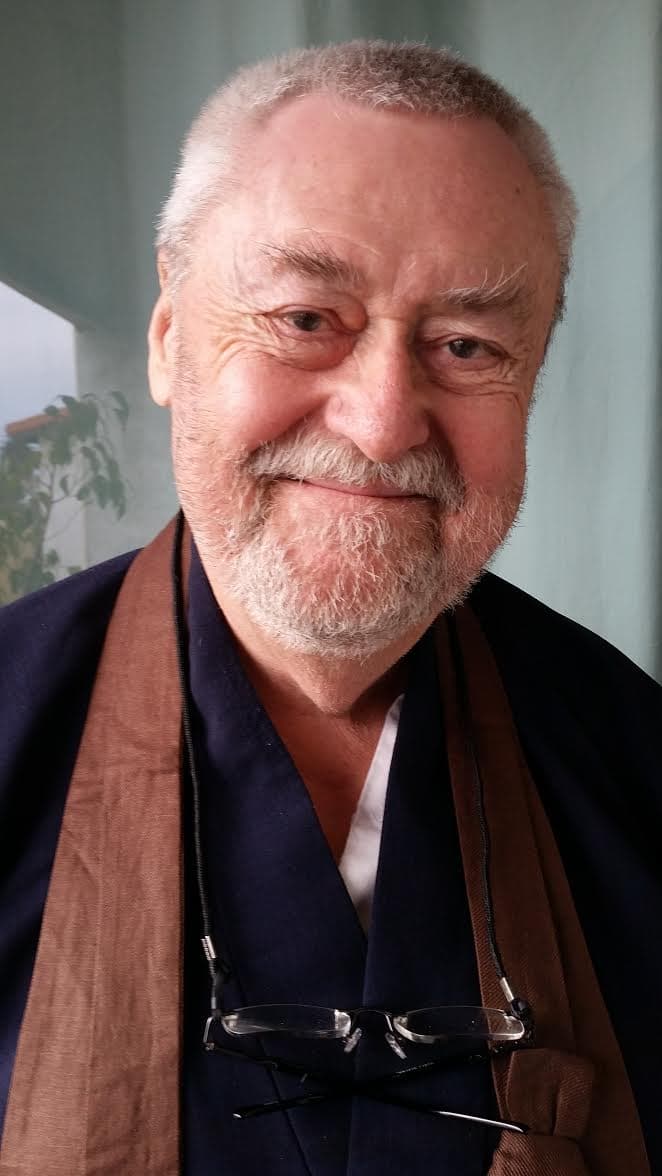
James Ishmael Ford
James Ishmael Ford is an American Zen Buddhist priest and retired Unitarian Universalist minister, recognized as a Zen master. He is known for co-founding Boundless Way Zen and establishing the Empty Moon Zen Network, contributing significantly to the establishment of Zen in North America. His work bridges Zen Buddhism and Unitarian Universalism, making him a notable figure in contemporary American Buddhism.
Gudō Wafu Nishijima
Gudō Wafu Nishijima was a Japanese Zen Buddhist priest and teacher, known for his extensive translations of Dōgen's works and his unique philosophical interpretation of the Four Noble Truths. He also authored several books on Buddhism and zazen, making Zen teachings accessible to a wider, international audience.
Ryōkan
Ryōkan was a Sōtō Zen Buddhist monk and hermit known for his poetry and calligraphy, which embodied the essence of Zen life. Despite his unconventional approach, he was deeply admired for his simplicity, humor, and compassion. His life and teachings continue to inspire those interested in Zen philosophy and practice.