
Ryōkan
Ryōkan was a Sōtō Zen Buddhist monk and hermit known for his poetry and calligraphy, which embodied the essence of Zen life. Despite his unconventional approach, he was deeply admired for his simplicity, humor, and compassion. His life and teachings continue to inspire those interested in Zen philosophy and practice.
Key Facts
- ›Born Eizō Yamamoto in Izumozaki, Echigo Province, Japan.
- ›Attained satori and received an Inka from his master Kokusen at Entsū-ji monastery.
- ›Spent much of his life as a hermit, dedicating himself to poetry, calligraphy, and communing with nature.
- ›Known for his simple, nature-inspired poetry and his fondness for children.
- ›Later in life, incorporated elements of Pure Land Buddhism into his practice, chanting nembutsu.
- ›Died in 1831, reportedly in a meditative posture.
Important Relationships
- Kokusen (master)
- Teishin (companion)
- Kimura Motouemon (patron)
Poetry, Calligraphy
Izumozaki, Niigata Prefecture, Echigo Province, KōShō-Ji, Entsū-Ji Monastery, Tamashima, Okayama Prefecture
Kokusen
Japanese
Monastic Vows
Monk, Poet, Hermit, Calligrapher
About Ryōkan
Ryōkan (1758 – 1831)
Taigu Ryōkan was a prominent Sōtō Zen Buddhist monk, poet, and calligrapher who lived a life of profound simplicity and detachment. Born Eizō Yamamoto in the village of Izumozaki, Echigo Province (now Niigata Prefecture), Japan, he renounced worldly life at a young age to pursue spiritual training.
Life and Spiritual Path
Ryōkan trained at the Sōtō Zen temple Kōshō-ji and later became a disciple of the Zen master Kokusen. Under Kokusen's guidance at Entsū-ji monastery, Ryōkan achieved satori (enlightenment) and received an Inka, a formal recognition of his realization. Following Kokusen's death, Ryōkan embarked on a long pilgrimage and spent much of his life as a hermit, dedicating himself to his spiritual practice, poetry, and calligraphy.
His decision to leave Entsū-ji may have been influenced by his disagreement with the abbot Gentō Sokuchū's reforms within the Sōtō school. Ryōkan's life as a hermit was characterized by a deep connection with nature, a playful fondness for children, and a humility that led him to refuse any formal position as a priest or even a "poet."
Poetry, Calligraphy, and Later Life
Ryōkan's poetry is celebrated for its simplicity, often inspired by nature, and for its embodiment of Zen humor and perspective. His calligraphy is equally revered for its expressive quality. In his final years, Ryōkan fell ill and moved into the home of a patron, where he was cared for by a young nun named Teishin. Their relationship was marked by a tender exchange of haiku. As his life drew to a close, Ryōkan also integrated elements of Pure Land Buddhism into his practice, chanting the nembutsu and aspiring for rebirth in Amida's Pure Land. He died peacefully on February 18, 1831, reportedly while seated in meditation.
Source: Wikipedia ↗
Frequently Asked Questions
Who was Ryōkan?
Ryōkan was a Japanese Sōtō Zen Buddhist monk and poet who lived from 1758 to 1831. He is celebrated for his poetry, calligraphy, and his unconventional, hermit-like lifestyle.
What is Ryōkan known for?
Ryōkan is primarily known for his poetry and calligraphy, which are seen as expressions of Zen principles and a simple life. He is also remembered for his kindness, sense of humor, and his unconventional practices.
Where did Ryōkan live?
Ryōkan was born in Izumozaki, Echigo Province (modern Niigata Prefecture), Japan. He spent much of his adult life as a hermit in the Echigo region, often near nature and villages.
What was Ryōkan's relationship with his family?
Ryōkan renounced the world at an early age and trained at a Zen temple, refusing to meet with or accept charity from his family. This indicates a strong commitment to his monastic path over familial ties.
Did Ryōkan have any notable disciples?
While Ryōkan had close companions like the nun Teishin, with whom he exchanged poetry, the text does not explicitly detail him having formal disciples in the traditional sense. His influence was more through his writings and example.
What was Ryōkan's view on material possessions?
Ryōkan lived a very simple life and demonstrated a disregard for material possessions. In one well-known story, he gave his clothes to a thief who broke into his hut, wishing he could have given him the moon.
Related Buddhists
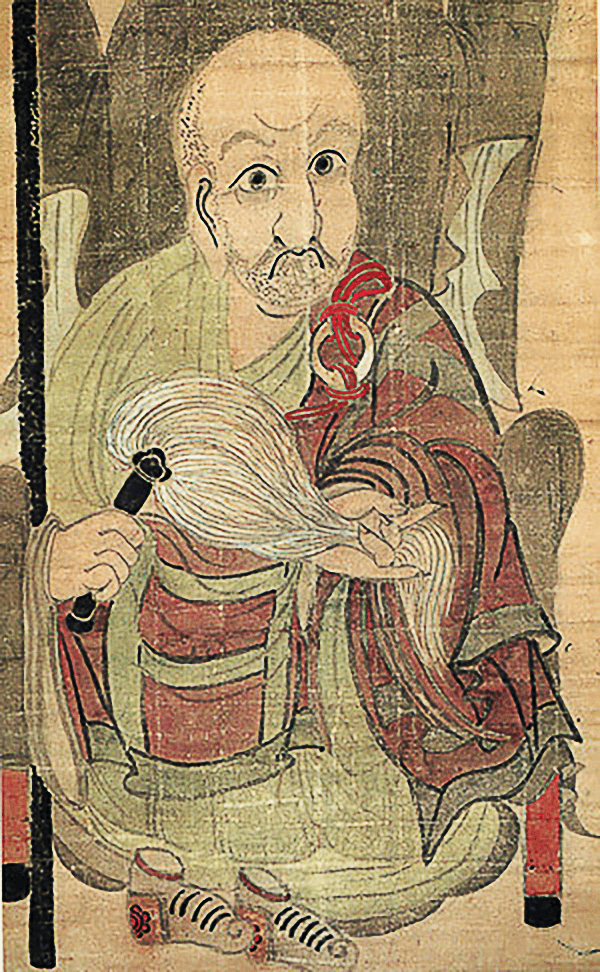
Hakuin Ekaku
Hakuin Ekaku was a pivotal figure in Japanese Zen Buddhism, revitalizing the Rinzai school through rigorous training that integrated meditation and koan practice. He emphasized the importance of bodhicitta, or working for the benefit of others, as the ultimate goal of Zen training, even though he never formally received dharma transmission. Hakuin's teachings and methods significantly shaped modern Zen practice.

Kūkai
Kūkai was a pivotal Japanese Buddhist monk, calligrapher, and poet who founded the esoteric Shingon school of Buddhism. He traveled to Tang China, where he studied under Huiguo and became a master of Chinese Vajrayana Buddhism. Upon his return to Japan, Kūkai established Shingon, deeply influencing Japanese religious and cultural life, and is revered as a bodhisattva.
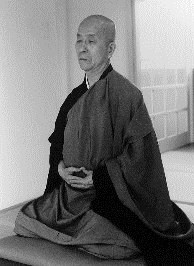
Gudō Wafu Nishijima
Gudō Wafu Nishijima was a Japanese Zen Buddhist priest and teacher, known for his extensive translations of Dōgen's works and his unique philosophical interpretation of the Four Noble Truths. He also authored several books on Buddhism and zazen, making Zen teachings accessible to a wider, international audience.