
Gudō Wafu Nishijima
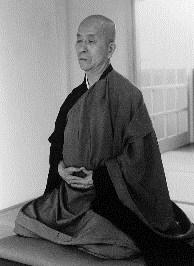
Gudō Wafu Nishijima was a Japanese Zen Buddhist priest and teacher, known for his extensive translations of Dōgen's works and his unique philosophical interpretation of the Four Noble Truths. He also authored several books on Buddhism and zazen, making Zen teachings accessible to a wider, international audience.
Key Facts
- ›He was a student of Zen teacher KōDō Sawaki and a successor to Rempo Niwa.
- ›Nishijima was ordained as a Buddhist priest in 1973 at the age of 54.
- ›He co-translated one of the complete English versions of Dōgen's ninety-five-fascicle Kana Shōbōgenzō.
- ›He developed a theory called 'three philosophies and one reality' to interpret the four Noble Truths and Dōgen's writings.
- ›Nishijima viewed Buddhism as 'just Humanism' and explained zazen in terms of balancing the autonomic nervous system.
- ›He founded Dogen Sangha International in 2007.
Important Relationships
- Rempo Niwa (preceptor and dharma heir)
- Mike Chodo Cross (student and dharma heir)
- Brad Warner (student and president of Dogen Sangha International)
- Dogen Sangha International
- Kana ShōBōGenzō
- Shinji ShōBōGenzō
- Fundamental Verses of the Middle Way
- How To Practice Zazen
- Handbook of Authentic Buddhism
- To Meet the Real Dragon
- Master Dogen's Shinji Shobogenzo
- A Heart To Heart Chat On Buddhism With Old Master Gudo
- Master Dogen's Shobogenzo
- Fundamental Wisdom of the Middle Way: Nagarjuna's Mulamadhyamakakarika
Tokyo University
KōDō Sawaki, DōGen, Nagarjuna
Japanese, English
Buddhist Priest Vows
About Gudō Wafu Nishijima
Gudō Wafu Nishijima (1919–2014) was a prominent Japanese Zen Buddhist priest and teacher. He is recognized for his significant contributions to the dissemination of Zen teachings, particularly through his extensive translations of classical Buddhist texts and his own authored works.
Life and Historical Context
Born in 1919, Nishijima became a student of the influential Zen teacher Kōdō Sawaki in the early 1940s. After the end of World War II, he earned a law degree from Tokyo University and pursued a career in finance. It was not until 1973, at the age of 54, that Nishijima was ordained as a Buddhist priest. His preceptor was Rempo Niwa, who later formally recognized Nishijima as one of his successors. Nishijima continued his professional life until 1979.
Teachings and Contributions
Nishijima began giving public lectures on Buddhism and zazen in the 1960s. By the 1980s, he was lecturing in English and attracted foreign students. A key contribution was his co-translation, with Dharma heir Mike Chodo Cross, of one of the three complete English versions of Dōgen's ninety-five-fascicle Kana Shōbōgenzō. He also translated Dōgen's Shinji Shōbōgenzō and Nagarjuna's 'Fundamental Verses of the Middle Way'.
Nishijima developed a philosophical framework known as 'three philosophies and one reality,' offering his interpretation of the Four Noble Truths and Dōgen's complex writings. He stated that 'Buddhism is just Humanism' and explained zazen as a practice for balancing the autonomic nervous system.
In 2007, he organized Dogen Sangha International with his students. Nishijima authored several books in Japanese and English, including 'How to Practice Zazen,' 'To Meet the Real Dragon,' and 'Master Dogen's Shobogenzo.' His book 'A Heart to Heart Chat on Buddhism with Old Master Gudo' was published posthumously in 2015.
Source: Wikipedia ↗
Frequently Asked Questions
Who was Gudō Wafu Nishijima?
Gudō Wafu Nishijima was a Japanese Zen Buddhist priest and teacher. He became a student of Kōdō Sawaki and later a successor to Rempo Niwa, a former head of the Soto Zen sect.
When was Gudō Wafu Nishijima ordained?
Nishijima was ordained as a Buddhist priest in 1973, when he was in his mid-fifties. He continued his professional career until 1979.
What are Gudō Wafu Nishijima's notable translations?
Nishijima is notable for translating Dōgen's ninety-five-fascicle Kana Shōbōgenzō and Shinji Shōbōgenzō into English. He also translated Nagarjuna's Fundamental Verses of the Middle Way.
What is Gudō Wafu Nishijima's 'three philosophies and one reality' theory?
This theory presents Nishijima's distinctive interpretation of the Four Noble Truths and the structure of Dōgen's writing. It describes issues from four perspectives: idealist/abstract, concrete/materialistic, a realistic synthesis, and reality itself.
What English-language books did Gudō Wafu Nishijima author or co-author?
His English-language books include 'How to Practice Zazen', 'To Meet the Real Dragon', 'Master Dogen's Shinji Shobogenzo', 'Master Dogen's Shobogenzo', and 'Fundamental Wisdom of the Middle Way'.
Related Buddhists

James Ishmael Ford
James Ishmael Ford is an American Zen Buddhist priest and retired Unitarian Universalist minister, recognized as a Zen master. He is known for co-founding Boundless Way Zen and establishing the Empty Moon Zen Network, contributing significantly to the establishment of Zen in North America. His work bridges Zen Buddhism and Unitarian Universalism, making him a notable figure in contemporary American Buddhism.

Bonnie Myotai Treace
Bonnie Myotai Treace is a Zen teacher and priest recognized as a lineage holder in the Soto tradition. She is the founder of Hermitage Heart and formerly served as the abbot of the Zen Center of New York City. Myotai Sensei is known for her extensive training and service within the Mountains and Rivers Order (MRO), where she received dharma transmission from John Daido Loori.
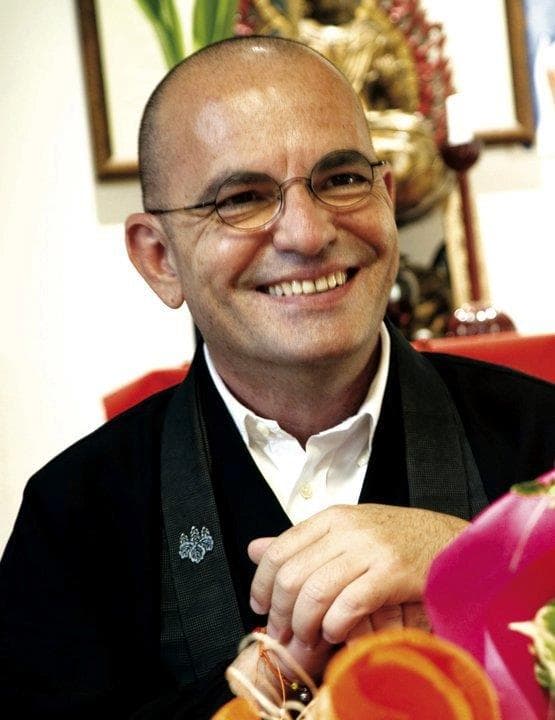
Carlo Zendo Tetsugen Serra
Carlo Zendo Tetsugen Serra is an Italian missionary Soto Zen master recognized as a Buddhist authority in Europe. He is known for founding the Sangha della foresta di Bambü, establishing monasteries in Italy, and integrating Zen Shiatsu practice into his teachings. Serra has also applied Zen principles to management and personal development, becoming a significant figure in bringing Buddhist traditions to Western society.