
Kūkai
Kūkai was a pivotal Japanese Buddhist monk, calligrapher, and poet who founded the esoteric Shingon school of Buddhism. He traveled to Tang China, where he studied under Huiguo and became a master of Chinese Vajrayana Buddhism. Upon his return to Japan, Kūkai established Shingon, deeply influencing Japanese religious and cultural life, and is revered as a bodhisattva.
Key Facts
- ›Founded the Shingon school of Buddhism in Japan.
- ›Studied Tangmi (Chinese Vajrayana Buddhism) in China under Huiguo.
- ›Attributed with the invention of the kana syllabary and the Iroha poem.
- ›Selected Mount Kōya as a holy site and established the Kongōbu-ji temple there.
- ›Oversaw public works, including the restoration of Manno Reservoir.
- ›Authored significant works such as the Jūjūshinron (Treatise on the ten Stages of the Development of Mind).

Important Relationships
- Emperor Kanmu
- Emperor Heizei
- Emperor Saga
- Emperor Junna
- Saichō
- Fujiwara no Kadanomaro
- Prajñā (Gandharan pandit)
- JūJūShinron
- Hizō HōYaku
- Sangō Shiiki
- Attaining Enlightenment In This Very Existence
- the Meaning of Sound, Word, Reality
- Meanings of the Word HūM
Mount KōYa, Zentsū-Ji Temple, Nara, Heian, Chang'An, Ximing Temple, Qinglong Monastery, Takao-San Temple, Tō-Ji, KongōBu-Ji
Huiguo, āKāśAgarbha
Classical Chinese, Sanskrit
About Kūkai
Kūkai: Founder of Shingon Buddhism
Kūkai (774–835 CE), born Saeki no Mao and posthumously known as Kōbō Daishi, was a towering figure in Japanese Buddhism. He was a monk, calligrapher, and poet who founded the esoteric Shingon school, a significant branch of Vajrayana Buddhism indigenous to Japan. His life and teachings profoundly shaped Japanese religious and cultural landscapes, with many legends and devotional practices continuing to this day.
Early Life and Education
Born into the aristocratic Saeki family in Sanuki province on the island of Shikoku, Kūkai initially pursued classical studies in Confucianism and Daoism. However, he grew disillusioned with these paths and developed a deep interest in Buddhism, particularly esoteric practices involving the bodhisattva Ākāśagarbha (Kokūzō). His quest for deeper understanding of Buddhist texts, especially the Mahavairocana Tantra, led him to resolve to travel to China.
Study in Tang China and the Founding of Shingon
In 804, Kūkai joined a government-sponsored expedition to China. There, he met the monk Huiguo at Qinglong Monastery in Chang'an, who initiated him into the intricacies of Chinese Esoteric Buddhism (Tangmi). Within months, Kūkai became a master of this lineage, receiving transmissions that he was meant to spend two decades acquiring. Upon his return to Japan in 806, Kūkai brought back a vast collection of esoteric texts and teachings, distinguishing them from existing Buddhist traditions.
Establishing Shingon and Public Works
With imperial support from Emperors Saga and Junna, Kūkai established the Shingon school, officially recognized and named by imperial decree. He was given control of Tō-ji temple in Kyoto, transforming it into a major center for Shingon practice. Beyond his religious endeavors, Kūkai was also recognized for his administrative and engineering skills. He oversaw the successful restoration of the Manno Reservoir and founded the School of Arts and Sciences (Shugei Shuchi-in), which was open to all social classes.
Mount Kōya and Legacy
Kūkai selected Mount Kōya as a sacred mountain retreat, envisioning it as a physical representation of the Shingon mandalas. He established the monastery Kongōbu-ji there, which remains the spiritual headquarters of the Shingon school. Even after his death in 835, Kūkai's influence persisted. He is revered as a bodhisattva, and pilgrims undertake the Shikoku Pilgrimage in his honor. Legends attribute to him the invention of the kana syllabary and the Iroha poem, further cementing his place in Japanese cultural history. His mausoleum at Mount Kōya is a significant site of devotion, where followers believe he remains in eternal meditative trance.
Source: Wikipedia ↗
Frequently Asked Questions
Who was Kūkai?
Kūkai was a highly influential Japanese Buddhist monk, calligrapher, and poet. He is most renowned for founding the esoteric Shingon school of Buddhism in Japan.
What is Kūkai best known for?
Kūkai is best known for establishing the Shingon school, which is the Japanese branch of Vajrayana Buddhism. He is also credited by legend with inventing the kana syllabary used in Japanese writing.
Where did Kūkai study Buddhism?
Kūkai traveled to China in 804 and studied Tangmi (Chinese Vajrayana Buddhism) under the monk Huiguo at Qinglong Monastery in Chang'an (modern-day Xi'an).
What is Mount Kōya's significance to Kūkai?
Kūkai chose Mount Kōya as a sacred site for his monastic community and retreat. He envisioned it as a representation of the Mandala of the Two Realms, central to Shingon Buddhism, and founded the Kongōbu-ji temple there.
When did Kūkai live?
Kūkai lived from July 27, 774 CE to April 22, 835 CE.
Related Buddhists
Ryōkan
Ryōkan was a Sōtō Zen Buddhist monk and hermit known for his poetry and calligraphy, which embodied the essence of Zen life. Despite his unconventional approach, he was deeply admired for his simplicity, humor, and compassion. His life and teachings continue to inspire those interested in Zen philosophy and practice.
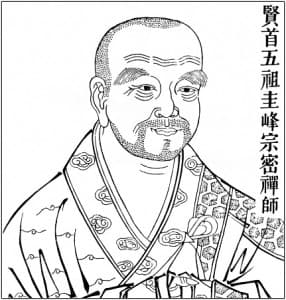
Guifeng Zongmi
Guifeng Zongmi was a highly influential Tang dynasty Chinese Buddhist monk, scholar, and patriarch of both the Huayan and Chan schools. He is renowned for his efforts to harmonize various Buddhist teachings, particularly Chan and Huayan, with Taoism and Confucianism, aiming to create a comprehensive spiritual vision. His extensive writings serve as a crucial resource for understanding the diverse Chan schools of his era.
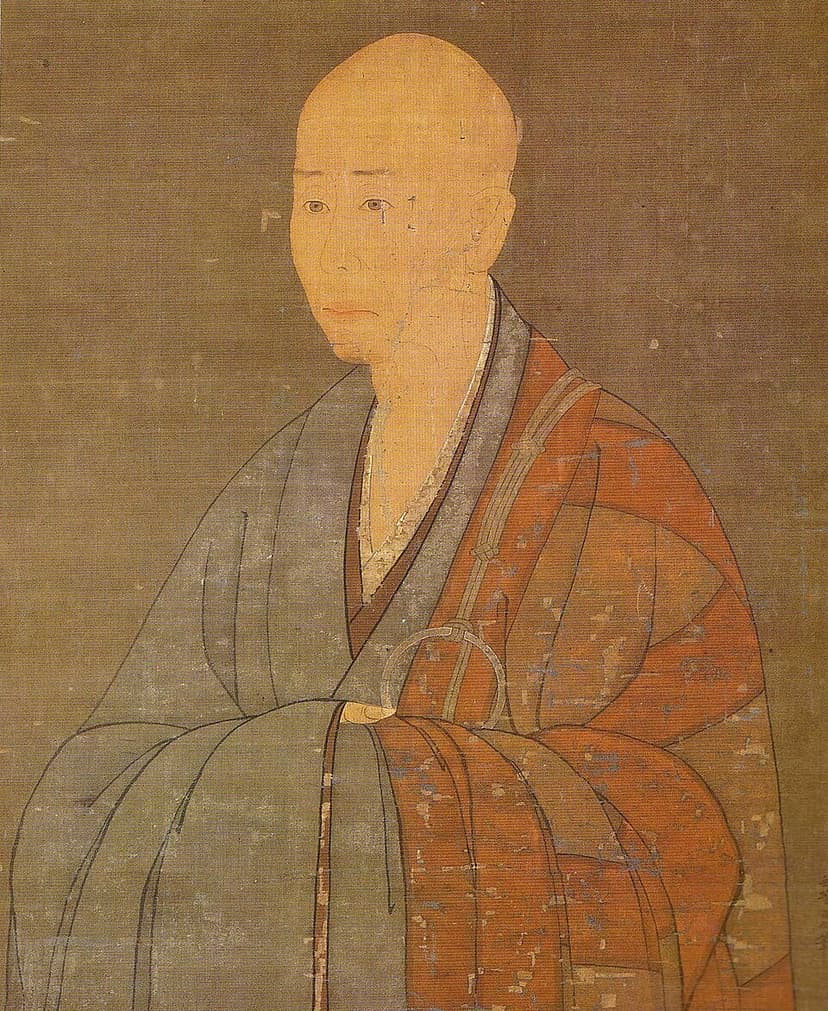
Musō Soseki
Musō Soseki was a prominent Rinzai Zen Buddhist monk, teacher, calligrapher, poet, and garden designer in 14th-century Japan. Revered as the most famous monk of his time, he received the honorific "Musō Kokushi" from Emperor Go-Daigo. He is celebrated for his significant contributions to Zen Buddhism, the development of the Five Mountain System, and the art of Japanese garden design, notably introducing concepts like "Zanzanjosui" and karesansui.