
Hakuun Yasutani
Japan·Sōtō Zen, Sanbō Kyōdan·Male·20th century
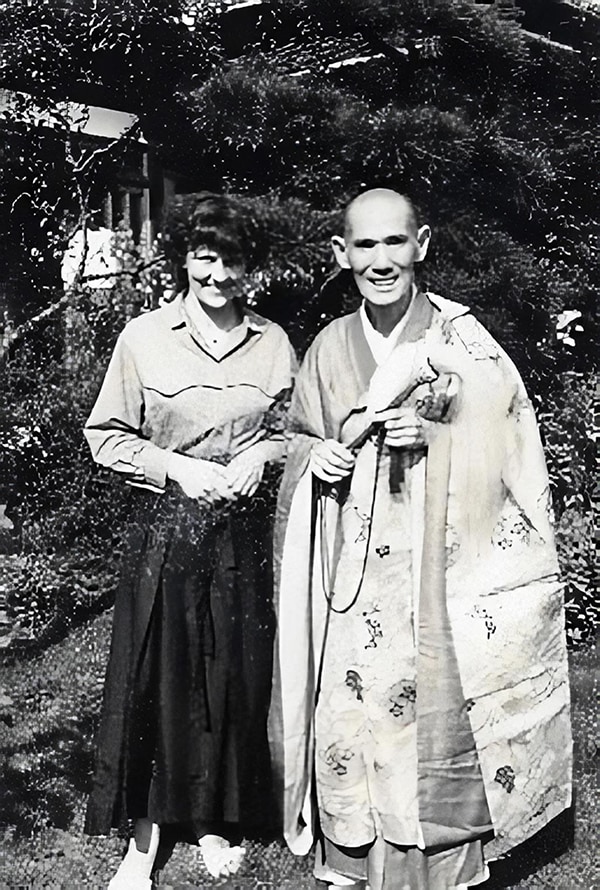
Hakuun Yasutani (1885–1973) was a Sōtō Zen priest and the founder of the Sanbo Kyodan, a lay Japanese Zen group. He is recognized as a principal force in establishing Western lay Zen practice through his students Philip Kapleau and Taizan Maezumi. Yasutani emphasized the importance of kensho, or initial insight, as a foundation for genuine Zen practice.
Key Facts
- ›Founded the Sanbo Kyodan (Fellowship of the three Treasures) in 1954 to train lay practitioners.
- ›Attained kensho in 1927 and received Dharma transmission from his teacher Harada Daiun Sogaku in 1943.
- ›Authored "Introductory Lectures on Zen Training" and a "Commentary on the Koan Mu."
- ›His teachings and lectures were influential in the translation and dissemination of Zen practice to the West, notably through Philip Kapleau's "the three Pillars of Zen."
- ›Criticized the Sōtō sect in Japan for what he perceived as an overemphasis on ritual and a lack of experiential realization.
- ›His political views, including support for Japanese militarism, have been a subject of significant discussion and criticism.
Important Relationships
- Philip Kapleau
- Taizan Maezumi
- Bokusan Nishiari
- Karlfried Graf Dürckheim
- Kubota Ji'un
- Introductory Lectures On Zen Training
- Commentary On the Koan Mu
- Flowers Fall: A Commentary On Zen Master Dogen's Genjokoan
Shizuoka Prefecture, Japan, Fukuji-In, Daichuji, Teishinji, Denshinji, Zuigan-Ji
Harada Daiun Sogaku
Japanese
Ordained As A Priest, Dharma Transmission In the Soto-Tradition
Influential Figure In Western Zen
About Hakuun Yasutani
Hakuun Yasutani: Founder of Sanbō Kyōdan and Pioneer of Western Zen
Hakuun Yasutani (1885–1973) was a prominent Sōtō Zen priest and the visionary founder of the Sanbō Kyōdan, a lay Zen community that significantly impacted the development of Zen practice in the West. Born Ryōkō Yasutani in Shizuoka Prefecture, Japan, his early life was marked by poverty, leading to his adoption and later placement in Buddhist temples from a young age. He was ordained at thirteen at Teishinji, a Sōtō temple, receiving the name Hakuun, meaning "white cloud."
Life and Spiritual Training
Yasutani's path to becoming a Zen master was unconventional. Alongside his monastic training, he pursued secular education and worked as an elementary school teacher and principal, marrying and raising five children. His formal Zen training intensified in 1925 when he began koan study under Harada Daiun Sogaku, a Sōtō Rōshi who had also completed a Rinzai koan curriculum. Yasutani achieved kensho, an initial awakening experience, in 1927 and received Dharma transmission from Harada in 1943. He later criticized what he perceived as a decline in experiential practice within the established Sōtō sect in Japan.
Founding the Sanbō Kyōdan and Western Influence
In 1954, at the age of 69, Yasutani established the Sanbō Kyōdan (Fellowship of the Three Treasures) with the primary aim of training lay practitioners. This move marked a departure from traditional monastic focus. His influence extended globally through his students, notably Philip Kapleau, who compiled "The Three Pillars of Zen." This seminal work, published in 1965, introduced Yasutani's "Introductory Lectures on Zen Training" and his "Commentary on the Koan Mu" to a Western audience, making them among the first accessible instructions on zazen in English. His student Taizan Maezumi also played a crucial role in establishing Zen in the United States.
Controversies and Legacy
Yasutani's legacy is complex, as his strong support for Japanese militarism and nationalist ideologies during the mid-20th century has been widely documented and criticized. This aspect of his life has led to debates about the nature of enlightenment and the relationship between spiritual attainment and political views. Despite these controversies, Hakuun Yasutani remains a pivotal figure in the transmission of Zen Buddhism to the West, with the Sanbō Kyōdan and its affiliated lineages continuing to influence Zen practitioners worldwide.
Source: Wikipedia ↗
Frequently Asked Questions
Who was Hakuun Yasutani?
Hakuun Yasutani was a Sōtō Zen priest and the founder of the Sanbo Kyodan, a lay Zen community established in Japan. He played a significant role in introducing Zen practice to Westerners.
What is the Sanbo Kyodan?
The Sanbo Kyodan, meaning "Fellowship of the Three Treasures," is a lay Zen group founded by Hakuun Yasutani in 1954. It emphasizes training for lay practitioners and incorporates elements of both Sōtō and Rinzai traditions.
How did Yasutani influence Zen in the West?
Yasutani's students, particularly Philip Kapleau and Taizan Maezumi, were instrumental in bringing his teachings to the West. His "Introductory Lectures on Zen Training" were among the first instructions on zazen published in English, appearing in Kapleau's influential book "The Three Pillars of Zen."
What was Yasutani's teaching style?
Yasutani placed great emphasis on kensho, or initial insight into one's true nature, as the starting point for genuine practice. His teaching style incorporated Rinzai koan study within a Sōtō framework.
What is known about Yasutani's political views?
Historical accounts suggest Yasutani held strong right-wing sympathies, supported Japanese militarism and anti-communist ideologies, and was influenced by Nazi propaganda. These views have led to criticism and apologies from within the Sanbo Kyodan.
Related Buddhists
Eido Tai Shimano
Eido Tai Shimano was a Rinzai Zen Buddhist priest and the founding abbot of the New York Zendo Shobo-Ji and Dai Bosatsu Zendo Kongo-Ji monastery in New York. He was a significant figure in the dissemination of Buddhism in the West, receiving a Buddhism Transmission Award in 2004. However, his tenure was marked by revelations of sexual relationships with female students, leading to his resignation as abbot and subsequent controversies.
Gudō Wafu Nishijima
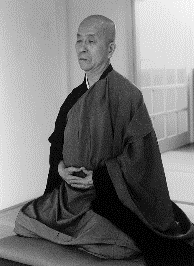
Gudō Wafu Nishijima was a Japanese Zen Buddhist priest and teacher, known for his extensive translations of Dōgen's works and his unique philosophical interpretation of the Four Noble Truths. He also authored several books on Buddhism and zazen, making Zen teachings accessible to a wider, international audience.

Choan Bertelsen Roshi
Choan Bertelsen Roshi, also known by several other names including Choan Denko Mokudo Bertelsen, Egmund Sommer, Denko Møller, and John Mortensen, is a Rinzai Zen Buddhist priest and teacher. He is recognized for founding Cho-An, the first Zen temple building in Denmark, and for his role within the American Zen Teachers Association. Bertelsen received Dharma transmission in 2002.