
Ole Nydahl
Ole Nydahl, also known as Lama Ole, was a prominent lama within the Karma Kagyu school of Tibetan Buddhism, known for bringing Mahamudra teachings to the West. Alongside his wife Hannah, he founded Diamond Way Buddhism, an organization that established over 600 centers globally for lay practitioners. Nydahl authored numerous books and lectured extensively, aiming to make Buddhist practices accessible in Western languages and contexts.
Key Facts
- ›Co-founded Diamond Way Buddhism with his wife Hannah Nydahl, establishing over 600 centers worldwide.
- ›Toured globally from the early 1970s, giving lectures and meditation courses on Mahamudra teachings.
- ›Authored more than 20 books on Diamond Way Vajrayana Buddhism, translated into multiple languages.
- ›Received teachings from prominent Tibetan lamas including the 16th Karmapa, the 14th Shamarpa, and Kalu Rinpoche.
- ›Translated Buddhist meditation practices and names into Western languages to foster deeper understanding.
- ›Known for his role in the Karmapa controversy, supporting Trinley Thaye Dorje as the 17th Karmapa.

Important Relationships
- Hannah Nydahl (wife and co-founder)
- Alexandra Munoz Barbosa (former wife)
- Anne Behrend (wife)
- Diamond Way Buddhism
- The Diamond Way Buddhism Foundation
- the Great Seal: Mahamudra View of Diamond Way Buddhism
- the Way Things Are
- Entering the Diamond Way
- Buddha and Love
- Fearless Death
Copenhagen, Nepal, Himalayas, Europe, Russia, United States
Rangjung Rigpe Dorje, Mipham Chokyi Lodro, Lopon Tsechu Rinpoche, Kalu Rinpoche, Walter Evans-Wentz
German, English, Danish
Bodhisattva Vows
Lama, Lay Teacher
About Ole Nydahl
Ole Nydahl (1941–2026)
Ole Nydahl, widely known as Lama Ole, was a significant figure in the dissemination of Tibetan Buddhism in the West, particularly within the Karma Kagyu lineage. Born in Denmark, Nydahl, alongside his wife Hannah, became instrumental in founding Diamond Way Buddhism. This organization, established from the early 1970s, grew to encompass over 600 centers across the globe, dedicated to making Buddhist teachings and practices accessible to lay practitioners.
Buddhist Education and Teachers
Nydahl's journey into Buddhism began in 1968 when he and his wife traveled to Nepal. There, they encountered their first Buddhist teacher, Lopon Tsechu Rinpoche, and subsequently met the 16th Karmapa, Rangjung Rigpe Dorje, the head of the Karma Kagyu school. The Nydahls became devoted students, studying and meditating in the Himalayas. They received teachings and empowerments from the Karmapa, the 14th Shamarpa, the 3rd Jamgon Kongtrul, Kalu Rinpoche, and other esteemed lamas. Nydahl learned about Vajrayana Buddhism and Mahamudra, and also received teachings on Gampopa's Jewel Ornament of Liberation and took Bodhisattva vows from the Shamarpa.
Teaching and Diamond Way Buddhism
Upon returning to Europe in 1972, the 16th Karmapa asked Ole and Hannah Nydahl to establish Buddhist centers and begin teaching. They started in Denmark, then expanded to Germany and other countries. Diamond Way Buddhism was later formalized to provide structure and continuity for these centers, especially during the Karmapa succession controversy. Nydahl's approach emphasized translating Buddhist texts and meditation practices into Western languages, believing this was crucial for Buddhism to take root in the West. He traveled extensively for over four decades, often lecturing and conducting meditation courses daily, until his health necessitated a reduced schedule in 2017. His teachings primarily focused on Mahamudra, the nature of mind, and previously on conscious dying (phowa).
Influence and Controversies
Ole Nydahl is recognized for his substantial influence on the Buddhist practice scene, particularly in Denmark, and is estimated to have adherents numbering in the tens of thousands worldwide. His efforts contributed to making the Karmapa's name renowned and establishing numerous dharma centers. However, Nydahl's work and teachings also generated controversy. He was criticized for presenting a "watered-down" or "instant Buddhism," and for his strong political views and rhetoric, particularly his critical stance on Islam. His role in the Karmapa controversy, where he supported Trinley Thaye Dorje, also led to criticism from opposing factions within the Karma Kagyu lineage. Despite these challenges, Nydahl continued to teach and lead the Diamond Way organization until his death in 2026.
Source: Wikipedia ↗
Frequently Asked Questions
Who was Ole Nydahl?
Ole Nydahl was a lama in the Karma Kagyu school of Tibetan Buddhism who became known for teaching Mahamudra and establishing Diamond Way Buddhism. He traveled extensively, lecturing and organizing meditation centers globally.
What is Diamond Way Buddhism?
Diamond Way Buddhism is a worldwide Karma Kagyu Buddhist organization founded by Ole and Hannah Nydahl. It comprises over 600 centers dedicated to lay practitioners, offering access to Vajrayana meditation methods with practices translated into Western languages.
Who were Ole Nydahl's main Buddhist teachers?
Ole Nydahl's main teachers included the 16th Karmapa, Rangjung Rigpe Dorje, the 14th Shamarpa, Mipham Chokyi Lodro, and Lopon Tsechu Rinpoche. He also received teachings from other notable lamas such as Kalu Rinpoche and Dilgo Khyentse.
What kind of teachings did Ole Nydahl primarily offer?
Initially, Ole Nydahl taught conscious dying (phowa) and other Buddhist meditation practices. More recently, his focus shifted to Mahamudra teachings, which are explanations on the nature of mind.
What role did Ole Nydahl play in the Karmapa controversy?
Ole Nydahl supported his teacher Shamar Rinpoche's recognition of Trinley Thaye Dorje as the 17th Karmapa. This led to most European Karma Kagyu centers affiliated with Diamond Way Buddhism supporting Trinley Thaye Dorje.
What controversies were associated with Ole Nydahl?
Ole Nydahl faced criticism for his sometimes superficial presentations of Buddhism, his political views, particularly his strong criticism of Islam, and his relationships with women. He was also criticized for his role in the Karmapa controversy.
Related Buddhists
Choan Bertelsen Roshi
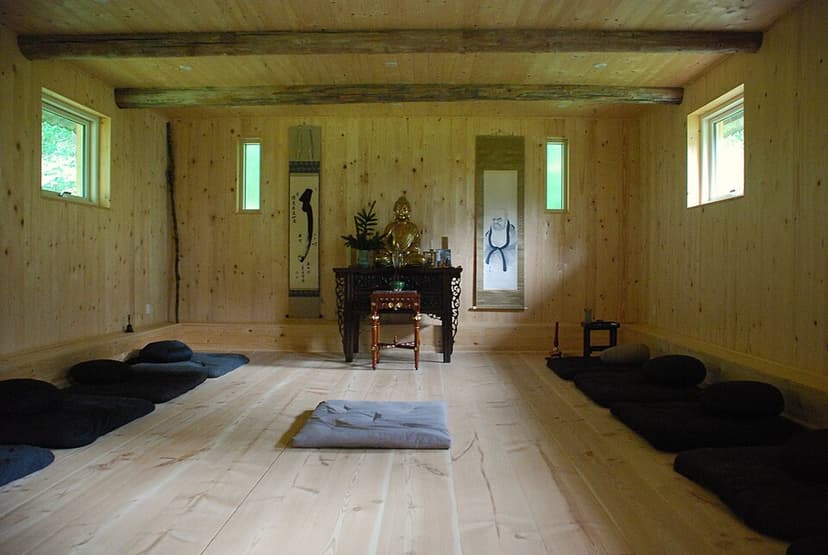
Choan Bertelsen Roshi, also known by several other names including Choan Denko Mokudo Bertelsen, Egmund Sommer, Denko Møller, and John Mortensen, is a Rinzai Zen Buddhist priest and teacher. He is recognized for founding Cho-An, the first Zen temple building in Denmark, and for his role within the American Zen Teachers Association. Bertelsen received Dharma transmission in 2002.
Godwin Samararatne
Godwin Samararatne was a prominent lay meditation teacher from Sri Lanka, known for his extensive teaching career at the Nilambe Meditation Centre near Kandy. He significantly influenced individuals worldwide through his meditation retreats and therapeutic work, with many attesting to the profound impact of his teachings after his death. Samararatne also collaborated with researcher Ian Stevenson on reincarnation studies.
Rangjung Rigpe Dorje, 16th Karmapa
Rangjung Rigpe Dorje was the 16th Gyalwa Karmapa and the spiritual leader of the Karma Kagyu lineage of Tibetan Buddhism. Known as the "King of the Yogis," he was a prominent "living Buddha" instrumental in transmitting Tibetan Vajrayana Buddhism to the West. His life was marked by the recognition process, extensive education across various Buddhist schools, and efforts to preserve Tibetan culture amidst political upheaval.