
Nyogen Senzaki
Nyogen Senzaki was a Rinzai Zen monk and one of the most significant proponents of Zen Buddhism in the United States during the 20th century. He played a crucial role in introducing Zen meditation and philosophy to a Western audience, establishing the "Floating Zendo" model of teaching. Senzaki's work helped lay the groundwork for the growth of Zen Buddhism in America.
Key Facts
- ›Born in Japan in 1876, Nyogen Senzaki became a Rinzai Zen monk.
- ›He moved to the United States in 1905 with his teacher Soyen Shaku.
- ›Senzaki developed the "Floating Zendo" concept to teach Zen meditation in rented halls and apartments.
- ›He compiled the influential collection "101 Zen Stories".
- ›During World War II, he was interned in a Japanese-American relocation camp.
- ›Notable students included Robert Aitken and Samuel L. Lewis.
Important Relationships
- Soyen Shaku
- D. T. Suzuki
- Kin Tanahashi
- Soen Nakagawa
- Robert Aitken
- Samuel L. Lewis
- 101 Zen Stories
- Buddhism and Zen
- the Iron Flute
- Zen Flesh, Zen Bones
- Eloquent Silence: Nyogen Senzaki's Gateless Gate
Fukaura, Aomori Prefecture, Japan, Kamakura, Japan, San Francisco, California, Usa, Los Angeles, California, Usa, Heart Mountain, Wyoming, Usa
Soyen Shaku, Matsuo Bashō, Tokusan, Benjamin Franklin, Friedrich FröBel
English, Japanese
Monk Vows
Proponent
About Nyogen Senzaki
Nyogen Senzaki (1876–1958) was a Rinzai Zen monk who significantly contributed to the spread of Zen Buddhism in the United States during the 20th century. Born Aizo Senzaki in Japan, his early life is marked by unclear details, with some accounts suggesting he was adopted.
Early Life and Training
Senzaki's mother died when he was five, and he was raised by his grandfather at a Pure Land temple, where he began studying classical Chinese texts. His grandfather's teachings emphasized living by Buddhist ideals away from worldly gain and loss. After his grandfather's death at age 16, Senzaki briefly considered medical school and was influenced by figures like Benjamin Franklin. By 18, he had read the entire Tripitaka, and an encounter with the story of Tokusan burning Buddhist commentaries led him to commit to becoming a Zen Buddhist monk. In 1895, at age 19, he was ordained as Nyogen at a Soto Zen temple, though he preferred Rinzai. He later studied Zen under the Rinzai master Soyen Shaku at Engaku-ji in Kamakura, enduring harsh training methods and a bout of tuberculosis.
Introduction to America and the "Floating Zendo"
In 1905, Senzaki accompanied his teacher, Soyen Shaku, to the United States to give lectures on Buddhism. Dissatisfied with Japanese Zen practices and politics, Senzaki chose to remain in America after Soyen Shaku departed. He supported himself through various jobs and dedicated his spare time to studying English and reading Western philosophy, including Kant and Emerson.
Around 1922, Senzaki began teaching Zen meditation, developing his innovative "Floating Zendo" approach. This method involved renting spaces in San Francisco and later Los Angeles to hold practice sessions, moving from place to place. His early materials often consisted of a picture of Manjusri Bodhisattva. During this period, he connected with figures like D. T. Suzuki and later, through Kin Tanahashi, began a significant correspondence with the Japanese Rinzai monk Soen Nakagawa.
Internment and Later Life
Following the attack on Pearl Harbor, Senzaki, as a Japanese-American, was among those relocated to internment camps, spending the duration of World War II at Heart Mountain, Wyoming. After the war, he re-established his "Floating Zendo" in Los Angeles and continued to dedicate his life to teaching Zen. His students included influential figures such as Robert Aitken and Samuel L. Lewis. Senzaki passed away in 1958, with his reported last words emphasizing the importance of remembering the Dharma.
Source: Wikipedia ↗
Frequently Asked Questions
When and where was Nyogen Senzaki born?
Nyogen Senzaki was born on October 5, 1876, in Fukaura, Aomori Prefecture, Japan. Details of his early life are not entirely clear, with some accounts suggesting he was adopted.
What is Nyogen Senzaki known for in the United States?
Nyogen Senzaki is known for being a leading proponent of Zen Buddhism in the United States during the 20th century. He was instrumental in introducing Zen meditation and philosophy to an American audience through his "Floating Zendo" teaching method.
What was the "Floating Zendo"?
The "Floating Zendo" was Nyogen Senzaki's unique approach to teaching Zen meditation. He would rent halls or apartments in various locations, moving his practice and teachings from place to place, often with minimal material possessions.
Who were some of Nyogen Senzaki's notable students?
Among Nyogen Senzaki's students were Robert Aitken, who became a significant modern Western Zen teacher, and Samuel L. Lewis, who later became known as a prominent Sufi and Zen teacher.
What are some of Nyogen Senzaki's notable works?
Nyogen Senzaki is credited with compiling the influential "101 Zen Stories". He also co-authored works such as "Buddhism and Zen" and "The Iron Flute".
Related Buddhists

Keido Fukushima
Keidō Fukushima was a prominent Japanese Rinzai Zen master and head abbot of Tōfuku-ji in Kyoto. He significantly influenced the development of Rinzai Zen in the West by accepting Western students, including women, and conducting extensive teaching tours and retreats in the United States. Fukushima was also recognized for his authority in calligraphy and his efforts to support the reconstruction of historical monasteries in China.
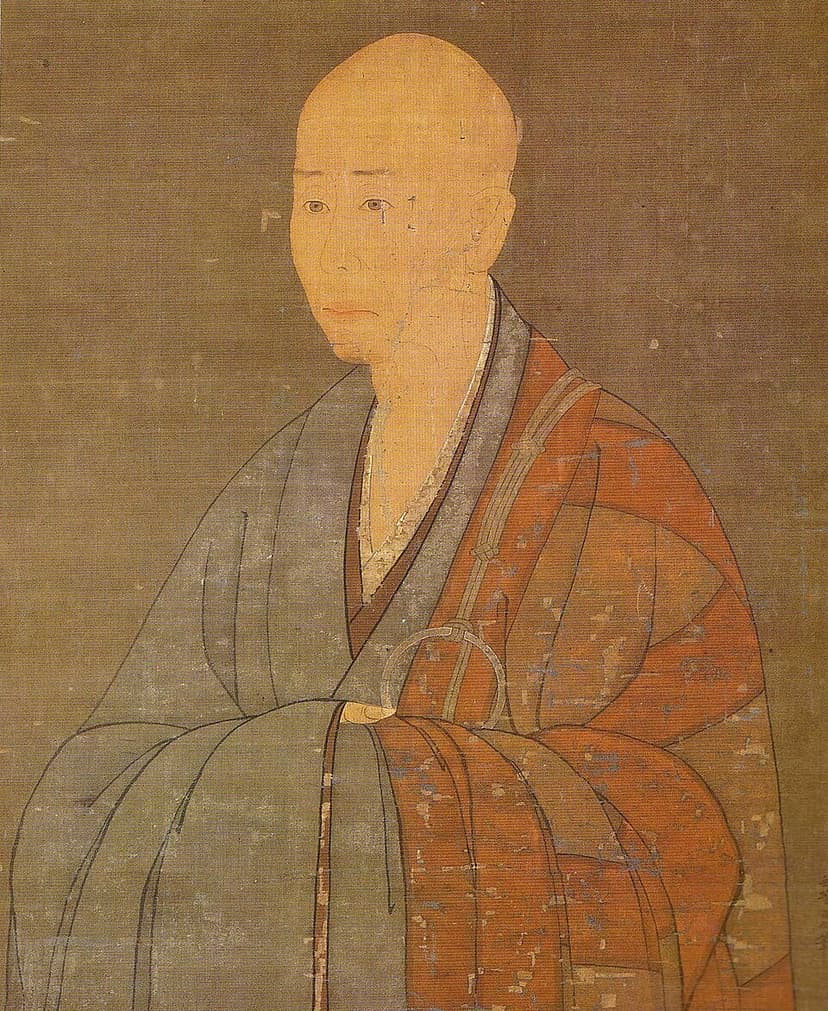
Musō Soseki
Musō Soseki was a prominent Rinzai Zen Buddhist monk, teacher, calligrapher, poet, and garden designer in 14th-century Japan. Revered as the most famous monk of his time, he received the honorific "Musō Kokushi" from Emperor Go-Daigo. He is celebrated for his significant contributions to Zen Buddhism, the development of the Five Mountain System, and the art of Japanese garden design, notably introducing concepts like "Zanzanjosui" and karesansui.
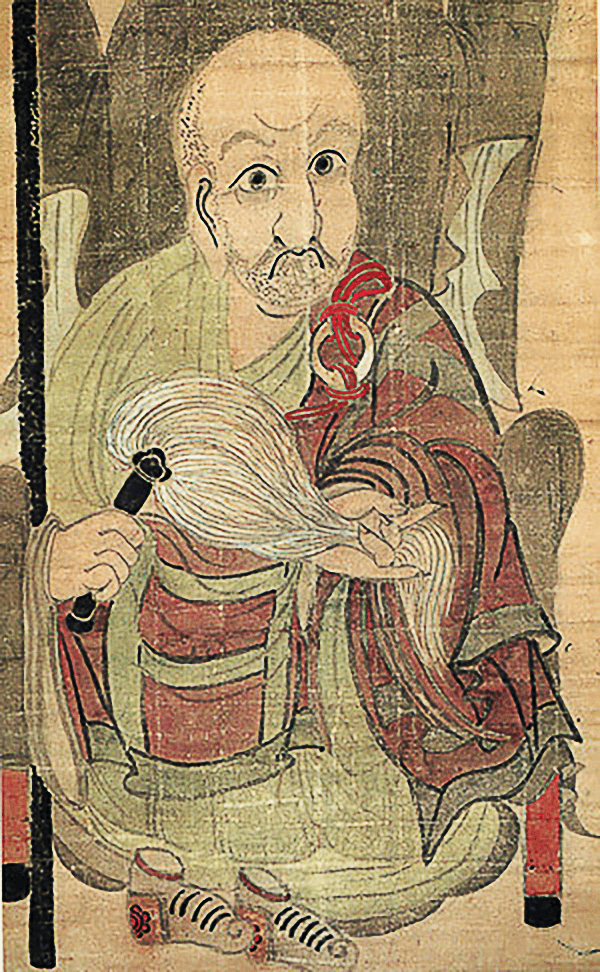
Hakuin Ekaku
Hakuin Ekaku was a pivotal figure in Japanese Zen Buddhism, revitalizing the Rinzai school through rigorous training that integrated meditation and koan practice. He emphasized the importance of bodhicitta, or working for the benefit of others, as the ultimate goal of Zen training, even though he never formally received dharma transmission. Hakuin's teachings and methods significantly shaped modern Zen practice.