
D. T. Suzuki
Japan·Ōtani University (Jōdo Shinshū)·Male·20th century
Daisetz Teitaro Suzuki was a prominent Japanese essayist, philosopher, and religious scholar, renowned for his extensive work on Buddhism, particularly Zen and Shin traditions. He was instrumental in introducing and popularizing these philosophies, along with East Asian thought in general, to Western audiences through his writings and lectures. Suzuki's career spanned decades, including professorships in Japan and extensive teaching engagements at Western universities.
Key Facts
- ›Born Teitarō Suzuki on October 18, 1870, in Kanazawa, Japan.
- ›Authored numerous influential works on Zen and Shin Buddhism, including 'Essays in Zen Buddhism' and 'Zen and Japanese Culture'.
- ›Instrumental in translating and introducing Eastern philosophies, especially Zen, to the West.
- ›Held professorships at Ōtani University in Japan and lectured at Western universities like Columbia University.
- ›Nominated for the Nobel Peace Prize in 1963.
- ›Died on July 12, 1966, at the age of 95.

Important Relationships
- Beatrice Erskine Lane Suzuki (wife)
- Paul Carus (collaborator)
- Soyen Shaku (Zen master)
- Theosophical Society Adyar
Essays In Zen Buddhism, Studies In Zen Buddhism, Manual of Zen Buddhism, Zen and Japanese Culture, Outlines of Mahayana Buddhism, the Training of the Zen Buddhist Monk, the Eastern Buddhist
Kanazawa, Ishikawa Prefecture, Kamakura, Lasalle, Illinois, Kyoto, ōTani University, Columbia University
Soyen Shaku, Paul Carus, Imakita Kosen
English, Japanese, Chinese, Sanskrit, Pali
Monk's Life
About D. T. Suzuki
Daisetz Teitaro Suzuki
Daisetz Teitaro Suzuki (1870–1966) was a highly influential Japanese essayist, philosopher, and scholar of religion, most renowned for his pivotal role in introducing Zen Buddhism and broader East Asian philosophy to the Western world. Born Teitarō Suzuki in Kanazawa, Japan, he later received the Buddhist name Daisetsu, meaning "Great Humility," from his Zen master Soyen Shaku. Despite an impoverished upbringing, Suzuki possessed a sharp intellect that led him to explore various religious traditions. He pursued his studies at Waseda University and the University of Tokyo, mastering languages such as Sanskrit and Pali.
Life and Work
Suzuki's intellectual journey was significantly shaped by his association with American scholar Paul Carus, with whom he lived and collaborated in Illinois, translating Eastern spiritual texts. This period marked the beginning of his extensive career as a writer in English. He also dedicated himself to Zen practice at Engaku-ji in Kamakura. Later, Suzuki held a professorship at Ōtani University in Kyoto, a Japanese university affiliated with the Ōtani School of Jōdo Shinshū. It was there, with his wife Beatrice Lane Suzuki, that he co-founded the Eastern Buddhist Society, which publishes the scholarly journal The Eastern Buddhist and fosters academic discourse on Mahayana traditions.
Contributions and Legacy
Suzuki's prolific writings, including seminal works like "Essays in Zen Buddhism," "Zen and Japanese Culture," and "The Training of the Zen Buddhist Monk," were instrumental in shaping Western understanding and perception of Zen. He presented Zen as a practical religion emphasizing direct experience, a concept that resonated with Western audiences familiar with mysticism. While celebrated for his ability to bridge cultural divides, Suzuki has also faced criticism for presenting an idealized view of Zen and for his interpretations of Buddhist texts, sometimes taken out of their original social and ethical contexts. Despite these scholarly debates, Suzuki's influence on the global dissemination of Buddhist thought is undeniable, leading to his nomination for the Nobel Peace Prize in 1963.
Source: Wikipedia ↗
Frequently Asked Questions
Who was D. T. Suzuki?
D. T. Suzuki was a Japanese scholar, essayist, and translator recognized as a leading authority on Buddhism, particularly Zen and Shin traditions. He dedicated his life to bridging Eastern and Western philosophical understanding.
What is D. T. Suzuki most known for?
Suzuki is most celebrated for his role in introducing Zen Buddhism and other East Asian philosophies to the Western world. His prolific writings and lectures made complex Buddhist concepts accessible to international audiences.
What were D. T. Suzuki's major contributions to Buddhist scholarship?
Suzuki made significant contributions by translating and interpreting classical Buddhist texts, particularly Chan (Zen) literature from China. He also explored the philosophical underpinnings of Zen and its influence on Japanese culture, as well as the Shin Buddhist tradition.
Where did D. T. Suzuki teach?
Suzuki held a professorship at Ōtani University in Japan for many years. He also spent considerable time lecturing and teaching at various universities in the United States and Europe, including Columbia University.
What Buddhist traditions did D. T. Suzuki focus on?
While widely known for his work on Zen Buddhism, Suzuki also had a deep interest in and wrote extensively about Jōdo Shinshū (True Pure Land Buddhism), the tradition of his mother's upbringing.
Related Buddhists

Fazang
Fazang was a prominent Sogdian-Chinese Buddhist scholar and religious leader of the Tang dynasty, recognized as the third patriarch and a key figure in the development of the Huayan school of East Asian Buddhism. He was highly influential at the Chinese Imperial Court, known for his translations and original philosophical works, most notably the "Essay on the Golden Lion," which elucidated Huayan teachings.
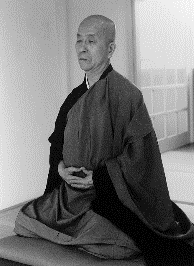
Gudō Wafu Nishijima
Gudō Wafu Nishijima was a Japanese Zen Buddhist priest and teacher, known for his extensive translations of Dōgen's works and his unique philosophical interpretation of the Four Noble Truths. He also authored several books on Buddhism and zazen, making Zen teachings accessible to a wider, international audience.
Ashin Thittila
Ashin Thittila was a distinguished Burmese Theravada Buddhist monk, scholar, and meditation teacher. He is renowned for being a pioneer in Buddhist missionary work abroad, notably spending extended periods in England. His contributions include translating key Abhidhamma texts into English and lecturing widely on Buddhist philosophy and meditation across multiple continents.