
Fazang
China·Huayan·Male·7th century
Fazang was a prominent Sogdian-Chinese Buddhist scholar and religious leader of the Tang dynasty, recognized as the third patriarch and a key figure in the development of the Huayan school of East Asian Buddhism. He was highly influential at the Chinese Imperial Court, known for his translations and original philosophical works, most notably the "Essay on the Golden Lion," which elucidated Huayan teachings.
Key Facts
- ›Third patriarch of the Huayan school of East Asian Buddhism.
- ›Known for his philosophical work, particularly the "Essay on the Golden Lion."
- ›Skillful translator of Sanskrit Buddhist texts into Chinese.
- ›Held significant influence at the Tang dynasty imperial court, including with Empress Wu Zetian.
- ›His philosophical concepts centered on the "Metaphysics of Totality," emphasizing interpenetration and perfect interfusion of phenomena.
- ›Considered by some scholars to be the de facto founder of the Huayan school.

Huayan Jing Tanxuan Ji, Jin Shizi Zhang, Huayan Wujiao Zhang, GaṇḍAvyūHa SūTra Translation, Lankavatara Sutra Translation, MahāRatnakūṭA Sutra Translation
Chang'An, Luoyang, Mount Zhongnan, Taiyuansi Monastery, Famen Temple
Zhiyan, Daocheng, Baochen, Uisang
Chinese, Sanskrit
Bodhisattva Vows
About Fazang
Fazang (643–712)
Fazang was a pivotal Sogdian-Chinese Buddhist scholar, translator, and religious leader of the Tang dynasty, widely recognized as the third patriarch and a de facto founder of the Huayan school of East Asian Buddhism. Born in the imperial capital of Chang'an to Sogdian parents who had assimilated into Chinese culture, Fazang became a key figure at the Chinese Imperial Court and an influential Buddhist philosopher.
Life and Historical Context
Little is recorded about Fazang's early life, though his family was of Sogdian origin. His father held an official title in the Tang court. Fazang developed an early interest in Buddhism, famously setting his finger on fire at age fifteen before a relic. After initial disappointment with teachers in the capital, he sought out Zhiyan, who became his primary teacher. Fazang entered Buddhist priesthood and spent his life traveling, lecturing, and engaging in scholarship. He collaborated with Indian monks like Divākara and Devendraprajña on translations and was commissioned by Empress Wu Zetian for significant Buddhist projects, solidifying his position at the imperial court.
Major Contributions
Fazang's most significant contributions lie in his philosophical elaborations on the Huayan teachings, particularly his articulation of the "Metaphysics of Totality." He developed the concept of "dharmadhatu pratītyasamutpāda" (the dependent arising of the whole realm of phenomena), emphasizing the interpenetration and perfect interfusion of all phenomena, where "one is all, and all is one." His seminal works include the "Huayan jing tanxuan ji" (Record of Investigating the Mystery of the Huayan jing), a major commentary on the Avatamsaka Sutra, and the influential essay "Jin shizi zhang" (The Treatise on Golden Lion), which uses the metaphor of a golden lion to illustrate Huayan doctrine. He also played a crucial role in translating and disseminating various Buddhist sutras, including an extended edition of the Gaṇḍavyūha sūtra.
Influence and Legacy
Fazang's influence extended beyond China. His close correspondence and friendship with Uisang led to the establishment of the Korean Hwaeom school, mirroring the Huayan school in China. His teachings were also transmitted to Japan, influencing the development of the Kegon school. Fazang is also credited with promoting the technology of woodblock carving for printing Buddhist texts, with the earliest dated wood-block printed text being a sutra translated by him.
Fazang died in 712 CE and was honored by Emperor Ruizong with a posthumous donation. His philosophical contributions remain fundamental to the study of East Asian Buddhism.
Source: Wikipedia ↗
Frequently Asked Questions
Who was Fazang?
Fazang (643–712) was a highly influential Sogdian-Chinese Buddhist scholar, translator, and religious leader during the Tang dynasty. He is considered the third patriarch of the Huayan school and a key philosopher in East Asian Buddhism.
What is Fazang most famous for?
Fazang is most famous for his philosophical contributions to the Huayan school, particularly his "Essay on the Golden Lion," which expounded on concepts of interpenetration and dependent arising. He was also a significant translator and promoter of Buddhist scriptures.
What was Fazang's role in the Huayan school?
Fazang is recognized as the third patriarch of the Huayan school and is considered by some to be its de facto founder. He played a crucial role in solidifying its doctrines and propagating its teachings.
What were Fazang's major philosophical ideas?
Fazang's philosophy centered on the Huayan "Metaphysics of Totality," which described the cosmos as an interdependent and interpenetrating network of phenomena. Key concepts include "dharmadhatu pratītyasamutpāda" (dependent arising of the whole realm of phenomena) and "interpenetration" (xiangru).
Did Fazang have any connection to the imperial court?
Yes, Fazang had a significant relationship with the Tang imperial court, especially with Empress Wu Zetian. This connection allowed him to promote Huayan teachings and Buddhist texts widely.
What were some of Fazang's notable works?
Among Fazang's most notable original works are the "Huayan jing tanxuan ji" (Record of Investigating the Mystery of the Huayan jing) and the "Jin shizi zhang" (The Treatise on Golden Lion). He also participated in the translation of several important sutras.
Related Buddhists
Candrakīrti
Candrakīrti was a 7th-century Buddhist scholar and philosopher of the Madhyamaka school, renowned for his commentaries on the works of Nāgārjuna. Based at Nalanda monastery, he is credited with refining the Madhyamaka approach, particularly its emphasis on emptiness and the "Prāsaṅgika" sub-school, making him a foundational figure in Tibetan Buddhism.
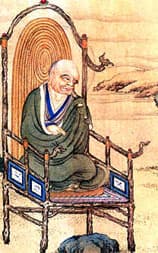
Dayi Daoxin
Dayi Daoxin (580–651) was the fourth Chán Buddhist Patriarch, significant for establishing the "East Mountain Teachings" and developing stable monastic communities. His teachings emphasized meditation and integrating practice into daily life, influencing the future development of Chan Buddhism in China.
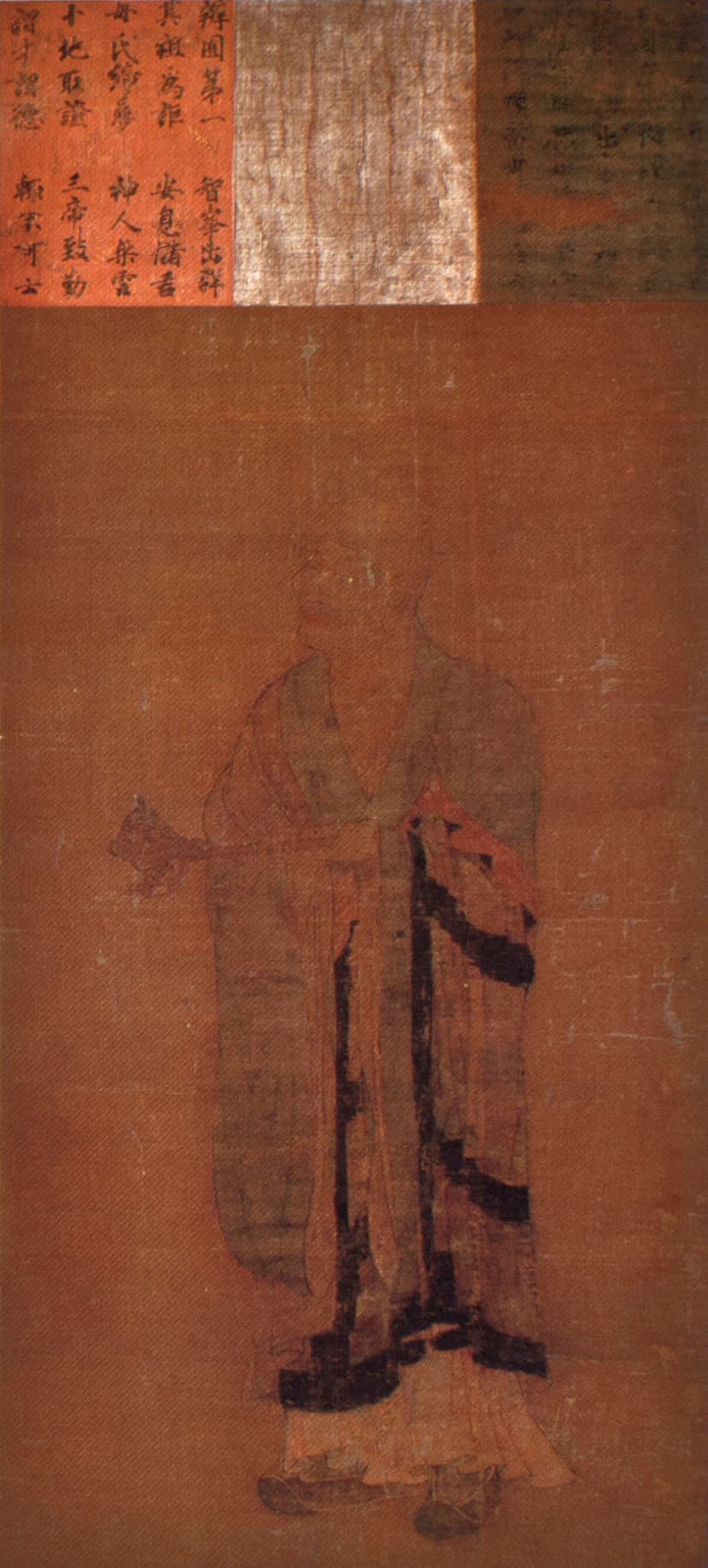
Jizang
Jizang (549–623 CE) was a Persian-Chinese Buddhist monk and scholar widely recognized as the founder of East Asian Mādhyamaka. He lived during a period of political transition in China and developed a nuanced philosophical approach to understanding Buddhist teachings, particularly the Madhyamaka treatises. His extensive writings and lectures significantly shaped the development of Mahayana Buddhism in East Asia.