
Jizang
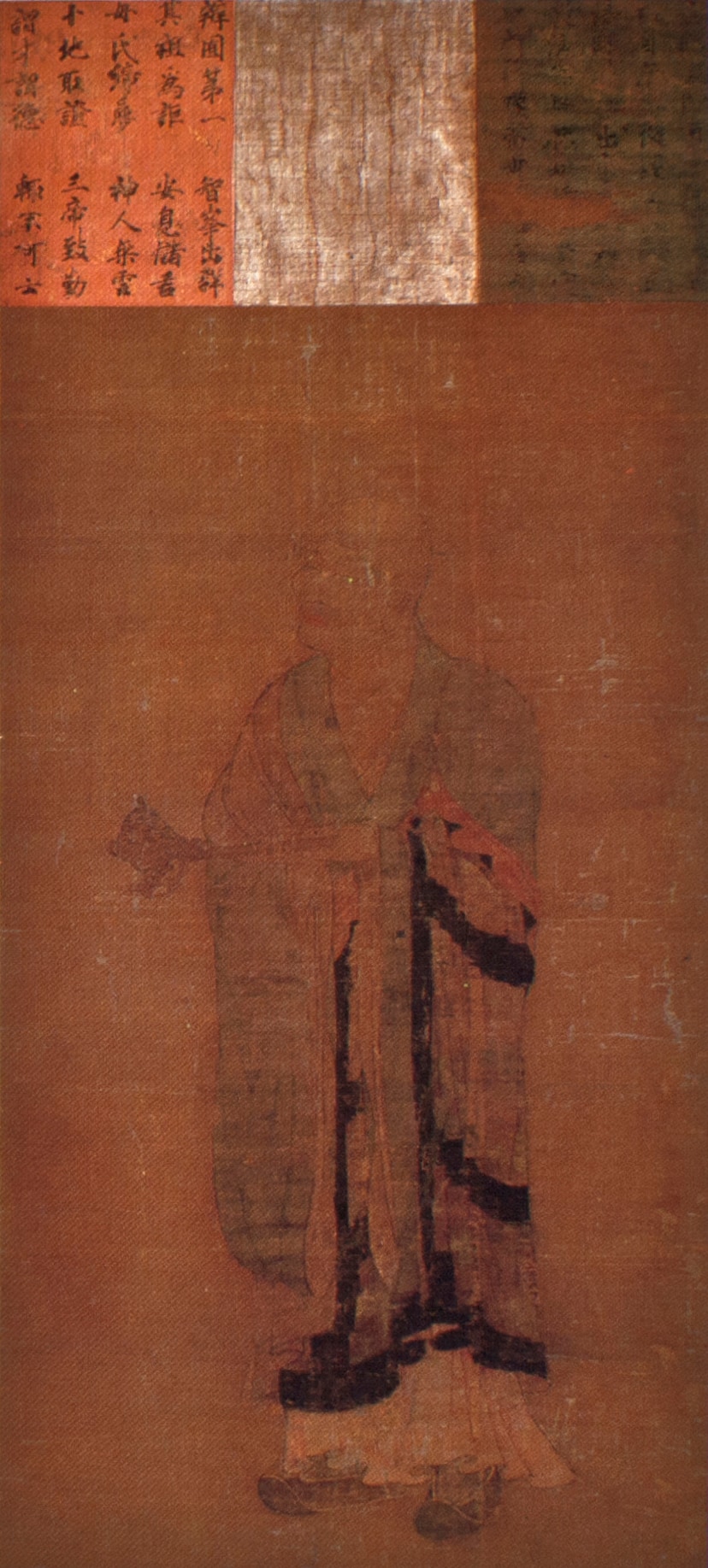
Jizang (549–623 CE) was a Persian-Chinese Buddhist monk and scholar widely recognized as the founder of East Asian Mādhyamaka. He lived during a period of political transition in China and developed a nuanced philosophical approach to understanding Buddhist teachings, particularly the Madhyamaka treatises. His extensive writings and lectures significantly shaped the development of Mahayana Buddhism in East Asia.
Key Facts
- ›Born in Jinling (modern Nanjing) to a Parthian father and educated in the Chinese tradition.
- ›Became a monk at the age of seven and studied the three Madhyamaka treatises.
- ›Developed the philosophical concept of 'four levels of the two kinds of discourse' (sizhong erdi).
- ›Authored nearly 50 books, specializing in commentaries on Madhyamaka, the Lotus Sutra, and the Nirvana Sutra.
- ›His student Hyegwan brought the three Treatise School to Japan.
- ›Was known as Master Jiaxiang due to his fame at Jiaxiang Temple.
Important Relationships
- Falang (teacher)
- Paramartha (gave Dharma name)
- Zhiyi (corresponded with)
- Hyegwan (student)
Dapin Youyi, Jingang Banruo Shu, Fahua Xuanlun, Sanlun Xuanyi, Dasheng Xuanlun, Erdi Zhang
Jinling, Xinghuang Temple, Jiaxiang Temple, Chang'An
Madhyamaka School, Kumarajiva
Chinese
Monk
About Jizang
Jizang (549–623)
Jizang, also known as Jiaxiang or Master Jiaxiang, was a highly influential Persian-Chinese Buddhist monk and scholar. He is widely regarded as the founder of East Asian Mādhyamaka, a philosophical tradition within Mahayana Buddhism. His life spanned a period of significant political upheaval in China, from the Northern and Southern dynasties to the Sui and early Tang dynasties.
Life and Historical Context
Born in Jinling (modern Nanjing) to a father who had emigrated from Parthia, Jizang received a thorough Chinese education. He displayed an early aptitude for spiritual matters, becoming a monk at the remarkable age of seven. Under the tutelage of Falang, he studied the foundational Madhyamaka treatises translated by Kumarajiva. Upon Falang's death, Jizang succeeded him as head monk at Xinghuang Temple. He later gained prominence lecturing throughout China, eventually settling at Jiaxiang Temple in Shaoxing, Zhejiang province. He also received his Dharma name from the Indian monk Paramartha. During the Sui dynasty, he was invited to oversee one of four new temples in the capital, Chang'an, and engaged in correspondence with the respected Tiantai figure Zhiyi.
Philosophical Contributions
Jizang's philosophical work centered on the Mādhyamaka principle of emptiness (śūnyatā) and the avoidance of attachment. He developed the methodology of 'poxie xianzheng' (refuting what is misleading, revealing what is corrective), aiming to move beyond rigid assertions of truth or falsehood. A key development was his 'four levels of the two kinds of discourse' (sizhong erdi), a sophisticated framework for analyzing conventional and ultimate truths. He cautioned against becoming attached even to the idea of non-attachment, advocating for a pragmatic and deconstructive approach to understanding reality and overcoming suffering.
Writings and Legacy
Jizang was a prolific writer, authoring close to 50 books. His works primarily consisted of commentaries on the Madhyamaka treatises, as well as on important Mahayana sutras such as the Lotus Sutra and the Nirvana Sutra. His extensive scholarship and teachings significantly shaped the trajectory of Buddhist thought in East Asia. His student Hyegwan was instrumental in transmitting the Three Treatise School (Sanlun) to Japan, establishing Jizang's lasting influence on East Asian Buddhism.
Source: Wikipedia ↗
Frequently Asked Questions
Who was Jizang?
Jizang was a prominent Buddhist monk and scholar of Persian-Chinese heritage who lived from 549 to 623 CE. He is considered the founder of East Asian Mādhyamaka and is known for his profound philosophical insights and extensive writings.
What is Jizang known for philosophically?
Jizang developed a philosophical methodology called 'poxie xianzheng' (refuting what is misleading, revealing what is corrective). He also formulated the 'four levels of the two kinds of discourse' (sizhong erdi), a complex system for understanding truth and discourse within Mādhyamaka philosophy.
What were Jizang's most important teachings?
Jizang emphasized avoiding rigid attachment to any viewpoint, including the concept of non-attachment itself. He advocated for deconstructing dichotomies and using viewpoints pragmatically to overcome suffering.
What significant texts did Jizang write or comment on?
Jizang specialized in commentaries on the three Madhyamaka treatises: The Treatise on the Middle Way, The Treatise on the Twelve Gates, and The One-Hundred-Verse Treatise. He also wrote extensively on texts like the Lotus Sutra and the Nirvana Sutra.
Where did Jizang primarily teach and work?
Jizang studied and taught in various locations across China, including Xinghuang Temple in Nanjing and Jiaxiang Temple in modern Shaoxing. He also served in imperial temples in Chang'an during the Sui and Tang dynasties.
How did Jizang influence Buddhism in other countries?
Jizang's teachings and the Mādhyamaka school he founded were transmitted to Japan by his student Hyegwan, playing a significant role in the development of Japanese Buddhism.
Related Buddhists
Guifeng Zongmi
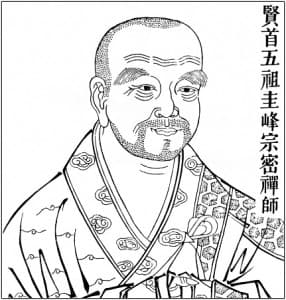
Guifeng Zongmi was a highly influential Tang dynasty Chinese Buddhist monk, scholar, and patriarch of both the Huayan and Chan schools. He is renowned for his efforts to harmonize various Buddhist teachings, particularly Chan and Huayan, with Taoism and Confucianism, aiming to create a comprehensive spiritual vision. His extensive writings serve as a crucial resource for understanding the diverse Chan schools of his era.
Atiśa
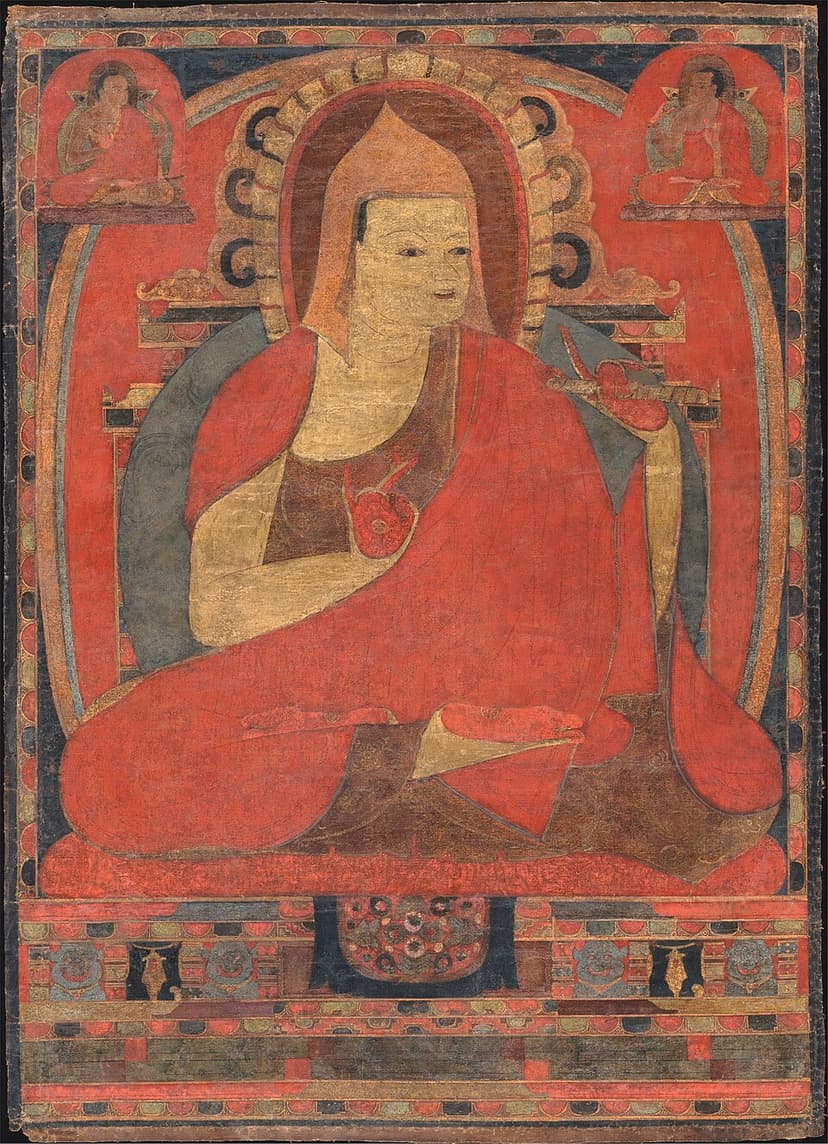
Atiśa Dīpaṃkara Śrījñāna was a prominent Buddhist religious leader and scholar from Bengal in the 11th century CE. He is renowned for his significant role in spreading Mahayana and Vajrayana Buddhism across Asia, particularly in Tibet, and is considered a founder of the Kadam school. His teachings, compiled in works like "Bodhipathapradīpa," laid the groundwork for subsequent Tibetan Buddhist traditions.
Jinul
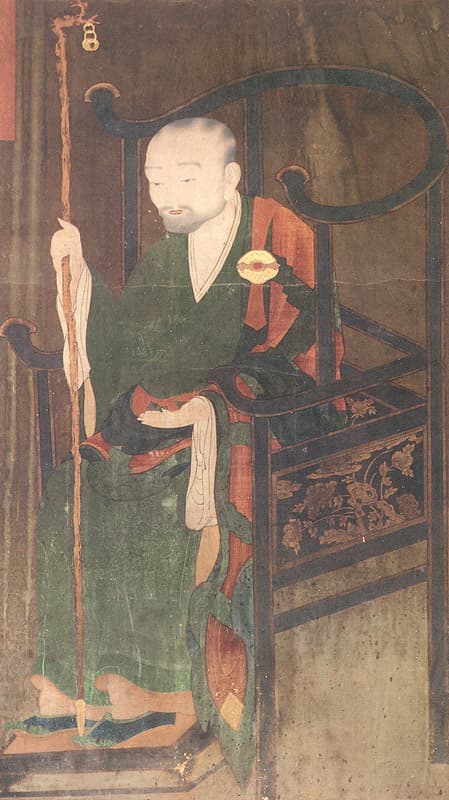
Jinul (1158–1210), often called Chinul, was a Korean monk of the Goryeo period and the most influential figure in forming Korean Seon (Zen) Buddhism. He is recognized as the founder of the Jogye Order, having unified disparate Buddhist sects into a cohesive organization through his teachings on meditation and doctrine. Jinul's work emphasized the inherent Buddha-nature within all beings and the importance of self-reliance in spiritual practice.