
Jinul
Korea·Jogye Order (Korean Seon/Zen)·Male·12th century
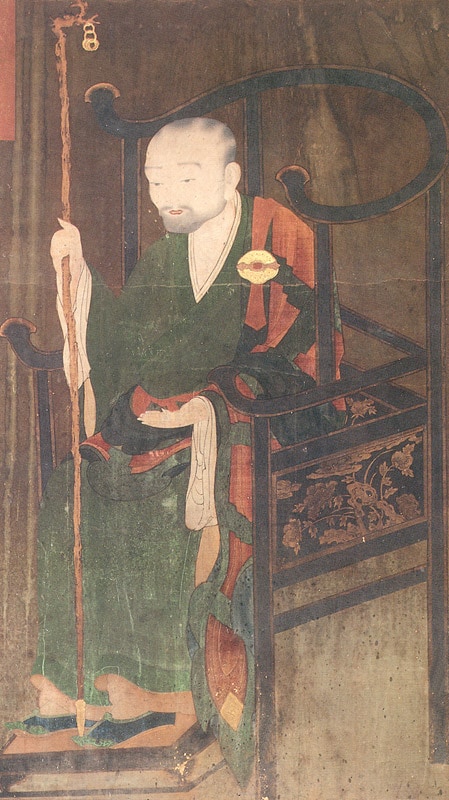
Jinul (1158–1210), often called Chinul, was a Korean monk of the Goryeo period and the most influential figure in forming Korean Seon (Zen) Buddhism. He is recognized as the founder of the Jogye Order, having unified disparate Buddhist sects into a cohesive organization through his teachings on meditation and doctrine. Jinul's work emphasized the inherent Buddha-nature within all beings and the importance of self-reliance in spiritual practice.
Key Facts
- ›Considered the most influential figure in the formation of Korean Seon (Zen) Buddhism.
- ›Founder of the Jogye Order, unifying disparate Buddhist sects.
- ›Emphasized a comprehensive approach to Buddhism including meditation, doctrine, chanting, and lectures.
- ›His philosophy centered on the concept of 'Essence-Function' (체용; 體用).
- ›Authored the magnum opus 'Excerpts from the Dharma Collection and Special Practice Record with Personal Notes' (법집별행록절요병입사기).
- ›Taught that Nirvana is an inherent essence present in all beings.
Important Relationships
- King Huijong of Goryeo
- Jonghwi (Seon Master)
- Excerpts From the Dharma Collection and Special Practice Record With Personal Notes
Bojesa, Cheongwonsa, Bomunsa, Songgwangsa
Guifeng Zongmi
Korean
Ordination Name 'Jinul' Received At Age 15
About Jinul
Jinul (1158–1210)
Jinul, also known as Chinul or by his honorific title Bojo Jinul, was a Korean monk of the Goryeo period whose influence was paramount in the shaping of Korean Seon (Zen) Buddhism. He is widely recognized as the founder of the Jogye Order, an organization he established by working to unify the previously disparate sects within Korean Buddhism into a cohesive and comprehensive tradition. Jinul's teachings emphasized a holistic approach to Buddhist practice, integrating meditation, doctrinal study, chanting, and lectures.
Life and Historical Context
Born Jeong, Jinul left his family at the age of fifteen to be ordained as a monk. He received the ordination name Jinul from Seon Master Jonghwi of the Sagulsan School. Despite his early ordination, Jinul's spiritual training was marked by a degree of self-reliance, as he did not appear to have a permanent teacher. His biographer notes that Jinul's intellect and inclination towards solitude were evident from youth, leading him to draw inspiration from Buddhist scriptures and pursue his own spiritual development through Sŏn meditation. By 1182, Jinul had passed the royal examination for monks, but he declined administrative positions to join the Seon sangha at Bojesa in Pyongyang. Dissatisfied with the community's receptiveness to reform, he moved through several other monastic communities, including Cheongwonsa and Bomunsa.
During this period of dedicated study and practice, Jinul is said to have studied the entire Tripiṭaka and experienced multiple awakenings. He sought to establish a new movement called the "samadhi and prajñā society" (정혜사; 定慧社; Jeonghyesa), aiming to create a disciplined community of pure-minded practitioners in the mountains. This vision culminated in the founding of Songgwangsa on Jogyesan, which became the center for the Jogye Order and its comprehensive approach to Buddhism.
Teachings and Contributions
Jinul's philosophical framework significantly contributed to Korean Buddhism, notably through his concept of 'Essence-Function' (체용; 體用). This concept explores the interplay between the fundamental nature of reality (Essence) and its manifest forms (Function). He articulated a profound view of Nirvana, positing it not as a distant goal but as a sublime essence inherent in all beings – the very nature of Buddha, complete and innate since time immemorial. Jinul taught that this true nature is unchanging, and that all minds are ultimately numinous and aware, even when seemingly caught in delusion.
His magnum opus, the "Excerpts from the Dharma Collection and Special Practice Record with Personal Notes" (법집별행록절요병입사기), completed in 1209, offered an extensive exploration of various Chan Buddhist schools in China, featuring detailed commentaries on the writings of Guifeng Zongmi alongside Jinul's own insights. This work earned him considerable respect, including that of King Huijong of Goryeo, who ordered Mount Songgwangsan to be renamed Jogyesan in Jinul's honor. Following his death in 1210, King Huijong bestowed a posthumous title of honor upon him.
Source: Wikipedia ↗
Frequently Asked Questions
Who was Jinul?
Jinul, born Jeong, was a Korean monk of the Goryeo period (1158–1210) who became the most significant figure in the development of Korean Seon (Zen) Buddhism. He is credited with founding the Jogye Order, a unified organization of Korean Buddhist sects.
What is Jinul known for?
Jinul is best known for unifying the various sects of Korean Buddhism into the Jogye Order and for his teachings that integrated meditation, doctrine, chanting, and lectures. He also emphasized the concept of 'Essence-Function' and the inherent Buddha-nature in all beings.
What was Jinul's most important work?
Jinul's most significant work is the 'Excerpts from the Dharma Collection and Special Practice Record with Personal Notes' (법집별행록절요병입사기), completed in 1209. This extensive text explores various schools of Chan Buddhism and includes his own commentaries and personal reflections.
What was Jinul's view on Nirvana?
Jinul viewed Nirvana not as something to be attained externally, but as a sublime essence inherently present in all beings. He taught that everyone originally possesses this impeccable self-nature and the complete essence of Nirvana, which has been innate since time immemorial.
How did Jinul approach spiritual practice?
Jinul advocated for a self-reliant approach to spiritual development, drawing inspiration from Buddhist scriptures and confirmed through his own Seon meditation. He believed that practitioners should use scriptural instructions to perfect formal Seon practice, emphasizing that one's own mind is numinous, aware, and unchanging.
Related Buddhists
Han Yong-un
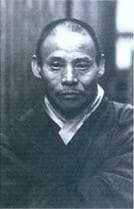
Han Yong-un, also known by his art name Manhae, was a prominent 20th-century Korean Buddhist reformer, poet, and independence activist. He advocated for the modernization of Korean Buddhism and played a significant role in the Korean independence movement against Japanese colonial rule. His poetry often intertwined themes of nationalism and love, becoming a powerful voice for Korean identity and resistance.
Gihwa
Gihwa was a prominent Korean Buddhist monk and leading figure during the transition from the Goryeo to the Joseon dynasties. Initially a respected Confucian scholar, he converted to Buddhism in his early twenties and became a disciple of National Teacher Muhak. Gihwa is known for synthesizing Seon (Zen) and Gyo (scriptural) traditions, authoring influential commentaries on key Buddhist sutras, and vigorously defending Buddhism against Neo-Confucian criticisms.
Guifeng Zongmi
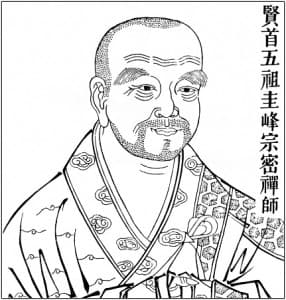
Guifeng Zongmi was a highly influential Tang dynasty Chinese Buddhist monk, scholar, and patriarch of both the Huayan and Chan schools. He is renowned for his efforts to harmonize various Buddhist teachings, particularly Chan and Huayan, with Taoism and Confucianism, aiming to create a comprehensive spiritual vision. His extensive writings serve as a crucial resource for understanding the diverse Chan schools of his era.