
Han Yong-un
Han Yong-un, also known by his art name Manhae, was a prominent 20th-century Korean Buddhist reformer, poet, and independence activist. He advocated for the modernization of Korean Buddhism and played a significant role in the Korean independence movement against Japanese colonial rule. His poetry often intertwined themes of nationalism and love, becoming a powerful voice for Korean identity and resistance.
Key Facts
- ›Born Han Yu-cheon in 1879, he adopted the religious name Han Yong-un in 1905 and the art name Manhae.
- ›He was a key figure in reforming Korean Buddhism, criticizing its isolationist policies and advocating for modernization.
- ›Manhae was a signatory to the Korean Declaration of Independence in 1919 and was imprisoned for his activism.
- ›His poetry, notably in the collection 'Nimui Chimmuk' (Lover's Silence), explored nationalism and sexual love, often using symbolic language for the independence movement.
- ›He was recognized as one of the ten most important modern Korean poets by the Korean Poets' Association in 2007.
- ›Manhae's philosophical and literary works aimed to enlighten youth and promote principles of equality, self-discovery, and progress.
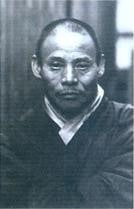
Important Relationships
- Chae Lin
the Restoration of Korean Buddhism, Whole Mind, Reasons For Korean Independence, Nimui Chimmuk, Dark Wind, Regret, Misfortune
- Yucheon, Hongseong, South Chungcheong Province
- Ose-Am, Baekdam Temple
- Japan
Rabindranath Tagore
Korean, Chinese
Bhikkhu
Independence Activist, Poet
About Han Yong-un
Han Yong-un (Manhae)
Han Yong-un, widely known by his art name Manhae, was a pivotal figure in 20th-century Korean Buddhism, a celebrated poet, and a fervent advocate for Korean independence during the Japanese colonial period. Born Han Yu-cheon in 1879, he adopted the religious name Han Yong-un in 1905, signifying his commitment to Buddhist practice. His life was dedicated to both spiritual reform and national liberation.
Life and Historical Context
Manhae was born in Yucheon, Hongseong, in Joseon. He received early education in classical Chinese texts and, prior to his ordination, was involved in resistance efforts against growing Japanese influence. He lived in seclusion at Ose-am in Baekdam Temple from 1896, dedicating this time to studying Buddhist scriptures and modern philosophy. In 1905, he was ordained into the Jogye Order. A brief period in Japan from 1908 allowed him to deepen his understanding of Buddhism and Eastern philosophy.
Major Contributions
As a social writer and reformer, Manhae called for a revitalization of Korean Buddhism, challenging its anachronistic isolationist policies in his influential work "The Restoration of Korean Buddhism" (1913). He championed the principles of equality, self-discovery, and Buddhism's capacity to safeguard the world and foster progress. His literary output, particularly his poetry collections, frequently intertwined themes of nationalism and sexual love. His collection "Nimui Chimmuk" (Lover's Silence, 1926) is considered his most significant work, where love for his country is expressed through the guise of longing for a beloved.
Manhae's commitment to Korean independence was profound. He was a signatory of the Korean Declaration of Independence in 1919, an act that led to his imprisonment and a three-year sentence. During his incarceration, he penned "Reasons for Korean Independence." Upon his release, he embarked on a nationwide lecture tour aimed at inspiring Korean youth, a mission consistent with the objectives outlined in his earlier work "Whole Mind" (1918).
Legacy
Manhae's writings and activism left a lasting impression on Korean intellectual and cultural life. His poetry, admired for its rhapsodic style and symbolic depth, drew inspiration from figures like Rabindranath Tagore and the Indian tradition of mysticism and eroticism. In recognition of his literary contributions, the Korean Poets' Association named him among the ten most important modern Korean poets in 2007. He passed away in 1944, leaving behind a legacy as a spiritual leader, a patriotic poet, and a champion of Korean identity.
Source: Wikipedia ↗
Frequently Asked Questions
What was Han Yong-un's birth name and when did he adopt his religious name?
Han Yong-un's birth name was Han Yu-cheon. He adopted his religious name, Han Yong-un, in 1905, given to him by his meditation instructor.
What was Manhae's role in the Korean independence movement?
Manhae was a patriot and a signatory to the Korean Declaration of Independence in 1919. His writings and lectures also aimed to inspire youth and promote passive resistance and non-violence against colonial rule.
What are the main themes in Manhae's poetry?
Manhae's poetry frequently dealt with themes of nationalism and sexual love, often merging the two. His works used symbolic language to express longing for his country, drawing parallels with the longing for a loved one.
What was the significance of his work 'The Restoration of Korean Buddhism'?
Published in 1913, 'The Restoration of Korean Buddhism' criticized the outdated isolationist policies of Korean Buddhism and its disconnection from contemporary realities. It promoted principles of equality, self-discovery, and Buddhism's potential for global safeguarding and progress.
What is Manhae's most significant literary achievement?
Despite numerous other publications, his poetry collection 'Nimui Chimmuk' (Lover's Silence), published in 1926, is considered his most significant and enduring literary achievement. It garnered considerable attention from critics and intellectuals.
Related Buddhists
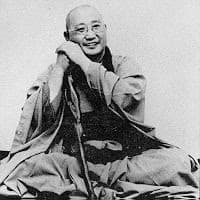
Seungsahn
Seungsahn Haengwon was a Korean Seon master and the seventy-eighth Patriarch in his lineage, born Duk-In Lee. He is widely recognized as the founder of the international Kwan Um School of Zen and was one of the first Korean Zen masters to establish a significant presence in the United States. Known for his charismatic teaching style, direct approach, and use of phrases like "only don't know," Seungsahn adapted Zen Buddhism for Western audiences, opening many temples and practice groups globally.
Sesson Yūbai
Sesson Yūbai was a Japanese Zen Buddhist monk of the Rinzai sect, active in the 14th century. He is renowned as "the first important poet of the Five Mountains" and is particularly known for his poetry, much of which was composed during or about his imprisonment in China. His work and influence extended to Japan, where he founded several significant temple-monasteries.
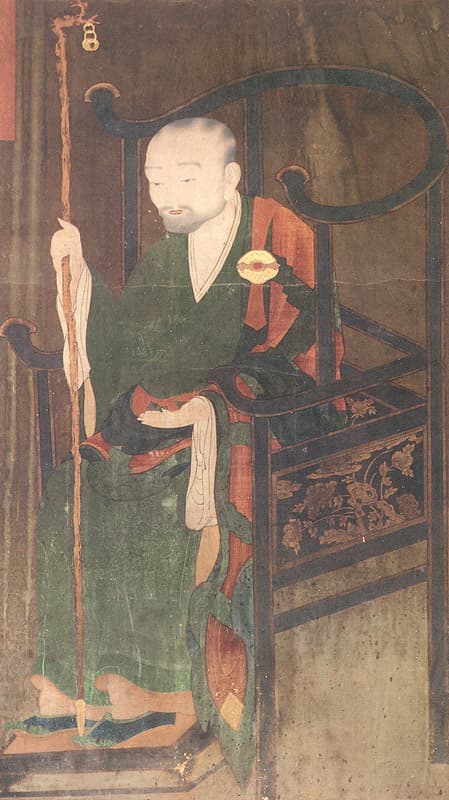
Jinul
Jinul (1158–1210), often called Chinul, was a Korean monk of the Goryeo period and the most influential figure in forming Korean Seon (Zen) Buddhism. He is recognized as the founder of the Jogye Order, having unified disparate Buddhist sects into a cohesive organization through his teachings on meditation and doctrine. Jinul's work emphasized the inherent Buddha-nature within all beings and the importance of self-reliance in spiritual practice.