
Dayi Daoxin
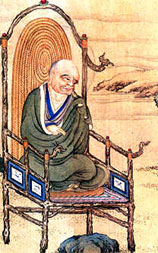
Dayi Daoxin (580–651) was the fourth Chán Buddhist Patriarch, significant for establishing the "East Mountain Teachings" and developing stable monastic communities. His teachings emphasized meditation and integrating practice into daily life, influencing the future development of Chan Buddhism in China.
Key Facts
- ›Fourth Chán Buddhist Patriarch, succeeding Jianzhi Sengcan and preceding Daman Hongren.
- ›Born in Yongning County, Qizhou (modern Wuxue City, Hubei Province).
- ›Enlightened at age fourteen after an exchange with Jianzhi Sengcan.
- ›Taught Chan Buddhism at East Mountain Temple for thirty years, attracting many practitioners.
- ›Refused multiple invitations from Emperor Tai Zong, demonstrating his commitment to his practice.
- ›His teachings, known as the East Mountain Teachings, were a precursor to the national flowering of Chan Buddhism.
Important Relationships
- Jianzhi Sengcan
- Daman Hongren
- Emperor Tai Zong
- Zhikai
the Five Gates of Daoxin
East Mountain Temple, Shuangfeng, Mount Lu, Ji Province
Jianzhi Sengcan, Zhikai, Tiantai School, Sanlun School, Prajnaparamita Sutra, Pure Land Sutras
Chinese
Monastic Vows
About Dayi Daoxin
Dayi Daoxin (580–651) was a foundational figure in Chinese Chan Buddhism, recognized as the fourth Chán Patriarch. His life and teachings were instrumental in shaping the lineage, particularly through his establishment of a stable monastic community and his emphasis on integrating spiritual practice into everyday life.
Biography and Historical Context
Born with the surname Si-ma in Yongning County, Qizhou (modern Wuxue City, Hubei Province), Daoxin began his Buddhist studies at a young age. He met Jianzhi Sengcan, the third Chán Patriarch, at fourteen, an encounter that led to his enlightenment and nine years of discipleship. Sengcan famously instructed Daoxin to remain and spread the Dharma in the south, rather than follow him to Mount Lo-fu.
Daoxin later spent ten years studying with Zhikai at Great Woods Temple on Mount Lu, where he was influenced by the Tiantai and Sanlun schools. He received monastic ordination in 607. A notable event in his life occurred in 617 when he taught the Mahaprajnaparamita Sutra to residents of Ji Province under siege, causing the bandits to withdraw. He eventually settled at East Mountain Temple on Shuangfeng, where he resided for thirty years, cultivating a large community of practitioners.
Daoxin famously refused multiple invitations from Emperor Tai Zong, demonstrating a profound detachment from worldly power and recognition. His steadfastness, even in the face of the emperor's forceful demands, earned him great respect. He died in 651, reportedly after instructing his students to build his stupa and making enigmatic remarks about his succession.
Teachings and Legacy
The teachings associated with Daoxin and his successor, Daman Hongren, are known as the East Mountain Teachings. This period is significant for developing a stable monastic life for Chan practitioners. Dumoulin suggests that the need to sustain a large, isolated community led to the integration of manual labor and administrative duties with meditation, fostering the idea that religious practice should permeate all aspects of existence.
While the historical accuracy of some records is debated, Daoxin's teachings emphasized profound introspection and meditation. He is quoted as saying, "Buddha is the mind. Outside of the mind there is no Buddha." He encouraged earnest meditation, advising students to "Sit earnestly in meditation! Sitting in meditation is basic to all else…." His final words urged his disciples to "drop away" all worldly dharmas and protect this understanding for the future. Daoxin's legacy lies in his role in solidifying Chan Buddhism as a distinct and influential tradition within China.
Source: Wikipedia ↗
Frequently Asked Questions
When did Dayi Daoxin live?
Dayi Daoxin lived from 580 to 651 CE. He was the fourth Chán Buddhist Patriarch.
Where was Dayi Daoxin born?
Dayi Daoxin was born in Yongning County, Qizhou, which is the former Guangji County in modern-day Wuxue City, Hubei Province, China.
Who was Dayi Daoxin's teacher?
Dayi Daoxin attended Jianzhi Sengcan, the third Chán Patriarch, from the age of fourteen for nine years. He also studied with Zhikai for ten years at Great Woods Temple on Mount Lu.
What are the "East Mountain Teachings"?
The "East Mountain Teachings" refer to the teachings of Dayi Daoxin and his successor, Daman Hongren. This period is significant for developing stable monastic communities and integrating Chan practice into all aspects of daily life.
How did Dayi Daoxin influence Chan Buddhism?
Daoxin was the first Chan master to settle in one place for an extended period, fostering stable monastic communities. He emphasized that Chan practice should extend to daily duties, a theme that became central to Chan teachings.
Related Buddhists
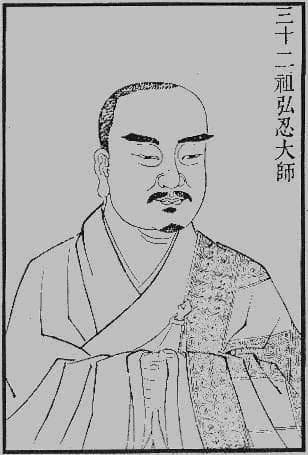
Daman Hongren
Daman Hongren (601–674) was the fifth Patriarch of Chan Buddhism, succeeding Dayi Daoxin and transmitting the lineage to Huineng. His teachings, known as the "East Mountain Teachings," emphasized meditation practice and the purification of the mind from discriminating thoughts. Hongren is considered a pivotal figure in the development of early Chinese Chan Buddhism, with his teachings influencing the tradition as it moved into urban centers and the imperial court.
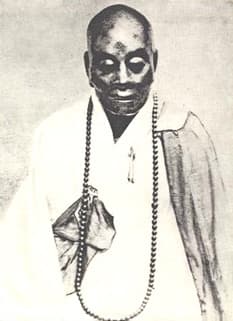
Huineng
Huineng was a pivotal, though semi-legendary, figure in early Chinese Chan Buddhism, revered as the Sixth Patriarch. Despite his illiteracy and humble origins, tradition states he attained sudden enlightenment upon hearing the Diamond Sutra and was secretly chosen as the successor to the Fifth Patriarch, Daman Hongren. He is credited with founding the "Sudden Enlightenment" Southern Chan school, emphasizing immediate insight over gradual practice, and his teachings, recorded in the influential Platform Sutra, continue to shape East Asian Buddhist thought.

Dazu Huike
Dazu Huike was the Second Patriarch of Chan Buddhism, succeeding Bodhidharma. He is credited with developing the "sudden awakening" approach to enlightenment and emphasizing meditation as the primary practice. His teachings, possibly based on the Lankavatara Sutra, stressed the realization of innate Buddha-nature.