
Daman Hongren
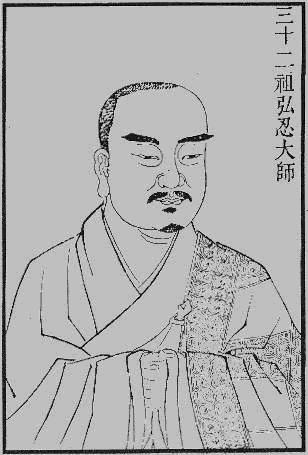
Daman Hongren (601–674) was the fifth Patriarch of Chan Buddhism, succeeding Dayi Daoxin and transmitting the lineage to Huineng. His teachings, known as the "East Mountain Teachings," emphasized meditation practice and the purification of the mind from discriminating thoughts. Hongren is considered a pivotal figure in the development of early Chinese Chan Buddhism, with his teachings influencing the tradition as it moved into urban centers and the imperial court.
Key Facts
- ›Recognized as the 5th Patriarch of Chan Buddhism.
- ›Received Dharma transmission from Dayi Daoxin.
- ›Passed on the symbolic bowl and robe of transmission to Huineng.
- ›His teachings, along with Daoxin's, were known as the "East Mountain Teachings."
- ›Authored the "Treatise on the Essentials of Cultivating the Mind," an early compilation of Chan master teachings.
- ›His teachings focused on meditation practice, eliminating false thoughts, and maintaining awareness of natural enlightenment.
Important Relationships
- Dayi Daoxin
- Huineng
- Yuquan Shenxiu
- Treatise On the Essentials of Cultivating the Mind
Huangmei, East Peak
Dayi Daoxin
Chinese
Monk Vows
About Daman Hongren
Daman Hongren: Fifth Patriarch of Chan Buddhism
Daman Hongren (601–674), also known as Hongren, was the fifth Patriarch of Chan Buddhism. He is a pivotal figure in the lineage of Chan patriarchs, famously receiving Dharma transmission from Dayi Daoxin and passing it on to Huineng, the Sixth Patriarch.
Life and Historical Context
Details of Hongren's early life are layered with legend, but traditional sources indicate he was born in Huangmei with the family name Chou. He began his monastic studies at a young age under Daoxin, who recognized his insight. Hongren remained with Daoxin until his death in 651. His teachings, along with those of Daoxin, became known as the "East Mountain Teachings," and Hongren was the more prominent of the two. It is said that after Daoxin's death, Hongren moved the monastic community to the East Peak of Mount Shuangfeng.
Teachings and Contributions
Hongren's primary focus was on meditation practice. His core teaching, as recorded in the Treatise on the Essentials of Cultivating the Mind, emphasized the obscuring nature of "discriminating thinking, false thoughts, and ascriptive views" and advocated for their elimination to realize inherent enlightenment. This work is significant as the earliest known collection of a Chan master's teachings. He also developed specific meditation techniques, such as focusing on the concept of 'one' and observing the fluctuations of consciousness until they dissolved into stability.
Influence and Legacy
Hongren's teachings were highly regarded by later Chan adepts in the major urban centers of Chang'an and Luoyang. His role in nurturing the transmission to Huineng and his own established teachings were instrumental in the development and spread of Chan Buddhism, marking its transition from a rural base to a more prominent position within Chinese society and the imperial court.
Source: Wikipedia ↗
Frequently Asked Questions
Who was Daman Hongren?
Daman Hongren was the fifth Patriarch of Chan Buddhism, a significant figure in the development of early Chinese Chan. He is known for transmitting the lineage to Huineng, the Sixth Patriarch.
What were the "East Mountain Teachings"?
The "East Mountain Teachings" refer to the teachings of Dayi Daoxin and Daman Hongren. Hongren was the more prominent of the two, and his teachings emphasized meditation practice and the elimination of distracting thoughts.
What is the significance of the "Treatise on the Essentials of Cultivating the Mind"?
The "Treatise on the Essentials of Cultivating the Mind" is considered the earliest collection of the teachings of a Chan master. It is attributed to Daman Hongren and outlines his core teachings on meditation and mental purification.
How did Hongren influence Chan Buddhism?
Hongren's teachings were highly esteemed, particularly in the ancient capitals of Chang'an and Luoyang. His influence grew as Chan Buddhism transitioned from a rural base to urban centers and the imperial court in the early eighth century.
What meditation techniques did Hongren teach?
Hongren taught practitioners to focus on the concept of 'one,' represented by a single horizontal line, as a way to unify the mind and Buddha nature. He also instructed meditators to observe their consciousness as it flows and fluctuates, until it dissolves into stability.
Related Buddhists
Huineng
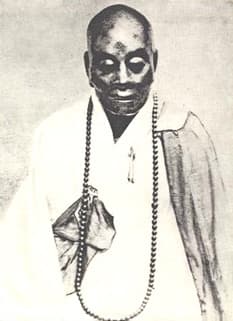
Huineng was a pivotal, though semi-legendary, figure in early Chinese Chan Buddhism, revered as the Sixth Patriarch. Despite his illiteracy and humble origins, tradition states he attained sudden enlightenment upon hearing the Diamond Sutra and was secretly chosen as the successor to the Fifth Patriarch, Daman Hongren. He is credited with founding the "Sudden Enlightenment" Southern Chan school, emphasizing immediate insight over gradual practice, and his teachings, recorded in the influential Platform Sutra, continue to shape East Asian Buddhist thought.
Dayi Daoxin
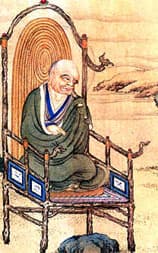
Dayi Daoxin (580–651) was the fourth Chán Buddhist Patriarch, significant for establishing the "East Mountain Teachings" and developing stable monastic communities. His teachings emphasized meditation and integrating practice into daily life, influencing the future development of Chan Buddhism in China.

Dazu Huike
Dazu Huike was the Second Patriarch of Chan Buddhism, succeeding Bodhidharma. He is credited with developing the "sudden awakening" approach to enlightenment and emphasizing meditation as the primary practice. His teachings, possibly based on the Lankavatara Sutra, stressed the realization of innate Buddha-nature.