
Dazu Huike
Dazu Huike was the Second Patriarch of Chan Buddhism, succeeding Bodhidharma. He is credited with developing the "sudden awakening" approach to enlightenment and emphasizing meditation as the primary practice. His teachings, possibly based on the Lankavatara Sutra, stressed the realization of innate Buddha-nature.
Key Facts
- ›Considered the Second Patriarch of Chan Buddhism and the twenty-ninth patriarch since Gautama Buddha.
- ›Successor to Bodhidharma and teacher of Sengcan, the Third Patriarch.
- ›Emphasized meditation (dhyana) and sudden awakening as the path to enlightenment.
- ›His teachings may have been influenced by the Lankavatara Sutra.
- ›Received the honorific name Dazu ('Great Ancestor') from Emperor De Zong of the Tang dynasty.
- ›Traditional accounts suggest he was executed, with a legend stating white milk flowed from his severed neck.

Important Relationships
- Bodhidharma
- Sengcan
- Tao-hsuan
- Emperor De Zong
Letter To Bodhidharma
Shaolin Monastery, Yedu, Wei, Yangtze River, Anyang City
- Bodhidharma
- Lankavatara Sutra
- Treatise On the Two Entrances and Four Practices
Classical Chinese
Bodhisattva Vows
About Dazu Huike
Dazu Huike (487–593) is revered as the Second Patriarch of Chan Buddhism, the successor to Bodhidharma and the twenty-ninth patriarch since Gautama Buddha. He is a pivotal figure in the historical development of Chan (Zen) Buddhism, known for his scholarly background and his deep commitment to meditative practice as the path to spiritual realization.
Biography and Teachings
Born Shénguāng in Hu-lao, Henan, Huike was a scholar proficient in Buddhist scriptures and classical Chinese texts, including Taoism. He encountered Bodhidharma at Shaolin Monastery around 528 CE and studied with him for several years. A significant event in his hagiography is the legend of him cutting off his arm in the snow to prove his sincerity to Bodhidharma, who then accepted him as a disciple and renamed him Huike, meaning "Wisdom and Capacity."
Huike's teachings emphasized meditation (dhyana) as the primary method for achieving enlightenment, often termed "sudden awakening." This approach contrasted with more gradual methods of self-perfection. He is believed to have based his teachings on the Lankavatara Sutra, advocating for 'self-enlightenment' and the "forgetting of words and thoughts." His philosophy also incorporated the concept of "Buddha-nature" residing within each individual, to be realized through personal meditation rather than external rituals or good deeds.
Later Life and Legacy
Huike spent much of his later life in Yedu and Wei regions. He is also known for encountering Sengcan, who would become his successor and the Third Chinese Patriarch of Chan. Despite facing persecution and hostility from other Buddhist factions, Huike continued to expound the dharma. Legend states that he lived to be one hundred and seven years old and was eventually executed, with accounts describing a miraculous white milky substance flowing from his neck instead of blood.
Later, the Tang dynasty emperor, De Zong, bestowed upon him the honorific title "Dazu," meaning "Great Ancestor," acknowledging his profound significance in the lineage of Buddhist masters.
Source: Wikipedia ↗
Frequently Asked Questions
Who was Dazu Huike?
Dazu Huike was a pivotal figure in early Chan Buddhism, considered its Second Patriarch. He was the direct successor to Bodhidharma and played a key role in shaping the tradition's core practices and philosophy.
What was Dazu Huike known for teaching?
Huike is primarily known for promoting meditation (dhyana) as the central practice for achieving enlightenment. He advocated a "sudden awakening" approach, contrasting with gradual self-perfection methods, and emphasized the inherent Buddha-nature within each individual.
What is the story of Huike cutting off his arm?
According to legend, Huike cut off his left arm to demonstrate his sincerity and resolve to Bodhidharma, who initially refused to teach him. This act of sacrifice convinced Bodhidharma to accept him as a disciple.
What is the significance of the "Skin, flesh, bone, marrow" transmission story?
This story describes the symbolic transmission of dharma from Bodhidharma to his disciples. Huike's attainment, described as receiving Bodhidharma's "marrow," signifies the deepest level of understanding and spiritual realization, marking him as the true successor.
What texts or sutras influenced Huike's teachings?
There is evidence suggesting that Huike and Bodhidharma based their teachings on the Lankavatara Sutra. This sutra's emphasis on self-enlightenment and the "forgetting of words and thoughts" aligns with early Chan principles.
What were the 'Two Entrances' in Huike's teachings?
The 'Two Entrances,' possibly derived from a text attributed to Bodhidharma, refer to the entrance of principle and the entrance of practice. The entrance of principle involves faith in the universal "true nature," while the entrance of practice outlines four attitudes: equanimity towards suffering, acceptance of circumstances, detachment from desires, and action based on emptiness.
Related Buddhists
Sundarī Nandā
Sundarī Nandā was a princess of the Shakya clan and the half-sister of Siddhartha Gautama, the Buddha. Renowned for her beauty and grace, she later became a nun and attained enlightenment, becoming recognized as foremost among bhikkhunis in the practice of jhana (meditative absorption). Her life story highlights themes of impermanence and the path to spiritual liberation within early Buddhism.
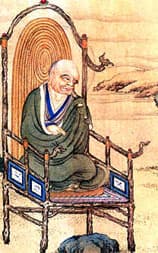
Dayi Daoxin
Dayi Daoxin (580–651) was the fourth Chán Buddhist Patriarch, significant for establishing the "East Mountain Teachings" and developing stable monastic communities. His teachings emphasized meditation and integrating practice into daily life, influencing the future development of Chan Buddhism in China.
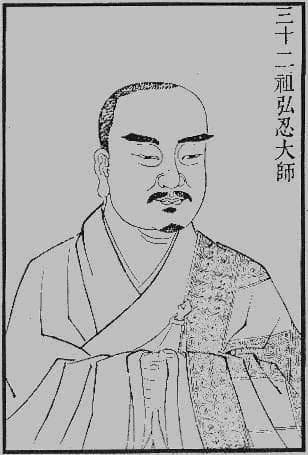
Daman Hongren
Daman Hongren (601–674) was the fifth Patriarch of Chan Buddhism, succeeding Dayi Daoxin and transmitting the lineage to Huineng. His teachings, known as the "East Mountain Teachings," emphasized meditation practice and the purification of the mind from discriminating thoughts. Hongren is considered a pivotal figure in the development of early Chinese Chan Buddhism, with his teachings influencing the tradition as it moved into urban centers and the imperial court.