
Keido Fukushima
Keidō Fukushima was a prominent Japanese Rinzai Zen master and head abbot of Tōfuku-ji in Kyoto. He significantly influenced the development of Rinzai Zen in the West by accepting Western students, including women, and conducting extensive teaching tours and retreats in the United States. Fukushima was also recognized for his authority in calligraphy and his efforts to support the reconstruction of historical monasteries in China.
Key Facts
- ›Japanese Rinzai Zen master and head abbot of Tōfuku-ji.
- ›Played a key role in introducing Rinzai Zen to Western students.
- ›Accepted Westerners, including women, as monks and disciples.
- ›Conducted annual speaking tours and sesshin-retreats at American universities.
- ›Was a respected calligrapher and supported the reconstruction of Chinese monasteries.
- ›Died on his 78th birthday in 2011, having suffered from Parkinson's disease.

Important Relationships
- Kidō Okada
- Zenkei Shibayama
- Yūdō Harada
- Jeff Shore
- Phra Thana Kaokham
- Muho Noelke
- Justin Lanier
- Alex Taikei Vesey
- Hap Tivey
- Tayo Gabler
- James Green
- Tim Armacost
- Ron Sinnige
- Alex Buijs
- Sally Stein
- JōShū-Roku Teishō
- TōFukuji
- Ima Koko O Mushin Ni Ikiru
- Hokkugyō No Kokoro
- Mushin No Satori: KōYūKen KōEnroku
- Zen Wa Mu No ShūKyō: KōYūKen HōWashū
- Chan Shi Wu Di Zong Jiao: Geng You Xuan Fa Yu
- Zen Bridge: the Zen Teachings of Keido Fukushima
TōFuku-Ji, Kyoto, HōFuku-Ji Monastery, Okayama, Nanzen-Ji Monastery, Claremont Colleges, United States, China
Zenkei Shibayama
Japanese, Chinese, English
About Keido Fukushima
Keidō Fukushima (1933–2011)
Keidō Fukushima was a significant Japanese Rinzai Zen master and the head abbot of Tōfuku-ji, a prominent temple in Kyoto, Japan, and a major branch of the Rinzai sect. His tenure and teaching activities played a crucial role in the expansion and adaptation of Rinzai Zen practice in the Western world, particularly in the United States.
Life and Historical Context
Born in 1933, Fukushima began his monastic journey at thirteen under his teacher Kidō Okada at Hōfuku-ji monastery in Okayama. He pursued higher education at Otani University, completing doctoral studies in Buddhist Studies. His intensive monastic training continued at Nanzen-ji Monastery in Kyoto under Zenkei Shibayama, a master instrumental in transplanting Rinzai Zen to the West. Fukushima accompanied Shibayama on early retreats in the United States in the late 1960s and later studied English at the Claremont Colleges, where he led seminars and zazen practice.
Fukushima was acknowledged as a Zen master in 1974 and subsequently held leadership positions at Hōfuku-ji and Tōfuku-ji. He was elected head abbot of Tōfuku-ji in 1991, overseeing a large network of temples. His ministry was marked by a dedication to his teacher Shibayama's vision of bringing Rinzai Zen to Westerners. He notably accepted Western students as monks, including women in sesshin retreats, which deviated from traditional Japanese monastic norms. Fukushima undertook annual speaking tours across the United States, engaging with numerous universities and incorporating sesshin retreats into these visits from 1991 onwards.
Contributions and Legacy
Keidō Fukushima's influence extended beyond his direct teaching. He was a respected calligrapher, and he utilized his artistic skill as a means of education and inspiration, especially during his overseas activities. He also dedicated efforts to raising awareness and funds for the reconstruction of significant historical monasteries in China, contributing to the revival of Chan Buddhism. By 2007, Fukushima began to articulate his evolving perspective on American Zen, recognizing its unique character as predominantly "lay Zen" in contrast to Japanese "monastic Zen," and encouraging its self-reliance.
His health began to decline around 2000 due to Parkinson's disease, and he passed away on his seventy-eighth birthday, March 1, 2011. Fukushima authorized one Japanese Dharma heir, Yūdō Harada, and one lay successor, Jeff Shore. He also accepted disciples from diverse spiritual backgrounds, including a Thai monk and an Anglican priest, demonstrating his inclusive approach to spiritual training.
Source: Wikipedia ↗
Frequently Asked Questions
Who was Keidō Fukushima?
Keidō Fukushima was a highly influential Japanese Rinzai Zen master and the head abbot of Tōfuku-ji, a major branch of the Rinzai sect in Kyoto, Japan. He is particularly noted for his role in spreading Rinzai Zen practice to the Western world.
What was Keidō Fukushima's contribution to Zen in the West?
Fukushima was instrumental in the growth of Rinzai Zen in the West due to his openness to teaching Western students. He accepted them as monks and allowed women to participate in monastic retreats, which was counter to traditional practices. He also conducted numerous speaking tours and led zazen practice at American universities.
What is Tōfuku-ji?
Tōfuku-ji is one of the main branches of the Rinzai sect of Zen Buddhism, with its center in Kyoto, Japan. Keidō Fukushima served as its head abbot, overseeing 363 affiliated temples.
What were Keidō Fukushima's views on American Zen?
By 2007, Fukushima observed that American Zen had learned much from Japanese Zen but should now stand on its own. He contrasted Japanese 'monastic Zen' with what he termed American 'lay Zen,' suggesting a divergence in practice and form.
Was Keidō Fukushima involved in efforts outside of teaching Zen?
Yes, Fukushima actively worked to raise awareness and funds for the revival and reconstruction of important historical monasteries in China. This effort aimed to aid Chan Buddhism's recovery following the impacts of the Cultural Revolution.
What is Keidō Fukushima known for besides his Zen teachings?
Keidō Fukushima was also well-known for his calligraphy. He was an authority on classical Chinese and Kanbun script, and he used calligraphy demonstrations, particularly overseas, as an educational and inspirational tool.
Related Buddhists
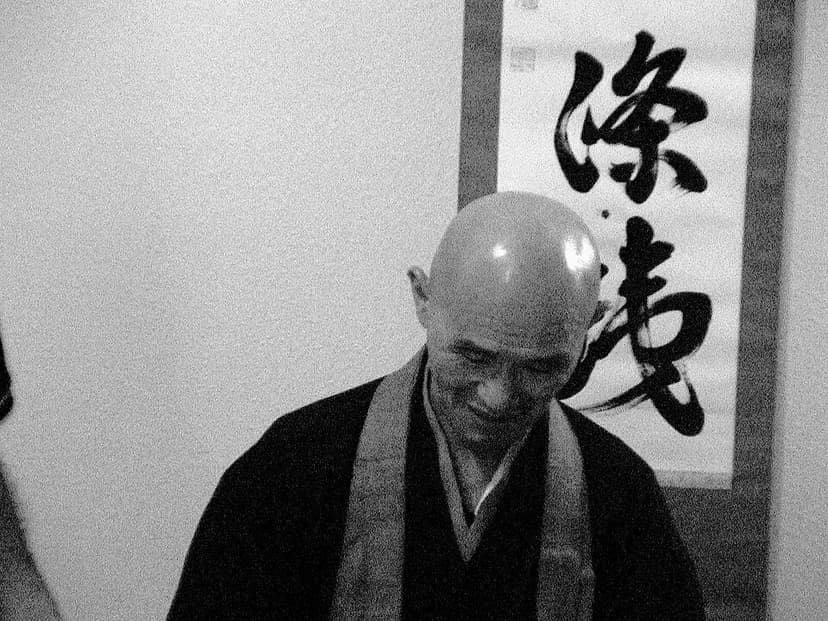
Shodo Harada
Shodo Harada, also known as Harada Roshi, is a prominent Rinzai Zen Buddhist priest, author, and calligrapher. He is the head abbot of Sōgen-ji temple in Okayama, Japan, and is recognized as a "teacher of teachers" whose influence extends globally through his teachings and the establishment of practice centers in the United States and Europe. Harada Roshi is known for his extensive writings and calligraphy, sharing Zen insights with a wide audience.
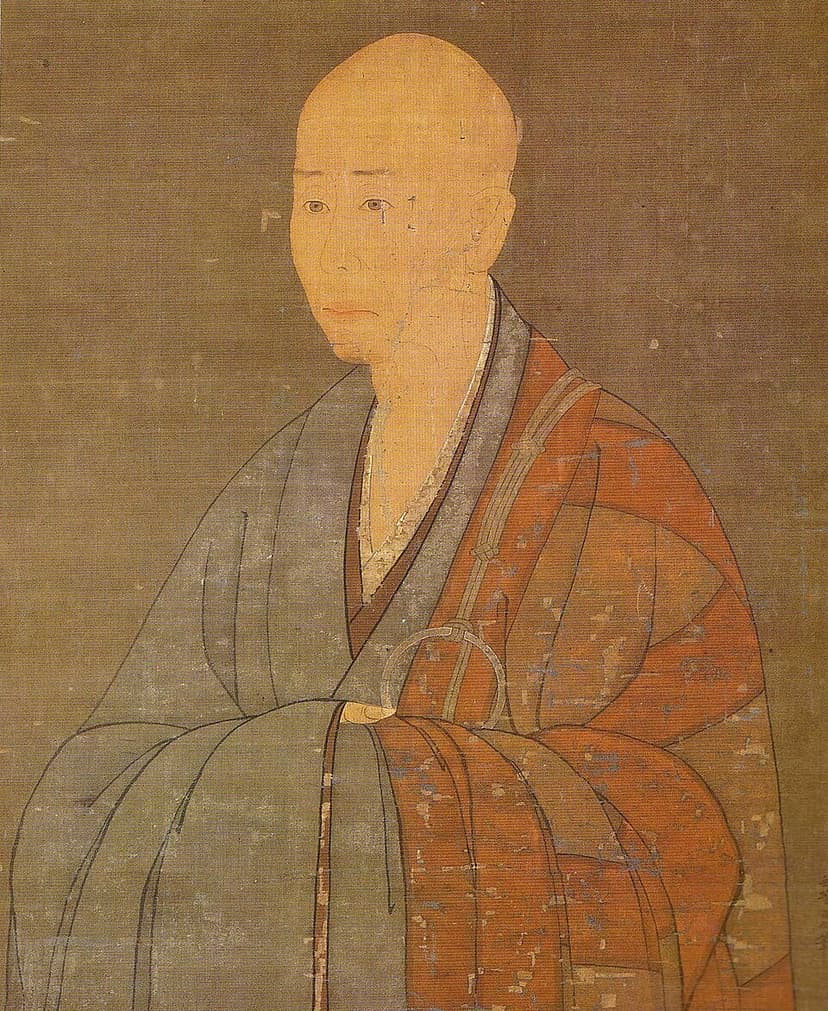
Musō Soseki
Musō Soseki was a prominent Rinzai Zen Buddhist monk, teacher, calligrapher, poet, and garden designer in 14th-century Japan. Revered as the most famous monk of his time, he received the honorific "Musō Kokushi" from Emperor Go-Daigo. He is celebrated for his significant contributions to Zen Buddhism, the development of the Five Mountain System, and the art of Japanese garden design, notably introducing concepts like "Zanzanjosui" and karesansui.
Ikkyū
Ikkyū Sōjun was a Japanese Zen Buddhist monk and poet renowned for his radical interpretation of Zen principles, often challenging monastic traditions and advocating for the integration of everyday life, including sexuality, into spiritual practice. His influence extended to Japanese art, literature, and the tea ceremony, and he remains a significant, albeit controversial, figure in Zen history, often depicted as a folk hero.