
Dahui Zonggao
China·Linji school·Male·12th century
Dahui Zonggao was a prominent 12th-century Chinese Chan (Zen) master and a leading figure of the Linji school during the Song dynasty. He is best known for introducing and promoting the practice of kan huatou, or "inspecting the critical phrase," of a koan, a method he termed "Chan of gongan introspection." Dahui was a vocal critic of the "heretical Chan of silent illumination" associated with the Caodong school.
Key Facts
- ›Introduced the practice of kan huatou (inspecting the critical phrase) for koan study.
- ›Was the 12th generation descendant of the Linji school of Chan Buddhism.
- ›Vigorously criticized the Caodong school's practice of "silent illumination."
- ›Authored or is associated with "the Storehouse of the True Dharma Eye" (Zhengfa Yanzang).
- ›Influenced the Japanese Rinzai tradition, particularly Hakuin Ekaku, through his teachings on great doubt.
- ›Was exiled for a period due to political circumstances but continued teaching.

Important Relationships
- Yuanwu Keqin (Teacher)
- Zhantang Wenzhun (Teacher)
- Lu Shun (Minister of the Right, patron)
- Zhang Jun (Chancellor, student and appointer)
- Hakuin Ekaku (Influenced)
Zhengfa Yanzang
Xuancheng, Anhui, Nanchang, Jiangxi Province, Kaifeng, Lin-An, Hengzhou, Guangdong
Yuanwu Keqin, Zhantang Wenzhun, Yunmen Wenyan, Xuedou Chongxian
Chinese
Monastic Vows
About Dahui Zonggao
Dahui Zonggao (1089–1163)
Dahui Zonggao was a pivotal 12th-century Chinese Chan (Zen) master, renowned as the dominant figure of the Linji school during the Song dynasty. His student, Yuanwu Keqin, recognized him as a Dharma-heir. Dahui is primarily celebrated for introducing and vigorously promoting the practice of "kan huatou," or "inspecting the critical phrase," of a koan story, a method he termed "Chan of gongan introspection."
Life and Historical Context
Born in Xuancheng, Anhui, Dahui left home at sixteen and became a monk at seventeen, with his initiatory name being Zong Gao. He studied under various masters, including a Caodong master and later Zhantang Wenzhun of the Huang-long branch of the Linji School. Dissatisfied with intellectual study, he sought deeper understanding and eventually studied under Yuanwu Keqin. After a period of intense struggle with koans, including Yunmen's "East Mountain walks on the water," Dahui experienced a breakthrough in 1125.
Following the move of the capital south during the Southern Song era, Dahui also relocated and gained considerable influence. He became a strong critic of the "heretical Chan of silent illumination" associated with the Caodong school. At forty-nine, he was appointed abbot of Jingshan monastery and became a leading figure in Southern Song Buddhism, attracting thousands of monks and high-ranking officials.
Disaster struck in 1141 when Dahui was exiled due to political entanglements. He endured hardship, including a plague that claimed the lives of some of his monks, but continued to teach. He was pardoned in 1155 and returned to Jingshan monastery, where he taught until his death in 1163. Emperor Xiaozong of Song bestowed upon him the posthumous title "Chan Master of Great Wisdom," from which his common name derives.
Major Contributions and Teachings
Dahui's teachings centered on the concept of "great doubt" as a necessary catalyst for enlightenment, emphasizing the importance of diligently working with koans. His introduction of the "kan huatou" practice involved focusing on a single word or phrase of a koan, such as the "mu" (no) from the famous koan about a dog, as a tool for piercing through conceptualization.
He vehemently rejected the practice of "silent illumination," which he saw as leading to passivity and a lack of genuine awakening. To combat what he perceived as superficial engagement with koans, Dahui famously ordered the destruction of his teacher's influential "Blue Cliff Record," aiming to preserve the integrity and depth of Chan practice. His teachings on kanhua practice significantly influenced the Rinzai tradition in Japan, notably impacting the master Hakuin Ekaku.
Writings
Among Dahui Zonggao's attributed works is "Zhengfa Yanzang" (The Storehouse of the True Dharma Eye), a collection of koans. He also co-compiled "Chánlín Bǎo Xùn" (Treasured Teachings of the Chan Monastic Tradition), which offers instructions on monastic life. A significant portion of his teachings and letters to students is preserved in "Zhiyue lu," translated as "Swampland Flowers."
Source: Wikipedia ↗
Frequently Asked Questions
What is Dahui Zonggao known for in Chan Buddhism?
Dahui Zonggao is most famous for developing and promoting the practice of kan huatou, also known as "inspecting the critical phrase." This method involved focusing intensely on a single phrase from a koan as a means to achieve enlightenment. He was a dominant figure in the Linji school during the Song dynasty.
What was Dahui Zonggao's stance on the Caodong school's practices?
Dahui Zonggao was a strong critic of what he termed the "heretical Chan of silent illumination," which was associated with the Caodong school. He believed this practice led to drowsiness and intellectualization rather than true enlightenment, contrasting it with the rigorous koan practice he advocated.
What is the significance of the 'mu' koan in Dahui Zonggao's teachings?
Dahui Zonggao frequently used the koan "Does a dog have Buddha-nature or not?" to which the master Zhaozhou replied "wu" (no). He taught that this single word "no" was a powerful tool to sever the doubting mind and achieve liberation, emphasizing that one must be willing to "abandon their life" to truly wield its power.
Did Dahui Zonggao have any notable disciples or influences?
Dahui Zonggao's teachings on kanhua practice became standard for the Linji school and significantly influenced the Japanese Rinzai tradition, notably the teacher Hakuin Ekaku. His letters to lay students reveal a compassionate teaching style, making enlightenment accessible to all.
Related Buddhists
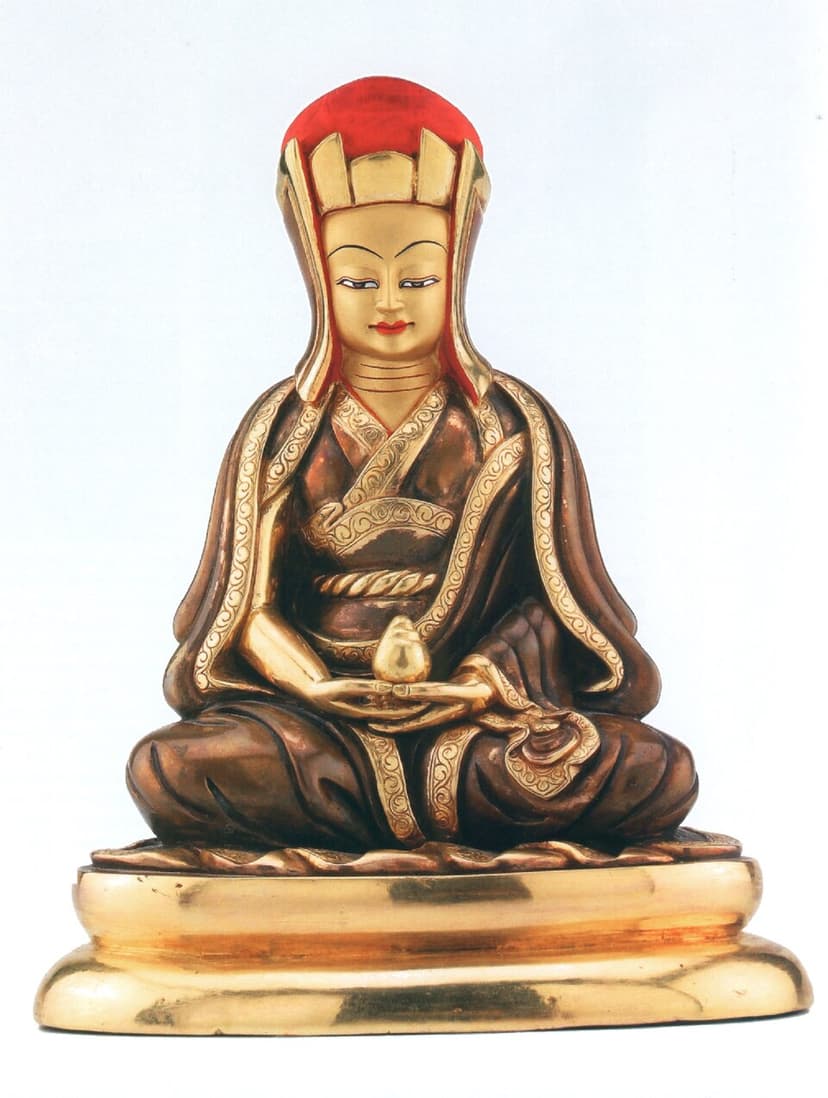
Gampopa
Gampopa Sönam Rinchen, known as the main student of Milarepa, was a pivotal Tibetan Buddhist master who established the foundation of the Kagyu educational tradition. He integrated the Kadampa teachings with Milarepa's Mahamudra practices, authoring the influential "Jewel Ornament of Liberation" and founding the Dagpo Kagyu school.
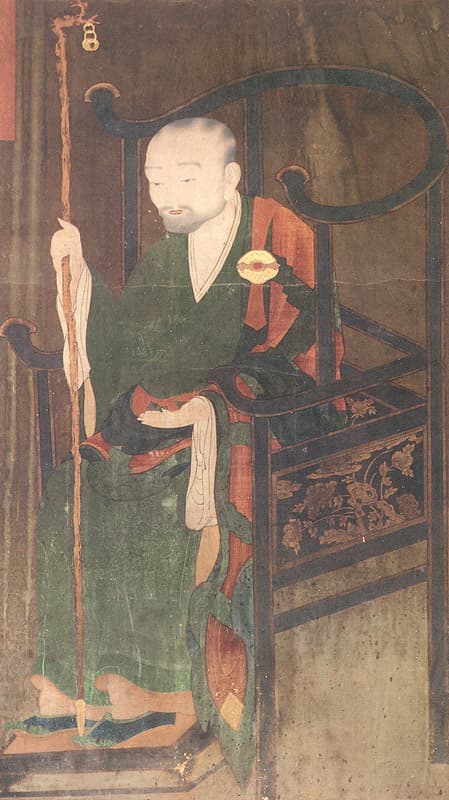
Jinul
Jinul (1158–1210), often called Chinul, was a Korean monk of the Goryeo period and the most influential figure in forming Korean Seon (Zen) Buddhism. He is recognized as the founder of the Jogye Order, having unified disparate Buddhist sects into a cohesive organization through his teachings on meditation and doctrine. Jinul's work emphasized the inherent Buddha-nature within all beings and the importance of self-reliance in spiritual practice.
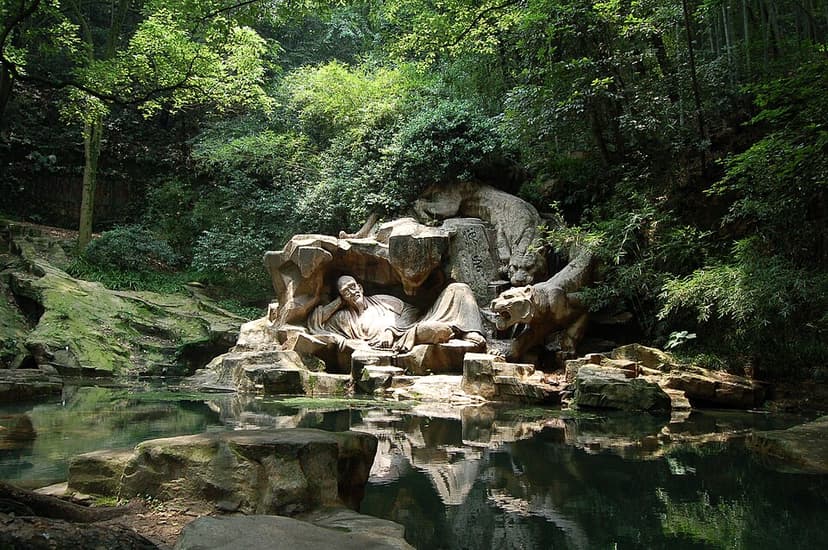
Ji Gong
Ji Gong, born Li Xiuyuan, was a Chan Buddhist monk of the Southern Song dynasty, renowned for his purported supernatural abilities used to aid the poor and combat injustice. Despite his compassionate deeds, he defied monastic rules by consuming alcohol and meat, leading to his expulsion. By his death, he had become a legendary figure in Chinese culture and a deity in folk religion, revered as the incarnation of the Dragon Subduing Arhat.