
Vipassana Meditation Centre
Meditation Centre·Singapore·20th century·Theravada Buddhism
The Vipassana Meditation Centre was established in Singapore in 1993 with the primary aim of propagating and perpetuating Theravada Buddhism and facilitating the practice of Vipassana meditation. It serves as a non-profit organization offering a venue for both Buddhists and non-Buddhists to cultivate their dhamma practice.
Key Facts
- ›Founded in 1993 as a non-profit organization.
- ›Dedicated to propagating and perpetuating Theravada Buddhism.
- ›Provides opportunities for the practice of Vipassana meditation.
- ›Affiliated with notable advisors and teachers such as Ovadacariya Sayadaw U Panditabhivamsa.
- ›Has multiple meditation locations globally, including Singapore.
- ›Not related to the non-sectarian society 'Vipassana International Center (Singapore)'.
Important Relationships
- Ovadacariya Sayadaw U Panditabhivamsa
Vipassana Meditation Practice Opportunities
About Vipassana Meditation Centre
The Vipassana Meditation Centre is a Buddhist facility established in Singapore in 1993. Its core mission is to propagate and perpetuate Theravada Buddhism, while also offering a dedicated space for individuals to practice Vipassana meditation. The centre operates as a non-profit organization, extending its services to both Buddhists and non-Buddhists who wish to cultivate their dhamma practice.
Historical Context and Purpose
Founded in 1993, the Vipassana Meditation Centre was conceived with the objective of providing accessible opportunities and a suitable venue for spiritual development. It serves as a hub for those seeking to deepen their understanding and practice of Buddhist principles, particularly Vipassana meditation, which is a key element of its offerings.
Affiliations and Reach
Notable figures associated with the centre include Ovadacariya Sayadaw U Panditabhivamsa, who serves as an advisor and teacher. The Vipassana Meditation Centre is part of a broader network, with several meditation locations established across the globe. These international sites include centers in countries such as Australia, China, and South Korea, in addition to its primary location in Singapore.
Distinction from Other Organizations
It is important to note that the Vipassana Meditation Centre in Singapore is distinct from the non-sectarian society known as 'Vipassana International Center (Singapore)'. The latter is recognized for offering 10-day residential meditation courses taught by SN Goenka, following the tradition of Sayagyi U Ba Khin.
Practice and Tradition
The centre is grounded in the Theravada Buddhist tradition. Vipassana meditation, meaning 'insight' meditation, is a central practice, focusing on developing deep awareness of the true nature of reality through direct observation. The centre aims to make this practice available to a wide audience, fostering personal growth and spiritual insight.
Source: Wikipedia ↗
Frequently Asked Questions
When was the Vipassana Meditation Centre founded?
The Vipassana Meditation Centre was founded in 1993. It was established as a non-profit organization with specific objectives for Buddhist practice in Singapore.
What is the main purpose of the Vipassana Meditation Centre?
The centre's main purpose is to propagate and perpetuate Theravada Buddhism and to provide opportunities for the practice of Vipassana meditation. It aims to help individuals cultivate their dhamma practice.
Who are some notable figures associated with the centre?
Notable advisors and teachers affiliated with the Vipassana Meditation Centre include Ovadacariya Sayadaw U Panditabhivamsa. These figures contribute to the centre's teachings and guidance.
Does the Vipassana Meditation Centre have international branches?
Yes, there are several meditation locations associated with the Vipassana Meditation Centre across the world. Examples of these locations include Australia, China, and South Korea, in addition to Singapore.
Is this centre related to Vipassana International Center (Singapore)?
No, the Vipassana Meditation Centre is not related to the non-sectarian society 'Vipassana International Center (Singapore)'. The latter offers 10-day residential meditation courses taught by SN Goenka in the tradition of Sayagyi U Ba Khin.
Related Buddhist Temples

Huyen Khong Son Thuong Monastery
Huyen Khong Son Thuong Monastery, also known as Abhisuññatāvanārama in Pali, is a significant Theravada Buddhist monastery located in the ancient capital region of Huế, Vietnam. Established in 1989, it is renowned for its serene landscape, characterized by a pine forest and a large garden with ponds, water lilies, orchids, and ancient trees, blending traditional Vietnamese architecture with a focus on meditation and spiritual practice.

Ananda Temple
The Ananda Temple, built in Bagan, Myanmar in 1105 AD, is a significant Buddhist temple renowned for its architectural fusion of Mon and Indian styles. It is celebrated for its four standing Buddha statues, intricate stone sculptures, and glazed terra-cotta plaques depicting Jataka tales, serving as a "veritable museum of stones" and a testament to Theravada Buddhism. The temple, though damaged by an earthquake in 1975, has been fully restored and remains a highly revered site and a cultural icon of Myanmar.
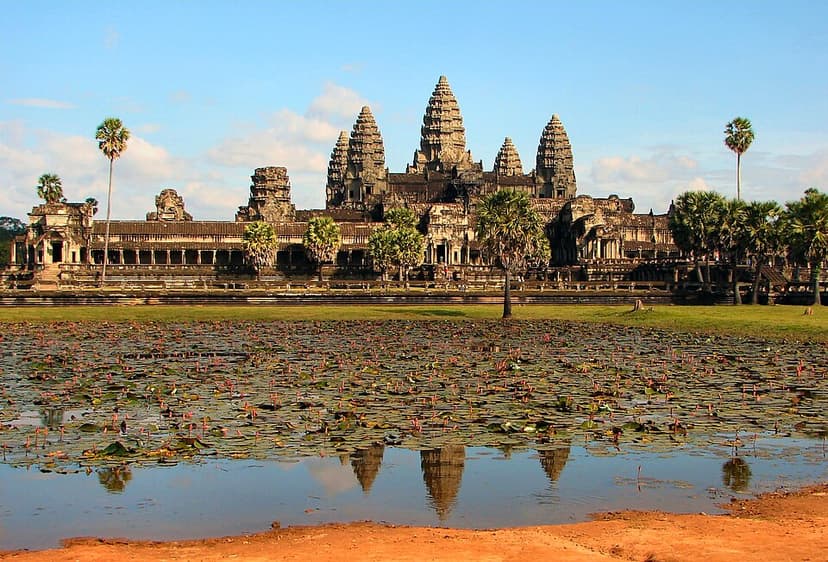
Angkor Wat
Angkor Wat, originally a Hindu temple dedicated to Vishnu and commissioned by King Suryavarman II in the early 12th century, is the largest religious complex in the world and a cornerstone of Khmer architecture. It was gradually transformed into a Theravada Buddhist temple from the late 13th century onwards and has remained an active center of Buddhist worship, serving as a potent symbol of Cambodia and appearing on its national flag.