
Ananda Temple
The Ananda Temple, built in Bagan, Myanmar in 1105 AD, is a significant Buddhist temple renowned for its architectural fusion of Mon and Indian styles. It is celebrated for its four standing Buddha statues, intricate stone sculptures, and glazed terra-cotta plaques depicting Jataka tales, serving as a "veritable museum of stones" and a testament to Theravada Buddhism. The temple, though damaged by an earthquake in 1975, has been fully restored and remains a highly revered site and a cultural icon of Myanmar.
Key Facts
- ›Built in 1105 AD during the reign of King Kyansittha of the Pagan Dynasty.
- ›Features a cruciform layout with four standing Buddha statues facing cardinal directions.
- ›Exhibits a fusion of Mon and Indian architectural styles, with strong influences from Bengal and Orissa.
- ›Houses 554 terra-cotta plaques illustrating Jataka tales and 80 stone reliefs depicting scenes from Buddha's life.
- ›Suffered damage in the 1975 earthquake but has been fully restored.
- ›Known as the "Westminster Abbey of Burma" and a "veritable museum of stones".

Important Relationships
- King Kyansittha
- Venerable Ananda
- Shin Arahan
- Four Standing Buddha Statues
- Cruciform Layout
- 554 Terra-Cotta Plaques Depicting Jataka Tales
- 80 Stone Reliefs of Buddha's Life
- Fusion of Mon and Indian Architectural Styles
- Hti
- Built In 1105 Ad
- Damaged By Earthquake In 1975
- Fully Restored After 1975 Earthquake
- 900th Anniversary Celebrated In 1990 With Gilded Spires
- Annual Pagoda Festival Held During Pyatho
Mon, Indian
About Ananda Temple
The Ananda Temple, situated in the ancient city of Bagan, Myanmar, stands as a paramount example of early Bagan architecture and a significant monument of Theravada Buddhism. Constructed in 1105 AD during the reign of King Kyansittha, the temple is celebrated for its masterful blend of Mon and Indian architectural styles, drawing inspiration from structures in Bengal and Orissa. It is often referred to as the "Westminster Abbey of Burma" and a "veritable museum of stones" due to its rich collection of religious art and its historical importance.
Architectural and Artistic Significance
The temple's cruciform layout is a key feature, leading to a central cube that houses four immense standing Buddha statues, each facing a cardinal direction. These statues, some of which are original Bagan-style representations while others are later replacements, are adorned with gold leaf. The temple's exterior and interior are elaborately decorated with 554 glazed terra-cotta plaques depicting scenes from the Jataka tales (Buddha's past lives) and 80 large stone reliefs illustrating episodes from the life of the Buddha. These artistic elements were intended by King Kyansittha to visually convey Buddhist teachings and his interpretation of the Dhamma to his people.
History and Restoration
The Ananda Temple's construction marked a stylistic transition in early Bagan architecture. Despite its grandeur, the temple suffered damage during the 1975 earthquake. However, it has since undergone comprehensive restoration and is meticulously maintained, including frequent repainting and whitewashing. The temple's 900th anniversary in 1990 was commemorated with the gilding of its spires. It remains a highly revered site for Buddhists and a major tourist attraction in Bagan.
Legends and Etymology
The name 'Ananda' is derived from the Venerable Ananda, a principal disciple and personal attendant of the Buddha, signifying "bliss" or "endless wisdom." Legends surrounding its construction are dramatic, with one account suggesting that King Kyansittha had the architects killed to prevent them from building a similar structure elsewhere, while another mentions them being buried alive as guardian spirits. The temple also features statues of King Kyansittha and Shin Arahan, the monk who converted him to Theravada Buddhism, at the western entrance.
Source: Wikipedia ↗
Frequently Asked Questions
When was the Ananda Temple built?
The Ananda Temple was built in 1105 AD during the reign of King Kyansittha of the Pagan Dynasty.
What is the architectural style of the Ananda Temple?
The temple is an architectural wonder noted for its fusion of Mon and adopted Indian styles, with significant influences from temples in Bengal and Orissa.
What are the prominent features inside the Ananda Temple?
Inside, the temple houses four standing Buddha statues, each facing a cardinal direction. It also features two circumambulatory passages with vaulted roofs, adorned with 80 large stone reliefs depicting Buddha's life and 554 terra-cotta plaques illustrating Jataka tales.
What is the significance of the four Buddha statues?
The four standing Buddha statues, named Kassapa, Kakusandha, Konagamana, and Gautama, are said to represent different Buddhas and symbolize the attainment of nirvana. They are a central focus of veneration within the temple.
Has the temple undergone restoration?
Yes, the Ananda Temple was significantly damaged in the 1975 earthquake but has since been fully restored and is actively maintained. Its spires were gilded in 1990 for its 900th anniversary.
What is the legend behind the construction of the Ananda Temple?
According to legend, eight monks described a Himalayan cave temple to King Kyansittha, who then commissioned them to build a similar temple. To preserve its uniqueness, the king is said to have had the architects killed after its completion, though alternative accounts suggest they were buried alive as guardian spirits.
Related Buddhist Temples
Angkor Wat
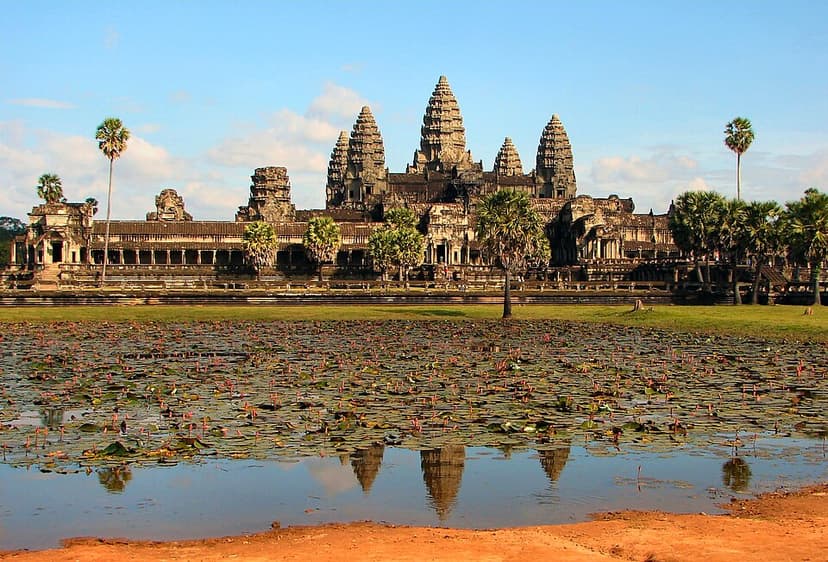
Angkor Wat, originally a Hindu temple dedicated to Vishnu and commissioned by King Suryavarman II in the early 12th century, is the largest religious complex in the world and a cornerstone of Khmer architecture. It was gradually transformed into a Theravada Buddhist temple from the late 13th century onwards and has remained an active center of Buddhist worship, serving as a potent symbol of Cambodia and appearing on its national flag.

Bawgyo Pagoda
Bawgyo Pagoda is a significant Buddhist temple located in Hsipaw, Myanmar, constructed in the 12th century. It is particularly renowned for the annual Buddhist festival held every March, which commemorates its founding and draws many devotees.

Alodawpyi Pagoda
The Alodawpyi Pagoda, also known as Alo-daw Pyi or Alodawpyay Pagoda, is a significant Buddhist temple located in Bagan, Myanmar. Constructed in the early 12th century, it is recognized for its ancient architecture and surviving fresco paintings. The pagoda's name translates to "Wish-fulfilling," and it serves as a popular pilgrimage destination.