
Shin Arahan
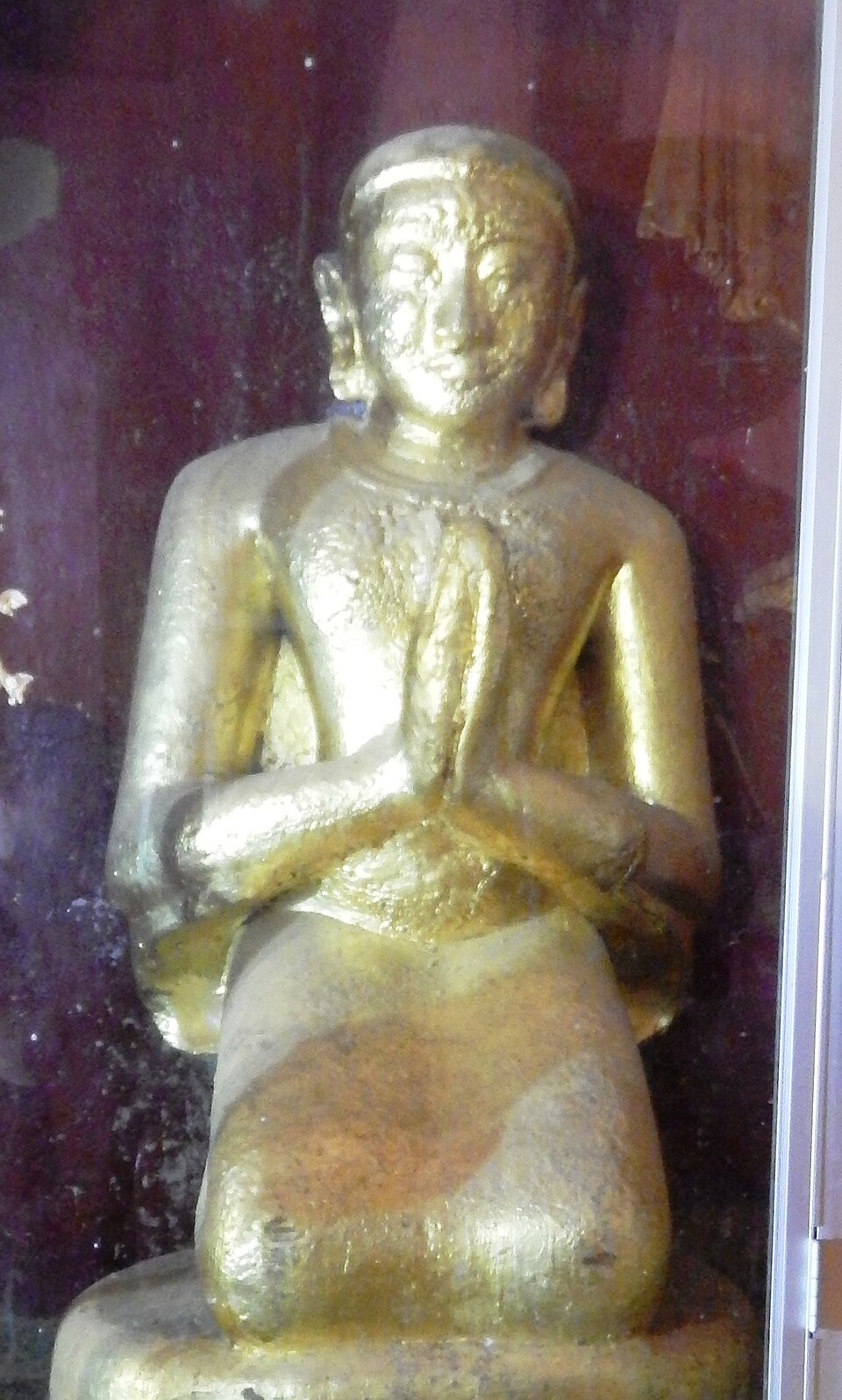
Shin Arahan was a prominent Theravada Buddhist monk and the Thathanabaing (chief monk) of the Pagan Kingdom from 1056 to 1115. He is historically credited with converting King Anawrahta to Theravada Buddhism and initiating significant religious reforms. Although historical evidence suggests his practice retained strong Hindu influences, his role in stabilizing and spreading Theravada Buddhism in mainland Southeast Asia is considered a pivotal turning point.
Key Facts
- ›Served as Thathanabaing of Pagan Kingdom from 1056 to 1115.
- ›Credited with converting King Anawrahta to Theravada Buddhism.
- ›Oversaw reformation of Buddhist school in Pagan.
- ›His teachings and practices were influenced by Hinduism.
- ›His conversion of Anawrahta is viewed as a key turning point for Theravada Buddhism.
- ›Contributed to the spread of Theravada Buddhism in mainland Southeast Asia.
Important Relationships
- King Anawrahta
- King Saw Lu
- King Kyansittha
- King Alaungsithu
- Shin Panthagu (student)
Tripitikataik Library
Pagan Kingdom, Thaton Kingdom, Pagan, Tenasserim
Bhikkhu
Thathanabaing
About Shin Arahan
Shin Arahan, also known by his formal name Dhammadassī Mahāthera, was a pivotal figure in the history of Theravada Buddhism in Burma. Born around 1034 in the Thaton Kingdom, he rose to prominence as the Thathanabaing (chief monk) of the Pagan Kingdom from 1056 until his death in 1115. He served as a religious advisor to four successive Pagan kings, most notably King Anawrahta.
Life and Historical Context
Shin Arahan's biography, first appearing in chronicles from the 18th century, details his dissatisfaction with the perceived decay of Theravada Buddhism and the increasing influence of Hinduism in the Thaton Kingdom. At the age of 22, he traveled to Pagan, where he met King Anawrahta. The king, himself dissatisfied with the corrupt practices of the existing Ari monks, was converted by Shin Arahan to Theravada Buddhism.
This conversion marked a significant turning point. Shin Arahan, with Anawrahta's powerful backing, initiated sweeping religious reforms. These reforms were bolstered by the conquest of Thaton, which brought valuable scriptures and clergy to Pagan. Shin Arahan oversaw the establishment of libraries, the training of the sangha, and the founding of numerous monasteries across the kingdom, traveling extensively to spread the religion.
Religious Reforms and Influences
Shin Arahan's reforms aimed to purify and orthodoxize Theravada Buddhism. He invited scholars from neighboring regions, including Ceylon and India, to Pagan. However, historical analysis suggests that the Theravada Buddhism promoted by Shin Arahan and the early Pagan kings retained strong influences from Hinduism, incorporating elements not typically found in later, more orthodox forms of the tradition. Despite this, his efforts are credited with stabilizing the Buddhist school in a region where it had been in decline.
Legacy
Upon King Anawrahta's death in 1077, Shin Arahan continued his role as a religious advisor to subsequent kings, including Saw Lu, Kyansittha, and Alaungsithu, assisting in their coronations. He died at the age of 80 in 1115. Although the specific school of Buddhism he championed eventually faded, his conversion of King Anawrahta is widely regarded as a crucial event that greatly strengthened Theravada Buddhism. This patronage from the Pagan Empire provided a vital sanctuary for the school, enabling its subsequent spread throughout mainland Southeast Asia in the 13th and 14th centuries.
Source: Wikipedia ↗
Frequently Asked Questions
Who was Shin Arahan?
Shin Arahan was a highly influential Theravada Buddhist monk who served as the Thathanabaing of the Pagan Kingdom. He was a religious advisor to four kings and played a crucial role in the religious landscape of ancient Burma.
What is Shin Arahan most known for?
Shin Arahan is primarily known for converting King Anawrahta to Theravada Buddhism and for initiating significant religious reforms. This conversion is considered a major turning point in the history of Theravada Buddhism in Southeast Asia.
What was the nature of the Buddhism Shin Arahan practiced and promoted?
While Shin Arahan promoted Theravada Buddhism, historical evidence suggests that his practice and the early Buddhism of Pagan were significantly influenced by Hinduism, including Tantric, Saivite, and Vaishnava elements.
What was Shin Arahan's impact on the spread of Buddhism?
Shin Arahan's work, particularly his influence on King Anawrahta, helped stabilize Theravada Buddhism when it was in retreat elsewhere. The patronage of the Pagan Empire under his guidance facilitated the later spread of Buddhism to Siam, Laos, and Cambodia.
When and where did Shin Arahan live?
Shin Arahan lived around 1034 to 1115. He was a native of the Thaton Kingdom and was active in the Pagan Kingdom of Burma.
Related Buddhists

Mahasi Sayadaw
Mahasi Sayadaw was a prominent Burmese Theravada Buddhist monk and meditation master renowned for popularizing Vipassana (insight) meditation globally. He developed a widely adopted teaching method based on the "New Burmese Method," emphasizing ethical conduct as a foundation for meditation practice. His influence extended across Asia and into the West, training hundreds of thousands of meditators and contributing significantly to Buddhist scholarship.
Ashin Abhijātābhivaṃsa
Ashin Abhijātābhivaṃsa, also known as Sagaing Tipiṭaka Sayadaw, was a highly respected Burmese Buddhist monk. He gained prominence for his exceptional mastery of the Tipitaka, earning him the prestigious titles of Tipiṭakadhara and Tipiṭakakovida, and becoming the 12th recipient of the Tipiṭakadhara Dhammabhaṇḍāgārika title. He served as chief abbot of Saddhamma Mānitāyon Monastery in Yangon and abbot of Saddhamma Jotaka Subodhāyon Monastery in Monywa.
Mogok Sayadaw
Mogok Sayadaw, born U Vimala, was a prominent Theravada Buddhist bhikkhu and vipassanā meditation master. He is recognized for establishing his own distinct meditation tradition, the Mogok tradition, which emphasizes dependent origination and cittanupassana. His teachings and meditation methods continue to be practiced and learned by Myanmar Buddhists.