
Mahasi Sayadaw
Mahasi Sayadaw was a prominent Burmese Theravada Buddhist monk and meditation master renowned for popularizing Vipassana (insight) meditation globally. He developed a widely adopted teaching method based on the "New Burmese Method," emphasizing ethical conduct as a foundation for meditation practice. His influence extended across Asia and into the West, training hundreds of thousands of meditators and contributing significantly to Buddhist scholarship.
Key Facts
- ›Born in 1904 in Seikkhun village, Upper Burma, he was ordained as a novice at age twelve and fully ordained at twenty.
- ›He developed a distinctive Vipassana meditation technique based on the Satipaṭṭhāna Sutta, focusing on observing bodily sensations.
- ›Mahasi Sayadaw was a key figure and final editor at the Sixth Buddhist Council in 1954.
- ›He established numerous meditation centers throughout Burma and in countries like Sri Lanka, Indonesia, and Thailand.
- ›In 1979, he traveled to the West, conducting retreats at centers such as the Insight Meditation Society in Massachusetts.
- ›He published nearly seventy volumes of Buddhist literature in Burmese and several works in English detailing his meditation methods.

Important Relationships
- U Nu (Prime Minister of Burma who invited him to Yangon)
- Sixth Buddhist Council
- Satipatthana Vipassana Meditation
- Thoughts On the Dhamma
- the Ups and Downs of Rebirth
- Practical Vipassana Exercises
- Progress of Insight: Treatise On Buddhist Satipathana Meditation
- Manual of Insight
- Burmese Translation of the Visuddhimagga
Seikkhun Village, Moulmein, Thaton, Sagaing Hills, Yangon, Barre, Massachusetts
U NāRada, Mingun Jetawun SayāDaw, Aletawya SayāDaw, Thelon SayāDaw
Burmese, English
Novice Vows, Full Ordination Vows
Renowned Teacher, Influential Figure
About Mahasi Sayadaw
Mahasi Sayadaw: Master of Vipassana Meditation
Mahasi Sayadaw U Sobhana (1904–1982) was a highly influential Burmese Theravada Buddhist monk and meditation master. He is widely credited with popularizing Vipassana (insight) meditation globally, particularly through his systematic teaching method known as the "New Burmese Method."
Life and Teachings
Born in Seikkhun village, Upper Burma, Mahasi Sayadaw pursued extensive scriptural studies and passed rigorous government examinations, earning the Dhammācariya degree. A pivotal moment in his spiritual development occurred in 1931 when he dedicated himself to intensive Vipassana practice under Mingun Jetawun Sayādaw. This practice was rooted in the teachings of the Satipaṭṭhāna Sutta, emphasizing mindfulness of breathing and observation of physical and mental phenomena to cultivate insight into impermanence, suffering, and non-self.
Mahasi Sayadaw's teaching style stressed the importance of ethical conduct (sīla) as a foundational element for meditation. His method involves anchoring attention on the sensations of the abdomen during breathing and carefully observing any arising sensations or thoughts, integrating this with reflections on Buddhist doctrines like causality.
Contributions and Legacy
Mahasi Sayadaw was a significant participant in the Sixth Buddhist Council in 1954, serving as a questioner and final editor. He was invited by Prime Minister U Nu to establish a permanent meditation center in Yangon, known as the Mahāsi Sāsana Yeiktha, which became a major hub for meditation training. Under his guidance, numerous meditation centers were established not only throughout Burma but also in countries such as Sri Lanka, Indonesia, and Thailand. By 1972, his centers had trained over 700,000 meditators.
In 1979, Mahasi Sayadaw traveled to the West, conducting retreats at prominent centers like the Insight Meditation Society in Barre, Massachusetts. His teachings attracted meditators from around the world, and his legacy continues through the many students and centers that uphold his Vipassana meditation methods. He authored numerous Buddhist texts in Burmese and several works in English, including "Manual of Insight" and "Progress of Insight."
Source: Wikipedia ↗
Frequently Asked Questions
What is Mahasi Sayadaw's primary contribution to Buddhist meditation?
Mahasi Sayadaw is best known for popularizing Vipassana (insight) meditation, particularly through his "New Burmese Method." This approach emphasizes ethical conduct as a prerequisite and then guides practitioners to observe bodily sensations and mental phenomena with mindfulness.
What is the core practice taught by Mahasi Sayadaw?
His method, derived from the Satipaṭṭhāna Sutta, involves mindfulness of breathing to observe the rising and falling of the abdomen. This is coupled with reflecting on Buddhist teachings on causality to gain insight into impermanence, suffering, and non-self.
Where did Mahasi Sayadaw establish meditation centers?
Mahasi Sayadaw played a significant role in establishing meditation centers across Burma. His influence also led to the creation of centers in Sri Lanka, Indonesia, and Thailand, and he traveled to the West to teach in places like the United States.
When did Mahasi Sayadaw travel to the West to teach?
Mahasi Sayadaw first traveled to the West in 1979. During this trip, he held retreats at newly founded centers, including the Insight Meditation Society in Barre, Massachusetts.
Related Buddhists
Mogok Sayadaw
Mogok Sayadaw, born U Vimala, was a prominent Theravada Buddhist bhikkhu and vipassanā meditation master. He is recognized for establishing his own distinct meditation tradition, the Mogok tradition, which emphasizes dependent origination and cittanupassana. His teachings and meditation methods continue to be practiced and learned by Myanmar Buddhists.
Ashin Abhijātābhivaṃsa
Ashin Abhijātābhivaṃsa, also known as Sagaing Tipiṭaka Sayadaw, was a highly respected Burmese Buddhist monk. He gained prominence for his exceptional mastery of the Tipitaka, earning him the prestigious titles of Tipiṭakadhara and Tipiṭakakovida, and becoming the 12th recipient of the Tipiṭakadhara Dhammabhaṇḍāgārika title. He served as chief abbot of Saddhamma Mānitāyon Monastery in Yangon and abbot of Saddhamma Jotaka Subodhāyon Monastery in Monywa.
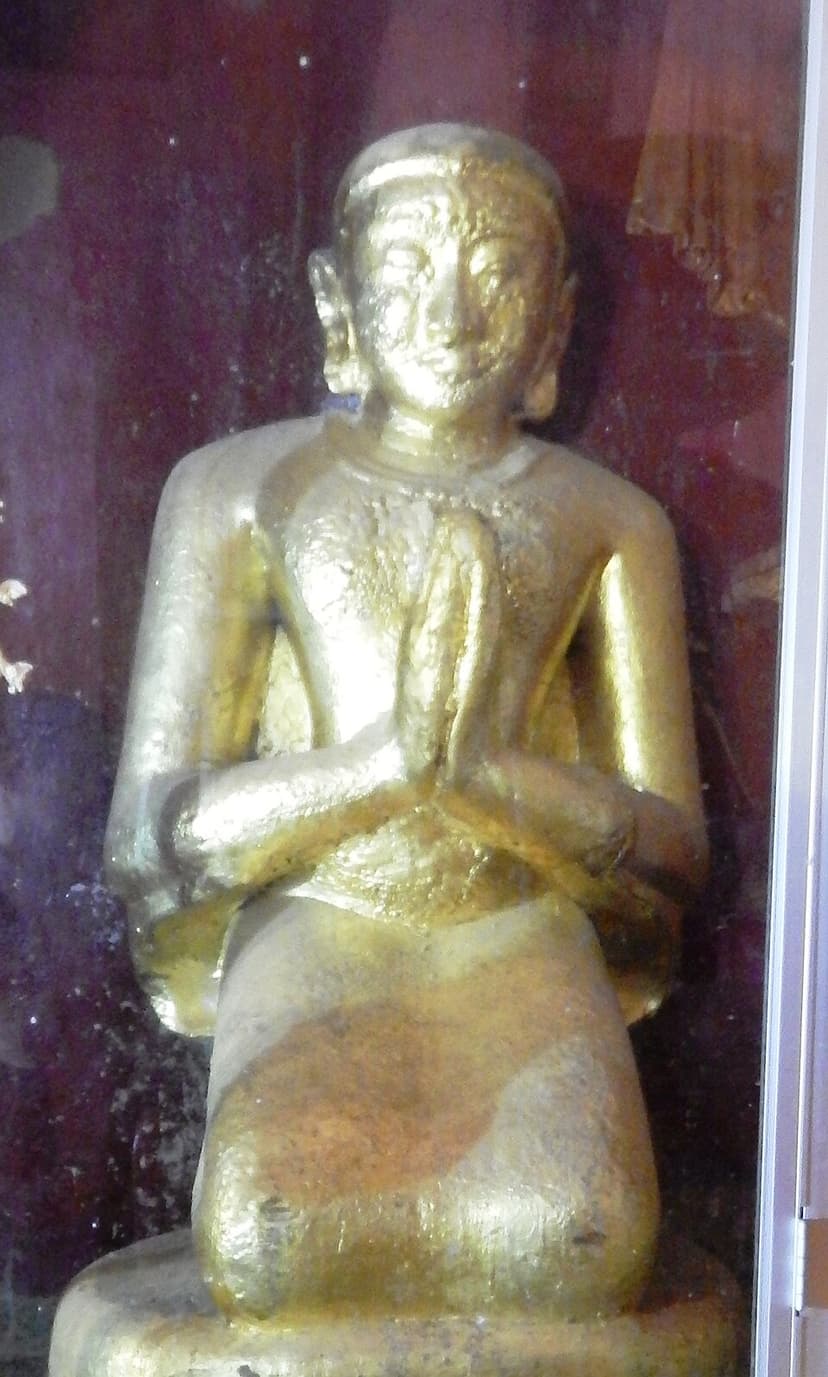
Shin Arahan
Shin Arahan was a prominent Theravada Buddhist monk and the Thathanabaing (chief monk) of the Pagan Kingdom from 1056 to 1115. He is historically credited with converting King Anawrahta to Theravada Buddhism and initiating significant religious reforms. Although historical evidence suggests his practice retained strong Hindu influences, his role in stabilizing and spreading Theravada Buddhism in mainland Southeast Asia is considered a pivotal turning point.