
Anawrahta
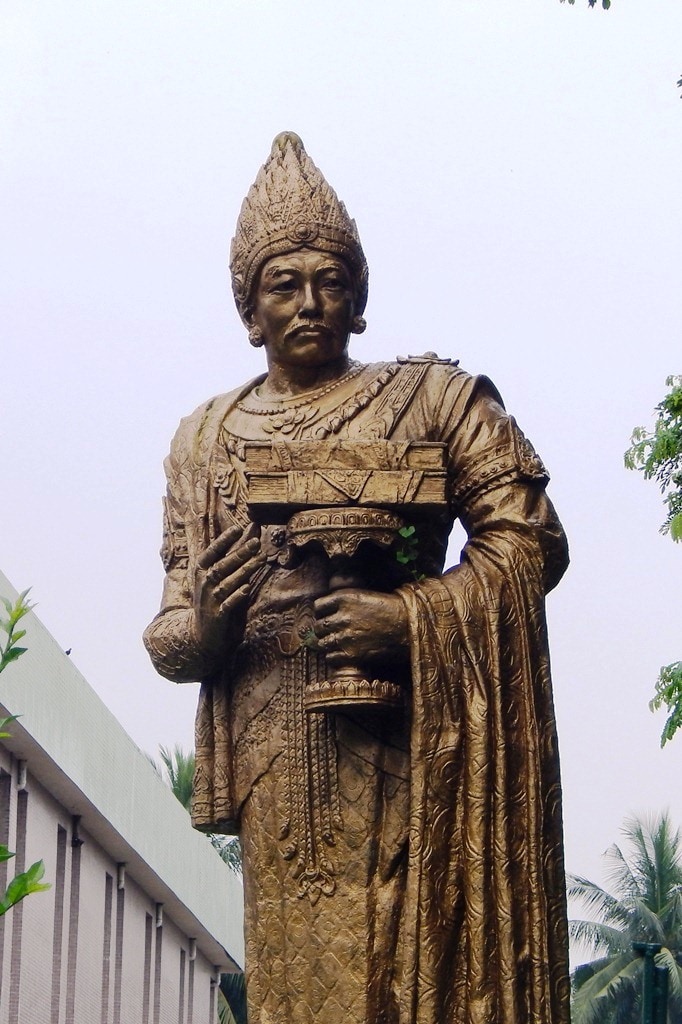
Anawrahta Minsaw was the founder of the Pagan Empire and is considered the father of the Burmese nation. He transformed a small principality into the first Burmese Empire, unifying the Irrawaddy valley and implementing significant social, religious, and economic reforms. His embrace of Theravada Buddhism provided a crucial refuge for the tradition, influencing its spread throughout Southeast Asia.
Key Facts
- ›Founded the Pagan Empire, the first unified Burmese state.
- ›Unified the Irrawaddy valley for the first time in history.
- ›Implemented key social, religious, and economic reforms, including irrigation systems.
- ›Embraced Theravada Buddhism and made Pagan a center for its learning.
- ›Successfully halted the expansion of the Khmer Empire.
- ›His reign marks the beginning of verifiable Burmese history.
Important Relationships
- King Kunhsaw Kyaunghpyu (father)
- Queen Myauk Pyinthe (mother)
- Kyiso (step-brother)
- Sokkate (step-brother)
- Shin Arahan (monk)
- Vijayabahu I of Ceylon (ally)
Pagan, Irrawaddy Valley, Shan States, Arakan, Tenasserim Coastline, Thaton
Shin Arahan
About Anawrahta
Anawrahta Minsaw
Anawrahta Minsaw (1014–1077), often referred to as Anawrahta, was the pivotal founder of the Pagan Empire and is widely regarded as the father of the Burmese nation. His accession to the Pagan throne in 1044 marked the beginning of historically verifiable Burmese history. Anawrahta transformed a modest principality in Upper Burma into the first unified Burmese Empire, controlling the entire Irrawaddy valley and extending his suzerainty over peripheral regions.
Life and Historical Context
Born Min Saw, Anawrahta's early life was marked by the deposition of his father, King Kunhsaw Kyaunghpyu, by his step-brothers Kyiso and Sokkate. Growing up in their shadow, Min Saw eventually raised a rebellion against Sokkate, whom he defeated in single combat in 1044. He then ascended the throne, taking the title Anawrahta, a Burmanized form of the Sanskrit name Aniruddha.
Major Contributions
Anawrahta's reign was characterized by extensive reforms that profoundly shaped Burmese history. Economically, he developed the arid lands of central Burma into a vital rice granary through the construction of an intricate irrigation system, much of which is still in use. Militarily, he organized Pagan's forces, including his renowned "Four Great Paladins." His conquests unified the Irrawaddy valley, bringing regions like the Shan Hills and Arakan under Pagan's influence.
Religious Reforms and Legacy
Perhaps Anawrahta's most significant contribution was his embrace and promotion of Theravada Buddhism. Converted by the monk Shin Arahan, he found Theravada Buddhism a powerful alternative to the established Ari tradition. Following his conquest of Thaton, which brought Buddhist scriptures and clergy to Pagan, Anawrahta implemented religious reforms, diminishing the power of the Ari monks and establishing Pagan as a center for Theravada learning. This patronage provided a crucial refuge for Theravada Buddhism at a time when it was in retreat elsewhere in Asia, facilitating its later spread throughout mainland Southeast Asia.
Important Relationships
Key figures in Anawrahta's life included his son and lead general Kyansittha, his father Kunhsaw Kyaunghpyu, and the influential monk Shin Arahan who converted him to Theravada Buddhism. He also had significant interactions with rulers of neighboring kingdoms, such as Vijayabahu I of Ceylon, whom he aided against Chola invaders, and Manuha, the king of Thaton.
Source: Wikipedia ↗
Frequently Asked Questions
Who was Anawrahta Minsaw?
Anawrahta Minsaw was the founder of the Pagan Empire and is widely regarded as the father of the Burmese nation. He reigned from 1044 to 1077 CE, establishing the first unified Burmese state.
What were Anawrahta's major accomplishments?
Anawrahta unified the Irrawaddy valley, established the Pagan Empire, and implemented significant reforms in irrigation, administration, and religion. He is also credited with stopping the advance of the Khmer Empire and promoting Theravada Buddhism.
What was Anawrahta's role in the spread of Theravada Buddhism?
Anawrahta's adoption of Theravada Buddhism and his empire's strength provided a safe haven for the tradition when it was in decline elsewhere in South and Southeast Asia. This contributed to its later growth in regions like Thailand, Laos, and Cambodia.
When did Anawrahta reign?
Anawrahta ascended the throne on December 16, 1044, and reigned until his death on April 11, 1077. His reign is considered the starting point of historically verifiable Burmese history.
What impact did Anawrahta's economic reforms have?
Anawrahta's economic reforms focused on developing irrigation systems, turning arid lands into rice granaries. This provided Upper Burma with an enduring economic base, enabling its dominance over the Irrawaddy valley for centuries.
Related Buddhists
Atiśa
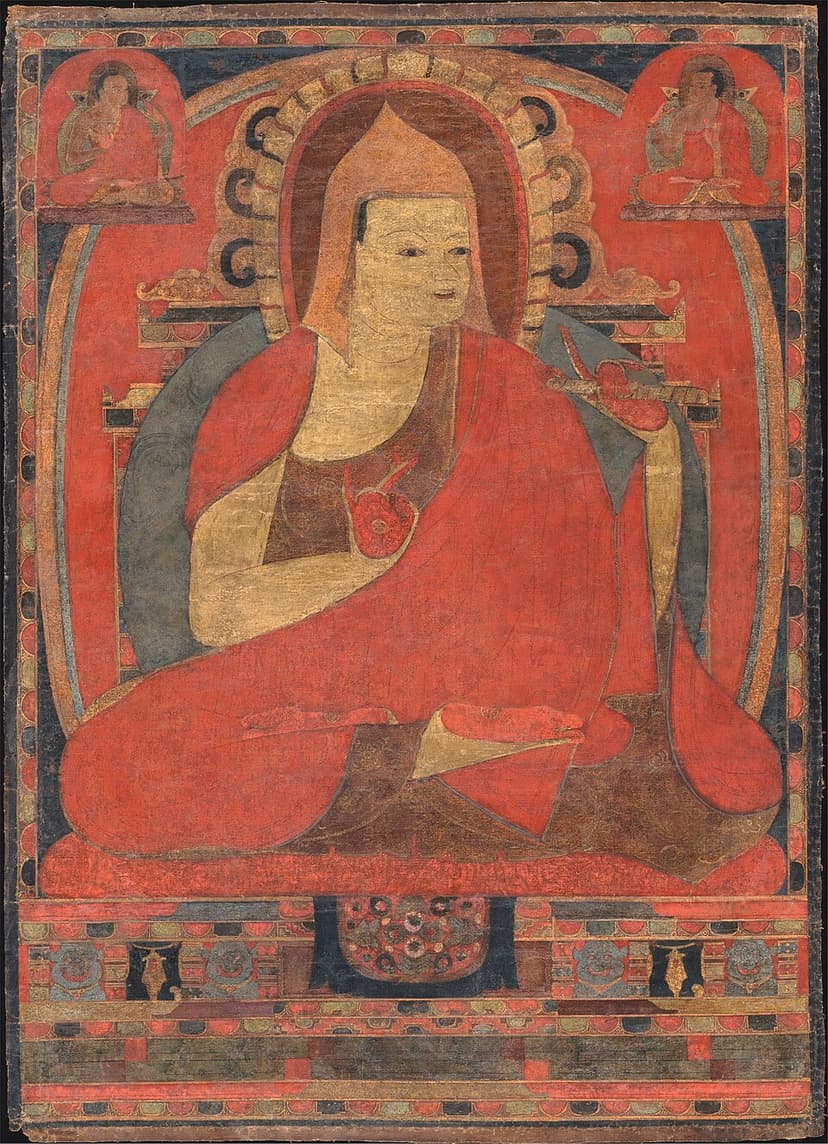
Atiśa Dīpaṃkara Śrījñāna was a prominent Buddhist religious leader and scholar from Bengal in the 11th century CE. He is renowned for his significant role in spreading Mahayana and Vajrayana Buddhism across Asia, particularly in Tibet, and is considered a founder of the Kadam school. His teachings, compiled in works like "Bodhipathapradīpa," laid the groundwork for subsequent Tibetan Buddhist traditions.

Ajātasattu
Ajātasattu was a powerful king of the Haryanka dynasty in ancient Magadha, reigning from approximately 492 to 460 BCE. He is known for his military conquests, including the subjugation of the Vajjika League and the city of Vaishali, and for initiating the fortification of Pataliputra. A contemporary of both Mahavira and Gautama Buddha, Ajātasattu held significant religious importance in both Jain and Buddhist traditions, eventually becoming a devout follower of the Buddha.
Bimbisar
Bimbisara was a significant king of Magadha who reigned during the period of the Buddha and Mahavira. He is credited with expanding his kingdom and laying the groundwork for future empires. Both Buddhist and Jain traditions recount his interactions with their respective spiritual leaders, highlighting his role as a patron and seeker of spiritual wisdom.