
Huyen Khong Son Thuong Monastery
Huyen Khong Son Thuong Monastery, also known as Abhisuññatāvanārama in Pali, is a significant Theravada Buddhist monastery located in the ancient capital region of Huế, Vietnam. Established in 1989, it is renowned for its serene landscape, characterized by a pine forest and a large garden with ponds, water lilies, orchids, and ancient trees, blending traditional Vietnamese architecture with a focus on meditation and spiritual practice.
Key Facts
- ›Founded in 1989 by Ven. Sīlaguṇa.
- ›Belongs to the Theravada Buddhism tradition.
- ›Features a unique architectural style reminiscent of ancient Huế houses, emphasizing a poetical spirit and meditation over overt religious symbolism.
- ›Covers an area of pine forest and a large garden with ponds, water lilies, and ancient trees.
- ›Includes several functional buildings such as a main temple, a chief monk's hut ('Am may Tia'), a guest house ('Yen Ha Cac'), and a rest house ('Nghinh Luong Dinh').
- ›Known for its tranquil atmosphere, making it a beautiful landscape and a place for spiritual retreat.

Important Relationships
- Ven. Sīlaguṇa
- Pine Forest Surroundings
- Large Garden With Ponds and Water Lilies
- Collection of Ancient Trees
- Unique Architectural Style Inspired By Ancient Huế Houses
- 'Am May Tia'
- 'Yen Ha Cac'
- 'Nghinh Luong Dinh'
Traditional Vietnamese, Huế Ancient House Style
About Huyen Khong Son Thuong Monastery
Huyen Khong Son Thuong Monastery, known in Pali as Abhisuññatāvanārama, is a notable Buddhist religious site located in Chầm hamlet, Hương Hồ commune, Hương Trà District, within the historic region of Huế, Vietnam. Founded in 1989 by Venerable Sīlaguṇa, it is recognized for its serene natural setting and distinct architectural approach.
Landscape and Architecture
The monastery is situated halfway down a mountain and is enveloped by a pine forest. Its grounds are characterized by a spacious garden featuring lush green grass, small ponds filled with pink water lilies, and an array of precious orchids, ferns, palms, pines, and cypresses, some of which are over a century old. Unlike many traditional Vietnamese monasteries, Huyen Khong Son Thuong does not possess a grand Tam quan gateway. Instead, its entrance is designed to resemble the humble gateways of ancient houses in Huế city, setting a tone of understated elegance and accessibility.
The architectural style of the main temple and other structures within the monastery draws inspiration from traditional Vietnamese design, specifically echoing the aesthetic of ancient Huế houses. This approach emphasizes a poetical spirit and a focus on meditation and spiritual practice, rather than overtly religious symbolism. This design philosophy aims to preserve the quintessential spirit of Huế and Vietnam.
Key Structures
The monastery complex includes several functional buildings. The main temple serves as the central place of worship and spiritual activity. The "Am May Tia" is a significant hut designed as the chief monk's dwelling and practice space, also functioning as a venue for literary and artistic discussions. "Yen Ha Cac" is a guest house designed with flexible architecture, featuring brown-painted elements to evoke a sense of simplicity and warmth. The "Nghinh Luong Dinh" provides a resting place for visitors, offering tea and opportunities for dialogue with the monastic community.
Source: Wikipedia ↗
Frequently Asked Questions
When was Huyen Khong Son Thuong Monastery founded?
Huyen Khong Son Thuong Monastery was built in 1989. It was established by Venerable Sīlaguṇa.
What Buddhist tradition does Huyen Khong Son Thuong Monastery follow?
This monastery adheres to Theravada Buddhism. It is also known by the Pali name Abhisuññatāvanārama.
What are the notable architectural features of the monastery?
Unlike many other Vietnamese monasteries, it lacks a traditional Tam quan gateway. Its architecture is designed in the style of ancient houses found in Huế, with a focus on a poetical spirit and meditation. The main temple and other structures reflect this traditional and serene aesthetic.
What is the significance of the 'Am May Tia' hut?
'Am May Tia' serves as the central dwelling for the chief monk, used for living, reading, and writing. It also functions as a gathering place for those interested in literature, poetry, and calligraphy to discuss Buddhist teachings and artistic pursuits.
What kind of landscape can be found at Huyen Khong Son Thuong Monastery?
The monastery is situated within a pine forest and features a large garden. This garden includes small ponds with pink water lilies, vases of orchids, and various trees such as ferns, palms, pines, and cypresses, many of which are over 100 years old.
Related Buddhist Temples
Vipassana Meditation Centre
The Vipassana Meditation Centre was established in Singapore in 1993 with the primary aim of propagating and perpetuating Theravada Buddhism and facilitating the practice of Vipassana meditation. It serves as a non-profit organization offering a venue for both Buddhists and non-Buddhists to cultivate their dhamma practice.
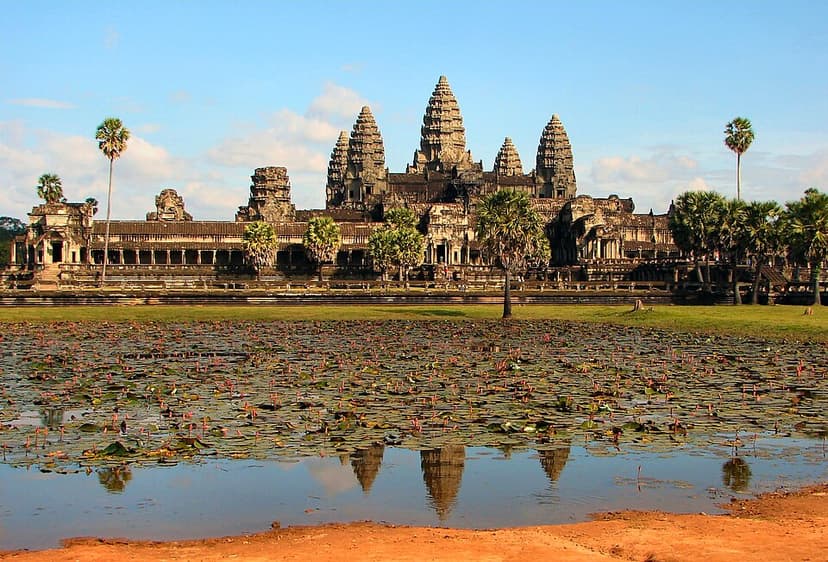
Angkor Wat
Angkor Wat, originally a Hindu temple dedicated to Vishnu and commissioned by King Suryavarman II in the early 12th century, is the largest religious complex in the world and a cornerstone of Khmer architecture. It was gradually transformed into a Theravada Buddhist temple from the late 13th century onwards and has remained an active center of Buddhist worship, serving as a potent symbol of Cambodia and appearing on its national flag.

Ananda Temple
The Ananda Temple, built in Bagan, Myanmar in 1105 AD, is a significant Buddhist temple renowned for its architectural fusion of Mon and Indian styles. It is celebrated for its four standing Buddha statues, intricate stone sculptures, and glazed terra-cotta plaques depicting Jataka tales, serving as a "veritable museum of stones" and a testament to Theravada Buddhism. The temple, though damaged by an earthquake in 1975, has been fully restored and remains a highly revered site and a cultural icon of Myanmar.