
Sayagyi U Ba Khin
Myanmar·Vipassana·Male·20th century
Sayagyi U Ba Khin was a prominent Burmese Buddhist teacher and the first Accountant General of the Union of Burma. He is primarily recognized as a leading twentieth-century authority on Vipassana meditation and founded the International Meditation Centre in Yangon. His teachings have had a significant global influence, with many of his students establishing meditation centers worldwide.
Key Facts
- ›Born in Yangon, Burma, on March 6, 1899.
- ›Served as the first Accountant General of the Union of Burma.
- ›Founded the International Meditation Centre (I.M.C.) in Yangon in 1952.
- ›Was a student of Saya Thet Gyi and influenced by Ledi Sayadaw.
- ›Played a role in the planning of the Sixth Buddhist Council (1954–56).
- ›Died on January 19, 1971, from complications following surgery.
Important Relationships
- Saya Thet Gyi
- Ledi Sayadaw
- Webu Sayadaw
- S. N. Goenka
- Mother Sayamagyi Daw Mya Thwin
Yangon, International Meditation Centre
Saya Thet Gyi, Ledi Sayadaw, Webu Sayadaw
Administrator, Teacher
About Sayagyi U Ba Khin
Sayagyi U Ba Khin: A Twentieth-Century Master of Vipassana Meditation
Sayagyi U Ba Khin (1899–1971) was a pivotal figure in the dissemination of Vipassana meditation in the twentieth century. He served as the first Accountant General of the Union of Burma and was instrumental in establishing the International Meditation Centre in Yangon. His dedication to the practice and teaching of Vipassana meditation has left a lasting global impact.
Life and Spiritual Journey
Born in Yangon during British colonial rule, U Ba Khin pursued a career in government service, passing the Accounts Service examination in 1926. His life took a significant spiritual turn in 1937 when he encountered Vipassana meditation through Saya Thet Gyi, a disciple of the renowned master Ledi Sayadaw. U Ba Khin experienced profound concentration from his initial practice, which motivated him to undertake a full ten-day Vipassana course. He continued to deepen his practice and receive guidance from his teachers, frequently visiting Thet Gyi's center and meeting with him whenever he came to Rangoon.
A pivotal encounter occurred in 1941 when U Ba Khin met Webu Sayadaw, a monk widely recognized as an arahant. Webu Sayadaw was impressed by U Ba Khin's meditation proficiency and was the first to encourage him to teach Vipassana.
Leadership and Legacy
Upon Burma's independence on January 4, 1948, U Ba Khin was appointed the first Accountant General of the Union of Burma. In 1950, he founded the Vipassana Association within the Accountant General's Office, providing a space for laypeople to learn the practice. This led to the establishment of the International Meditation Centre (I.M.C.) in Rangoon in 1952, which became a hub for both Burmese and foreign students seeking instruction in the Dhamma from U Ba Khin. He also contributed to the planning of the Sixth Buddhist Council, the Chaṭṭha Saṅgāyana, held in Yangon from 1954 to 1956.
After retiring from government service in 1967, U Ba Khin dedicated his remaining years to teaching Vipassana at the I.M.C. until his death in 1971. His wish was for Vipassana to return to its origin in India and spread worldwide. Though unable to travel to the West himself due to travel restrictions, he authorized several foreign students in 1969 to teach Vipassana in their respective countries, including S. N. Goenka, who would go on to establish a vast network of Vipassana centers globally. His teachings continue to be preserved and propagated by his students and their successors.
Source: Wikipedia ↗
Frequently Asked Questions
Who was Sayagyi U Ba Khin?
Sayagyi U Ba Khin was a Burmese Buddhist teacher and the first Accountant General of the Union of Burma. He is renowned as a significant twentieth-century authority on Vipassana meditation.
What is Sayagyi U Ba Khin known for?
He is best known for his teachings on Vipassana meditation and for founding the International Meditation Centre in Yangon. His efforts helped spread Vipassana meditation globally.
When and where was Sayagyi U Ba Khin born?
Sayagyi U Ba Khin was born in Yangon, Burma, on March 6, 1899, during the period of British colonial rule.
What was Sayagyi U Ba Khin's role in Burmese government?
He held the distinguished position of being the first Accountant General of the Union of Burma, appointed on the day Burma gained independence in 1948.
How did Sayagyi U Ba Khin become involved in meditation?
He met a student of Saya Thet Gyi in 1937 and was introduced to anapana-sati meditation. His positive experience led him to pursue a full course in Vipassana meditation.
What is the legacy of Sayagyi U Ba Khin's teachings?
His legacy is significant, with many of his students establishing meditation centers worldwide in his tradition. Notably, S. N. Goenka, one of his students, founded over two hundred Vipassana meditation centers globally.
Related Buddhists
Pa-Auk Sayadaw
The Most Venerable Bhaddanta Āciṇṇa Mahāthēra, commonly known as Pa-Auk Sayadaw, is a highly respected Burmese Theravāda monk and meditation teacher. He is the abbot of the Pa-Auk Forest Monastery and has developed a widely recognized meditation method. His teachings and extensive network of centers have made him a significant figure in contemporary Buddhist practice, particularly in Southeast Asia.
Ashin Nandamalabhivamsa
Ashin Nandamalabhivamsa, also known as the Rector Sayadaw, is a prominent Burmese Theravada Buddhist monk and scholar renowned for his expertise in Abhidhamma. He holds significant leadership roles, including chief abbot of Mahā Subodhāyon Monastery and rector of the Sitagu International Buddhist Academy, and has served as an associate Thathanabaing within the Shwekyin Nikāya. His extensive academic achievements include master's and doctoral degrees, and he has been instrumental in establishing educational institutions like the University of Wisdom Land.
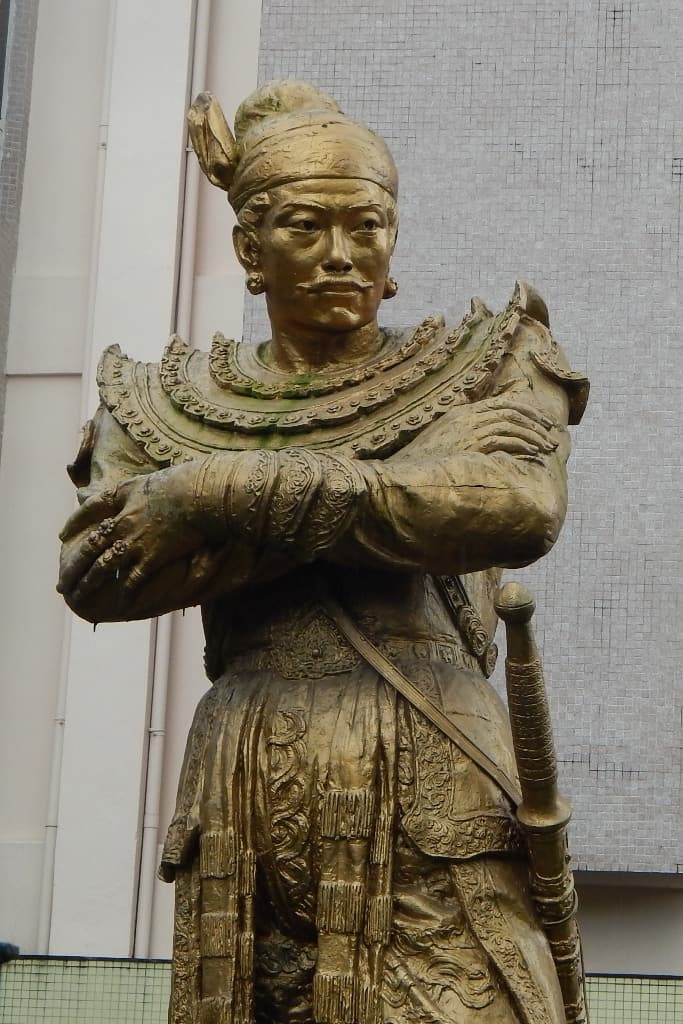
Bayinnaung Kyawhtin Nawrahta
Bayinnaung Kyawhtin Nawrahta was the King of Burma from 1550 to 1581, during which he assembled the largest empire in Southeast Asian history. His reign is celebrated for its significant human energy and administrative reforms, particularly in integrating the Shan States into the Burmese administrative system. Though his empire eventually collapsed after his death, Bayinnaung is remembered as one of the three greatest Burmese monarchs and a significant figure in Thai historical consciousness.