
Bayinnaung Kyawhtin Nawrahta
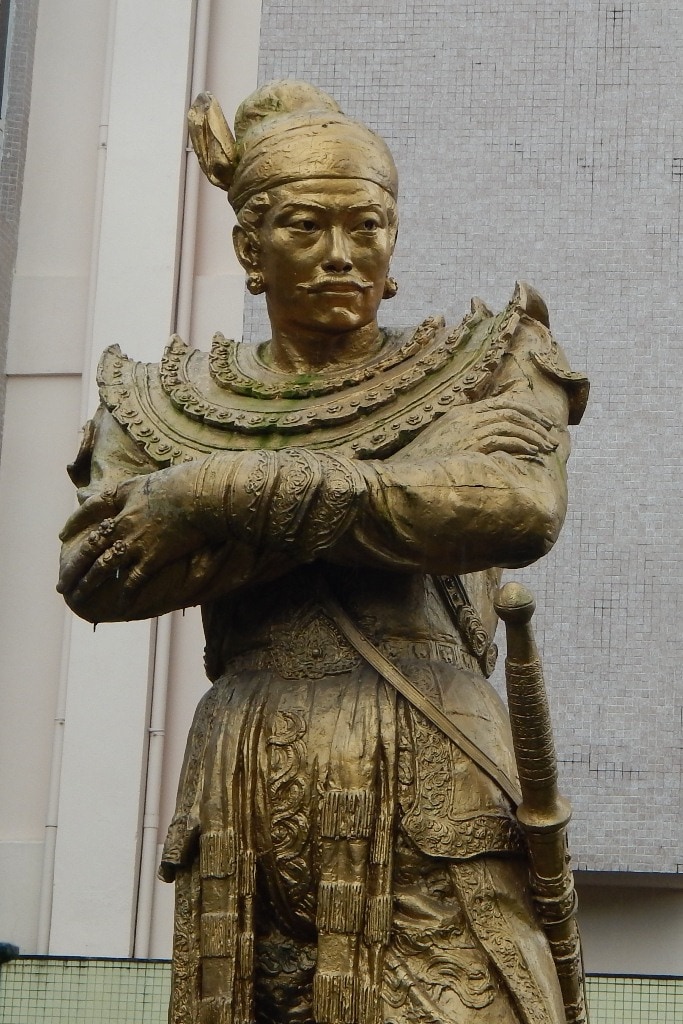
Bayinnaung Kyawhtin Nawrahta was the King of Burma from 1550 to 1581, during which he assembled the largest empire in Southeast Asian history. His reign is celebrated for its significant human energy and administrative reforms, particularly in integrating the Shan States into the Burmese administrative system. Though his empire eventually collapsed after his death, Bayinnaung is remembered as one of the three greatest Burmese monarchs and a significant figure in Thai historical consciousness.
Key Facts
- ›Assembled the largest empire in Southeast Asian history, encompassing much of present-day Myanmar, the Shan States, Lan Na, Lan Xang, Manipur, and the Ayutthaya Kingdom.
- ›Implemented administrative reforms to integrate the Shan States into the Irrawaddy valley administrative system, reducing the power of hereditary rulers.
- ›Regarded as one of the three greatest Burmese monarchs.
- ›Known in Thailand as 'Conqueror of the ten Directions'.
- ›His rule was characterized by personal allegiance rather than strong institutions, leading to the empire's rapid unraveling after his death.
- ›Commemorated with major landmarks in modern Myanmar.
Important Relationships
- Tabinshwehti
- Thakin Gyi
- Minkhaung II
- Minye Sithu
- Thado Dhamma Yaza II
- Binnya Dala
- Diogo Soares de Mello
Toungoo, Pegu, Shan States, Ayutthaya Kingdom, Lan Na, Lan Xang, Manipur
King, Military Leader, Administrator, Empire Builder
About Bayinnaung Kyawhtin Nawrahta
Bayinnaung Kyawhtin Nawrahta (1516–1581)
Bayinnaung Kyawhtin Nawrahta, born Ye Htut, was the King of Burma from 1550 to 1581, reigning during the Toungoo dynasty. His rule is considered one of the most significant in Burmese history, marked by the assembly of the largest empire ever seen in Southeast Asia. This vast realm encompassed much of modern-day Myanmar, alongside territories including the Shan States, Lan Na, Lan Xang, Manipur, and the Ayutthaya Kingdom.
Early Life and Rise to Power
Born in Toungoo, Ye Htut's early life and ancestry are subjects of historical debate. While later chronicles suggest royal lineage, oral traditions point to a commoner background. He grew up in the palace, receiving education in military arts alongside Prince Tabinshwehti. Ye Htut became Tabinshwehti's close confidant and, after a period of military service and demonstrating valor, was granted the title Kyawhtin Nawrahta. His close relationship with Tabinshwehti, solidified by marriage to the king's half-sister, Thakin Gyi, propelled him to a position of significant influence.
Military Campaigns and Empire Building
As a military leader under Tabinshwehti, Ye Htut, now known as Bayinnaung, played a crucial role in Toungoo's expansion. He was instrumental in key victories, including the Battle of Naungyo, which led to the conquest of Hanthawaddy and control of Lower Burma. Following Tabinshwehti's assassination in 1550, Bayinnaung faced a period of interregnum and rebellion. He meticulously rebuilt the Toungoo Empire, reconquering Lower Burma and subsequently expanding into Upper Burma. He was formally crowned King of Burma in 1554.
Imperial Administration and Legacy
Bayinnaung's reign is most celebrated for his administrative reforms, particularly his integration of the Shan States into the Irrawaddy valley administrative system between 1557 and 1563. These reforms aimed to diminish the power of hereditary rulers and align Shan governance with Burmese norms, effectively ending persistent Shan raids. Despite his imperial achievements, Bayinnaung's empire was largely held together by personal allegiance, following the Mandala model. This system, while effective during his lifetime, led to the rapid collapse of the empire shortly after his death in 1581.
Bayinnaung is widely regarded as one of the three greatest Burmese monarchs and is commemorated with significant landmarks in modern Myanmar. He is also recognized in Thailand as the "Conqueror of the Ten Directions," a testament to the profound impact of his military and political influence across Southeast Asia.
Source: Wikipedia ↗
Frequently Asked Questions
When did Bayinnaung rule as King of Burma?
Bayinnaung ruled as King of Burma from April 30, 1550, until his death on October 10, 1581.
What was Bayinnaung's most significant achievement?
Bayinnaung's most enduring legacy was the integration of the Shan States into the Irrawaddy valley administrative system, which reduced the power of local rulers and stabilized the region.
What was the extent of Bayinnaung's empire?
Bayinnaung assembled the largest empire in Southeast Asian history, which included much of modern-day Myanmar, the Shan States, Lan Na, Lan Xang, Manipur, and the Ayutthaya Kingdom.
How is Bayinnaung remembered in Thailand?
In Thailand, Bayinnaung is remembered as 'Conqueror of the Ten Directions', acknowledging the vast reach and power of his reign despite being a former adversary.
Why did Bayinnaung's empire collapse after his death?
The empire's collapse was largely due to its reliance on personal allegiance to Bayinnaung as a Universal Monarch, rather than established institutions. This loyalty waned after his death, leading to widespread revolts and declarations of independence by vassal states.
Related Buddhists
Jayavarman VII
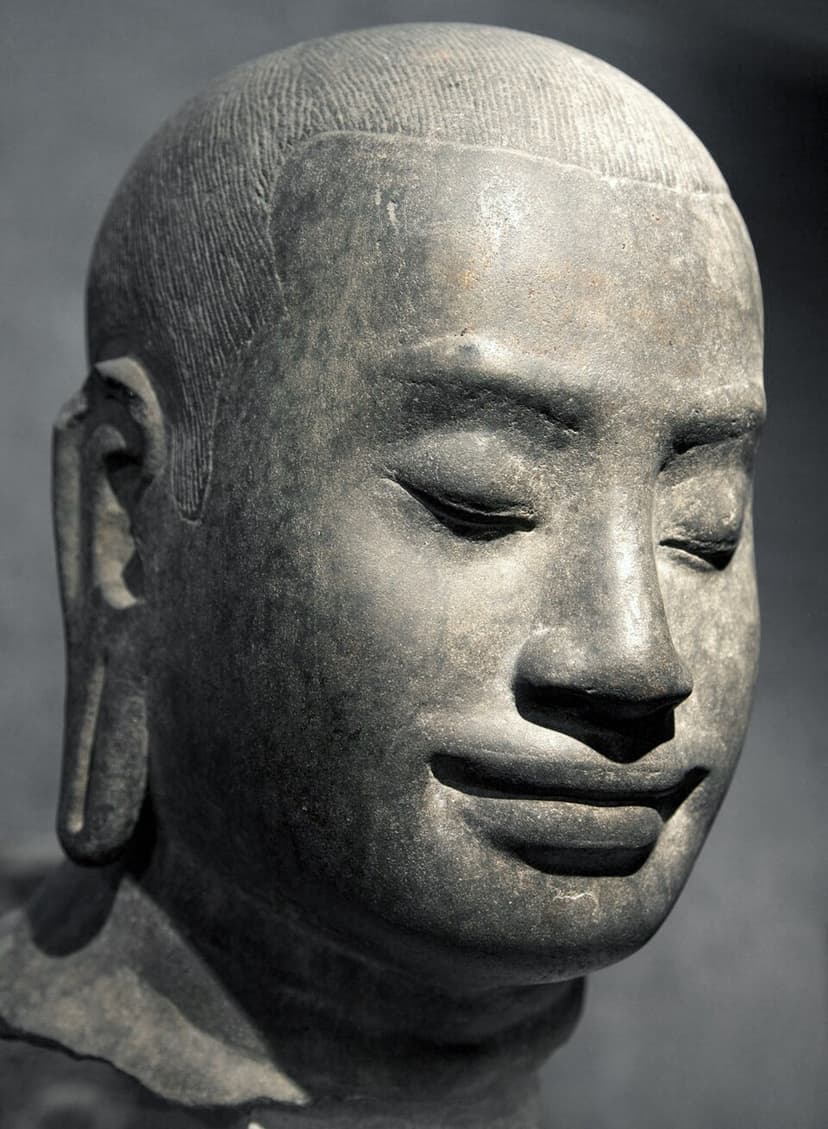
Jayavarman VII was the most powerful monarch of the Khmer Empire, reigning from 1181 to around 1218. As the first Khmer king devoted to Mahayana Buddhism, he initiated a welfare state and commissioned extensive public works, including hospitals and temples, aimed at alleviating human suffering. His reign is marked by monumental construction projects, most notably the Bayon temple and the city of Angkor Thom, and significant military achievements, including the conquest of Champa.
Emperor Ming of Han
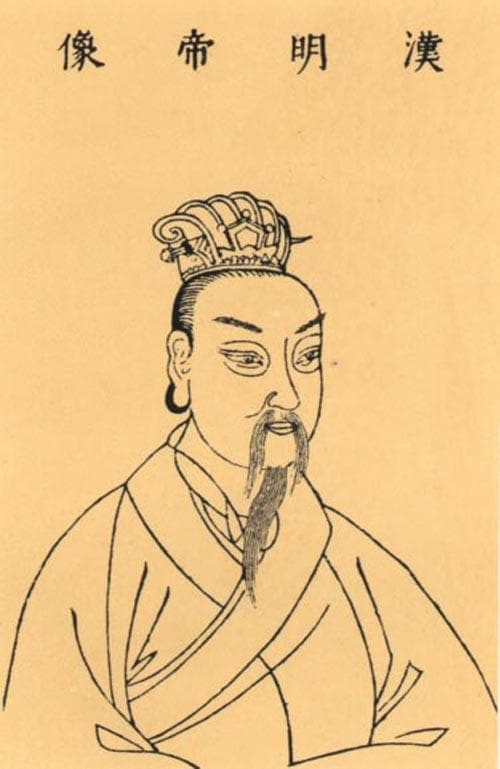
Emperor Ming of Han, born Liu Yang, was the second emperor of the Eastern Han dynasty, reigning from 57 to 75 AD. He is historically significant for initiating the spread of Buddhism into China during his rule. A diligent and competent administrator, Emperor Ming also extended Chinese influence into the Tarim Basin and is remembered for the prosperous "Rule of Ming and Zhang."
Harsha
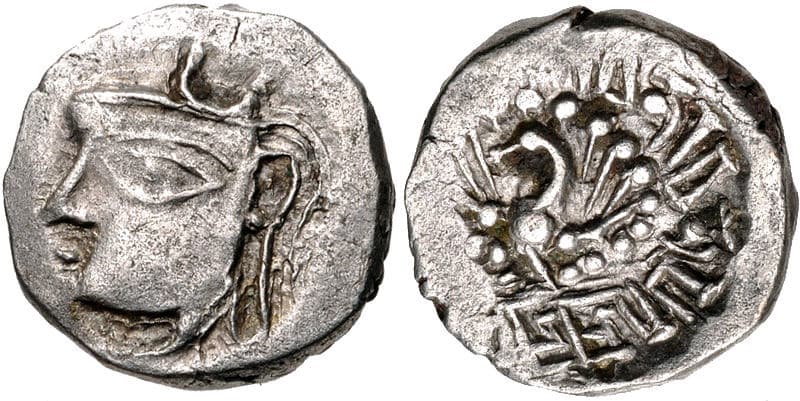
Harshavardhana, also known as Harsha, was an emperor who ruled from Kannauj starting in 606 CE until his death in 647 CE. He is recognized as one of the most significant kings of northern India, expanding his empire to encompass much of the region. His court was a center of learning and culture, attracting scholars and religious figures from across Asia, and he is remembered for his justice and generosity.