
Shasta Abbey
Monastery·United States·20th century·Order of Buddhist Contemplatives (OBC)
Shasta Abbey is a Buddhist training monastery located in northern California, established in 1970 by Reverend Master P.T.N.H. Jiyu-Kennett. It serves as a practice center for monks, lay Buddhists, and visitors, emphasizing Serene Reflection Meditation and the adherence to Buddhist Precepts within the Order of Buddhist Contemplatives.
Key Facts
- ›Established in 1970 by Reverend Master P.T.N.H. Jiyu-Kennett.
- ›A training monastery of the Order of Buddhist Contemplatives (OBC).
- ›Based on the practice of Serene Reflection Meditation (Sōtō Zen).
- ›The resident monastic community consists of approximately 26 vegetarian, celibate monks.
- ›Shasta Abbey Press publishes Buddhist books, including translations of classic Zen texts.
- ›Operates on a system of Dāna (mutual assistance) rather than charging fees for teachings or retreats.
Important Relationships
- Keido Chisan Koho Zenji (Teacher of Jiyu-Kennett)
- Dogen Zenji (Zen Patriarch)
- Keizan Jokin Zenji (Zen Patriarch)
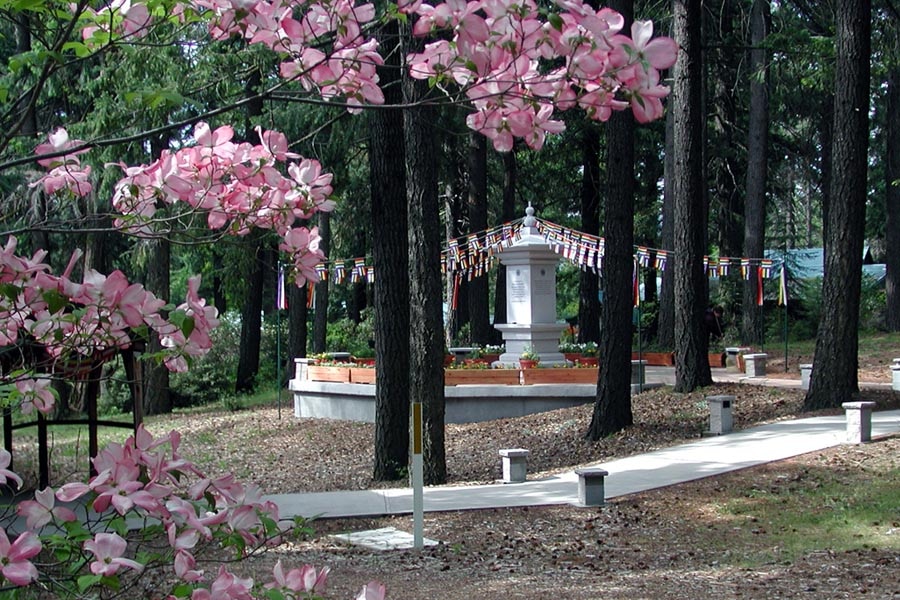
- Forest Setting Near Mount Shasta
- Training Monastery For Monks and Lay Practitioners
- Establishment By Rev. Master Jiyu-Kennett In 1970
- Founding of Throssel Hole Buddhist Abbey In England By Rev. Master Jiyu-Kennett In 1972
- Allegations of Sexual Misconduct Against the Second Abbot, Rev. Master Eko Little, Leading To His Departure In 2010
- Election of Rev. Master Meian Elbert As Abbess In 2010
Chinese Chan, Japanese SōTō Zen
About Shasta Abbey
Shasta Abbey is a significant training monastery for Buddhist monks, located on sixteen forested acres near Mount Shasta in northern California, United States. It also serves as a practice center for lay Buddhists and interested visitors, fostering a serene environment for spiritual development. The monastery is a key institution within the Order of Buddhist Contemplatives (OBC).
History and Foundation
The abbey was established in 1970 by the Reverend Master P.T.N.H. Jiyu-Kennett, who served as its Abbess and spiritual director until her passing in 1996. Rev. Master Jiyu-Kennett, a British woman, founded Shasta Abbey on behalf of her master in Japan, Keido Chisan Koho Zenji. She had arrived in San Francisco in November 1969 and subsequently dedicated herself to establishing this monastic community in the United States. During her tenure, she ordained and taught numerous monks and lay individuals. In addition to Shasta Abbey, she founded Throssel Hole Buddhist Abbey in England in 1972 and established the Order of Buddhist Contemplatives to provide a unifying framework for these institutions.
The abbey's leadership transitioned following Rev. Master Jiyu-Kennett's death. The second Abbot, Reverend Master Eko Little, a Dharma Heir and her long-time assistant, served until 2010. He continued to uphold his master's vision and strengthen the monastery's spiritual life. However, towards the end of his abbacy, allegations of sexual misconduct surfaced, leading to his departure from the Abbey and return to secular life.
The current Abbess is Reverend Master Meian Elbert, who was ordained by Rev. Master Jiyu-Kennett in 1977 and received Dharma Transmission in 1979. She had a long association with Rev. Master Jiyu-Kennett, serving as her chaplain for over 15 years and holding various leadership roles within the community and the Order of Buddhist Contemplatives. Rev. Master Meian Elbert was elected Abbess by the monastic community on June 17, 2010.
Practice and Training
Buddhist training at Shasta Abbey is centered on the practice of Serene Reflection Meditation (Sōtō Zen) and the strict observance of the Buddhist Precepts. The resident monastic community comprises approximately 26 vegetarian and celibate monks, both male and female. Their monastic robes are designed to reflect a synthesis of the Chinese Chan and Japanese Sōtō Zen traditions under which Rev. Master Jiyu-Kennett was ordained.
A structured daily schedule guides the community through periods of seated meditation, ceremonial practice, and working meditation, integrating the mind of meditation into all daily activities. The day begins with meditation and Morning Service, followed by communal meals, individual monastic duties, group tasks for the community's benefit, personal spiritual practice, and communal ceremonies. Rest and renewal are also incorporated, including community tea times and opportunities for interaction with laity.
Lay residents and visitors participating in retreats are encouraged to follow a similar schedule, striving to embody the practice of The Middle Way in their daily lives. The Abbey emphasizes silence and serenity, inviting practitioners to wholeheartedly follow the Buddha's Teachings. This dedication is reflected in their practice of Dāna, or mutual assistance, as they have chosen not to charge fees for teachings or retreats, placing their faith in the generosity and practice of Dāna.
Publications
Shasta Abbey Press is actively involved in publishing Buddhist literature. Their output includes the writings of their founder, Rev. Master Jiyu-Kennett, as well as translations of numerous seminal Buddhist texts. Notable among these are the master works of Sōtō Zen patriarchs such as Dogen Zenji's Shōbōgenzō and Keizan Jokin Zenji's Denkoroku. Many of these publications are made freely available through the Shasta Abbey website.
The translations produced by Shasta Abbey are particularly valued for practitioners in the West. They are undertaken from the perspective of meditation and by practicing Buddhist monks, aiming to offer interpretations that are more accessible and less esoteric than traditional scholastic translations. This approach facilitates a deeper understanding and practice of Buddhism within a Western context.
Source: Wikipedia ↗
Frequently Asked Questions
When was Shasta Abbey founded?
Shasta Abbey was established in 1970 by Reverend Master P.T.N.H. Jiyu-Kennett. She came to the United States in 1969 and founded the monastery the following year.
Who founded Shasta Abbey?
The abbey was founded by Reverend Master P.T.N.H. Jiyu-Kennett, a British woman who was the spiritual director and Abbess until her death in 1996. She established it on behalf of her teacher in Japan.
What is the primary Buddhist tradition practiced at Shasta Abbey?
The Buddhist training at Shasta Abbey is based on the practice of Serene Reflection Meditation, which is a form of Sōtō Zen. They also emphasize the keeping of the Buddhist Precepts.
What kind of publications does Shasta Abbey Press produce?
Shasta Abbey Press publishes Buddhist books, including the writings of its founder, Rev. Master Jiyu-Kennett, and translations of important Buddhist texts. These include master works from Soto Zen patriarchs like Dogen Zenji and Keizan Jokin Zenji.
How does Shasta Abbey handle fees for teachings and retreats?
Shasta Abbey does not have fees or suggested donation amounts for its teachings or retreats. Instead, they operate on a practice of Dāna, which is mutual assistance, placing faith in the offering of teachings and the refuge of training.
Who are the spiritual leaders of Shasta Abbey?
The founder was Reverend Master P.T.N.H. Jiyu-Kennett. The second Abbot was Reverend Master Eko Little, and the current Abbess is Reverend Master Meian Elbert, who was elected in 2010.
Related Buddhist Temples

Abhayagiri Buddhist Monastery
Abhayagiri Buddhist Monastery is a Theravada Buddhist monastery in Redwood Valley, California, belonging to the Thai Forest Tradition. It focuses on teaching Buddhist ethics and traditional concentration and insight meditation as a path to end suffering. The monastery, whose name means 'fearless mountain' in Pali, was established in the late 1980s and has grown into a significant center for Buddhist practice and teaching in the United States.
Deer Park Buddhist Center and Monastery
Deer Park Buddhist Center and Monastery in Oregon, Wisconsin, is a prominent center for Tibetan Buddhism, founded in 1975 by Geshe Lhundub Sopa. It serves as a monastic and teaching institution, upholding the Dalai Lama's tradition and attracting international students. The center is currently undertaking a significant temple expansion project to house Tibetan art and artifacts, expand educational programs, train new monks, and promote Tibetan freedom.
Karma Triyana Dharmachakra
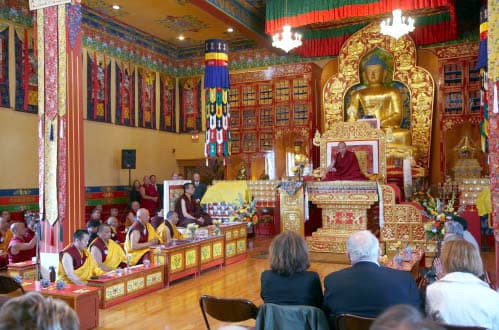
Karma Triyana Dharmachakra is a Tibetan Buddhist monastery located in Woodstock, New York, serving as the North American headquarters for the 17th Gyalwa Karmapa, the spiritual leader of the Karma Kagyu lineage. Founded in 1976 by the 16th Gyalwa Karmapa, it has been a significant center for Tibetan Buddhism in North America, with Khenpo Karthar Rinpoche serving as its abbot for many years.