
Abhayagiri Buddhist Monastery
Monastery·United States·20th century·Theravada
Abhayagiri Buddhist Monastery is a Theravada Buddhist monastery in Redwood Valley, California, belonging to the Thai Forest Tradition. It focuses on teaching Buddhist ethics and traditional concentration and insight meditation as a path to end suffering. The monastery, whose name means 'fearless mountain' in Pali, was established in the late 1980s and has grown into a significant center for Buddhist practice and teaching in the United States.
Key Facts
- ›Founded in the late 1980s, with its first 120 acres donated by devotees of Chan Master Hsuan Hua.
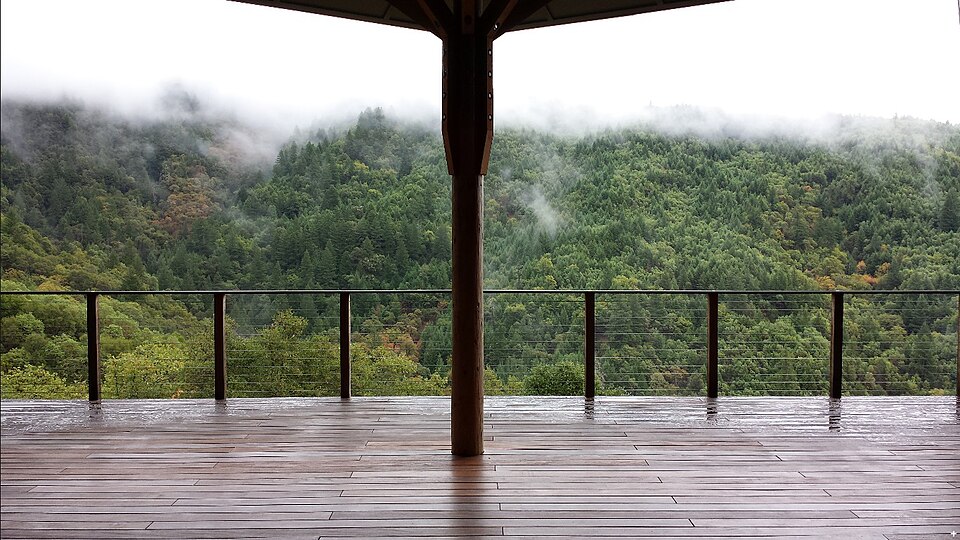
- ›Located on 280 acres of mountainous forest land in Redwood Valley, California.
- ›Part of the Theravada tradition and the Thai Forest Tradition, with roots tracing to Ajahn Chah.
- ›Has developed significant infrastructure, including monastic huts (kutis), a Dhamma Hall, and a Reception Hall.
- ›Established a branch, the Pacific Hermitage, in White Salmon, Washington.
- ›Survived the October 2017 Northern California wildfires without damage.
Important Relationships
- Ajahn Sumedho
- Ajahn Chah
- Ajahn Amaro
- Ajahn Pasanno
- Sanghapala Foundation
- Chan Master Hsuan Hua
- City of Ten Thousand Buddhas
- Pacific Hermitage
- Amaravati Buddhist Monastery
280 Acres of Mountainous Forest Land, Extensive Network of Forest Paths and Roads, Kutis, Dhamma Hall, Reception Hall, Bhikkhu Commons
- Establishment of the Sanghapala Foundation In 1988
- Acquisition of Initial Monastery Land
- Construction of Over 25 Kutis
- Completion of the Bhikkhu Commons In 2010
- Completion of the New Reception Hall In 2018
- Establishment of the Pacific Hermitage In 2010
- Survival of the October 2017 Northern California Wildfires
About Abhayagiri Buddhist Monastery
Abhayagiri Buddhist Monastery is a significant Theravada Buddhist center located in Redwood Valley, California. It is an affiliate of the Thai Forest Tradition, a lineage known for its emphasis on disciplined monastic life and deep meditation practice.
Origins and Development
The monastery's origins trace back to the 1980s when Ajahn Sumedho, a prominent Western disciple of the renowned Thai meditation master Ajahn Chah, began receiving requests to teach in California. These visits, along with those of other senior monks and nuns, led to the establishment of the Sanghapala Foundation in 1988. The monastery's initial 120 acres were generously donated by devotees of Chan Master Hsuan Hua, founder of the City of Ten Thousand Buddhas. Today, Abhayagiri spans 280 acres of mountainous forest land.
Leadership and Growth
Under the co-abbot leadership of Ajahn Amaro and Ajahn Pasanno, Abhayagiri experienced substantial development. Over 25 monastic huts (kutis) were constructed, alongside the conversion and building of essential facilities such as a Dhamma Hall, kitchen, office spaces, and amenities for visitors. A particularly notable project was the construction of the Bhikkhu Commons (MUB), a facility dedicated to the monks' needs, which was opened in 2010. Following Ajahn Amaro's departure to lead Amaravati Buddhist Monastery in England, Ajahn Pasanno continued to guide the monastery, overseeing the ambitious construction of a new Reception Hall, which was completed in 2018.
Branch and Community
In 2010, Abhayagiri also supported the establishment of the Pacific Hermitage, a branch monastery situated in the Columbia River Gorge in White Salmon, Washington, led by Ajahn Sudanto. The monastery maintains a disciplined daily schedule that includes extensive periods of chanting, silent meditation, study, and work. It welcomes visitors for day stays and overnight accommodations, offering a structured environment for spiritual practice. Abhayagiri also actively engages with the wider community through its Upāsikā Program and by offering teachings at various meditation centers throughout California and beyond.
Resilience
Abhayagiri demonstrated its resilience when it survived the October 2017 Northern California wildfires without sustaining any damage, a testament to its natural setting and perhaps fortunate circumstances.
Source: Wikipedia ↗
Frequently Asked Questions
What is the meaning of Abhayagiri?
Abhayagiri means 'fearless mountain' in the Pali language. This name reflects the spiritual aspirations and tranquil setting of the monastery.
When was Abhayagiri Buddhist Monastery founded?
The monastery has its origins in the 1980s, with the Sanghapala Foundation being established in 1988. The land was acquired shortly thereafter.
What is the primary focus of Abhayagiri Monastery?
Its chief priorities are the teaching of Buddhist ethics, traditional concentration, and insight meditation. These practices are taught as an effective way to uproot suffering and discontent.
What is the size of Abhayagiri Monastery?
The monastery currently rests on 280 acres of mountainous forest land. Initially, its first 120 acres were acquired.
What is the relationship between Abhayagiri and the Thai Forest Tradition?
Abhayagiri is a Theravada Buddhist monastery that belongs to the Thai Forest Tradition. This tradition emphasizes a disciplined monastic life and meditation practice, originating with the Thai meditation master Ajahn Chah.
Has Abhayagiri experienced any significant events?
The monastery survived the October 2017 Northern California wildfires without damage. It has also undergone significant development and construction of new facilities over the years.
Related Buddhist Temples
Alchi Monastery
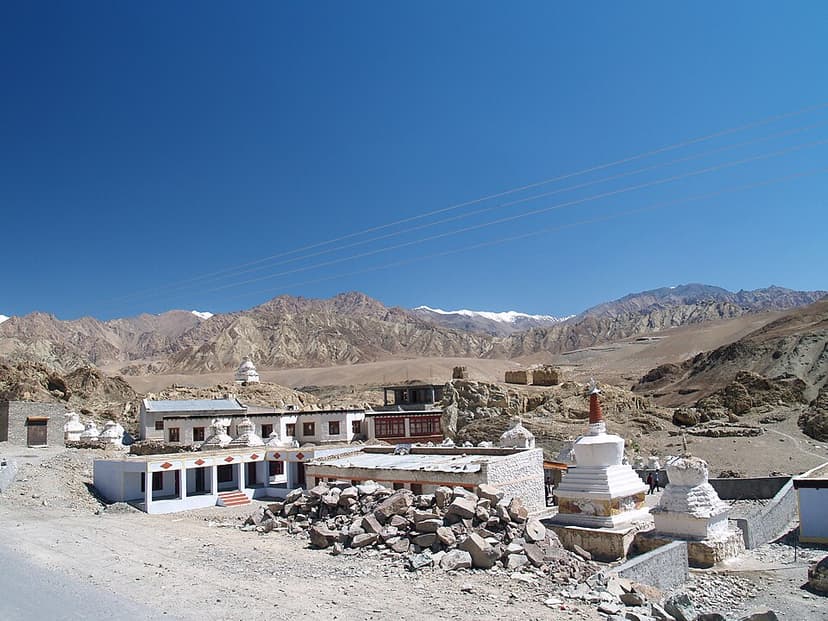
Alchi Monastery is a significant monastic complex located in the Leh District of Ladakh, India, comprising four ancient temples known for their unique artistic style that blends Tibetan and Kashmiri influences. Established between the early 12th and early 13th centuries, it is renowned for its well-preserved wall paintings, wood carvings, and statues, which are among the oldest surviving in Ladakh and reflect both Buddhist and Hindu artistic traditions of the period.
Abhayagiriya
Abhayagiriya Vihāra was a prominent Buddhist monastic complex and a royal capital in Anuradhapura, Sri Lanka, historically serving as a major center for Theravada, Mahayana, and Vajrayana Buddhism. It was a significant religious and educational institution, attracting scholars from afar and playing a crucial role in the spread of Buddhism internationally, making it a vital pilgrimage site.

Akron
Akron is a city in Summit County, Ohio, United States, founded in 1825 at the summit of the Ohio and Erie Canal. It rose to prominence as the "Rubber Capital of the World" due to its major tire manufacturing companies and later became known as a "City of Invention" for its advancements in polymer science.