
Namgyal Monastery
Namgyal Monastery, also known as the "Dalai Lama's Temple" or Namgyal Tantric College, is the personal monastery of the 14th Dalai Lama. Originally founded in the 16th century in Tibet and later housed in the Potala Palace, it relocated to Dharamshala, India, after the Tibetan uprising of 1959, where it continues to serve as a vital center for Tibetan Buddhist rituals and practices.
Key Facts
- ›Founded in 1564 or 1565 by the second Dalai Lama, Gendun Gyatso.
- ›Relocated to Dharamshala, India, following the Tibetan uprising in 1959.
- ›Serves as the personal monastery for the current (14th) Dalai Lama.
- ›Houses nearly 200 monks representing all four main Tibetan monastic lineages.
- ›Has established branches in the United States (Ithaca, New York) and India (Bodh Gaya, Kushinagar).
- ›Its main tantric practices include Kalachakra, Yamantaka, Chakrasamvara, Guhyasamaja, and Vajrakilaya.

Important Relationships
- 14th Dalai Lama
- Second Dalai Lama (Gendun Gyatso)
- Fifth Dalai Lama
- Personal Monastery of the 14th Dalai Lama
- Namgyal Tantric College
- Practices Kalachakra, Yamantaka, Chakrasamvara, Guhyasamaja, and Vajrakilaya
- Relocation To Dharamshala, India, Following the Tibetan Uprising of 1959
- Establishment of An American Branch In Ithaca, New York, In 1992
- Incorporation of Gendhen Phelgyeling Monastery In Bodh Gaya In 1998
About Namgyal Monastery
Namgyal Monastery, also frequently referred to as the "Dalai Lama's Temple" or Namgyal Tantric College, holds a significant position as the personal monastery of the 14th Dalai Lama. Its primary function is to provide ritualistic support for the Dalai Lama and engage in advanced tantric practices.
History and Relocation
The monastery's origins trace back to the 16th century. It was founded in either 1564 or 1565 by the second Dalai Lama, Gendun Gyatso, on the site of a defunct monastery known as Phende Gon. Originally named Phende Lekshe Ling, it was renamed Namgyal in 1571 in honor of the long-life deity Namgyälma. Following the construction of the Potala Palace, Namgyal Monastery was traditionally housed in its upper red section in Lhasa, Tibet.
After the Tibetan uprising in 1959, Namgyal Monastery, along with many other Tibetan institutions, relocated to Dharamshala, India. There, it has since continued its active spiritual and ritualistic work.
Present Day Operations and Branches
Today, Namgyal Monastery in Dharamshala is home to nearly 200 monks, representing all four major Tibetan monastic lineages. The monastery is known for its deep engagement in tantric practices, reportedly including those of Kalachakra, Yamantaka, Chakrasamvara, Guhyasamaja, and Vajrakilaya.
In recognition of its global reach and the diaspora, Namgyal has established several branches. In 1992, an American branch was founded in Ithaca, New York, which includes the Namgyal Monastery Institute of Buddhist Studies. This institute notably participated in the "Twenty-four Hours in Cyberspace" event in 1996, offering a "Blessing of Cyberspace." Furthermore, in 1998, Namgyal incorporated a Tibetan monastery in Bodh Gaya, India, which is now known as Namgyal (Bodhgaya) and houses 45 monks. The monastery also manages a temple in Kushinagar, India, since 1967, and an elderly home in Simla, India, since 1992.
The historical connection to the Potala Palace in Lhasa raises questions about whether an institution of the same name has been maintained within Tibet under the People's Republic of China, but historical accounts do not provide clarity on this matter.
Source: Wikipedia ↗
Frequently Asked Questions
When was Namgyal Monastery founded?
Namgyal Monastery was founded in either 1564 or 1565 by the second Dalai Lama, Gendun Gyatso. It was established on the foundations of a defunct monastery called Phende Gon.
Where is Namgyal Monastery located?
The main center of Namgyal Monastery is located in Mcleod Ganj, Dharamshala, India. It also has branches in Bodh Gaya, India, and Ithaca, New York, USA.
What is the main purpose of Namgyal Monastery?
The primary role of Namgyal Monastery is to assist with rituals involving the Dalai Lama of Tibet. Its monks engage in various tantric practices to support these rituals.
How many monks are currently part of Namgyal Monastery in Dharamshala?
According to Namgyal's website, the monastery in Dharamshala has nearly 200 monks. This is a significant increase from the 55 monks present in 1959.
Does Namgyal Monastery have branches outside of India?
Yes, on the advice of the present Dalai Lama, Namgyal established an American branch in Ithaca, New York, in 1992. This branch includes the Namgyal Monastery Institute of Buddhist Studies.
Related Buddhist Temples

Phyang Monastery
Phyang Monastery, also known locally as Gangon Tashi Chodzong, is a significant Buddhist monastery situated in Fiang village, west of Leh in Ladakh, India. Established in 1515, it holds historical importance as one of the earliest Drikung Kagyu monasteries in the region and serves as a repository of ancient religious art and artifacts.

Takthok Monastery
Takthok Monastery is a significant Buddhist monastery located in Sakti village, Ladakh, India, renowned as the only monastery in the region belonging to the Nying-ma-pa (Red Hat) sect. Its unique name, meaning 'rock-roof,' derives from its construction, where both the roof and walls are integrated with the natural rock face. The monastery holds historical importance as the site where Padmasambhava, a revered figure in Tibetan Buddhism, is believed to have meditated.
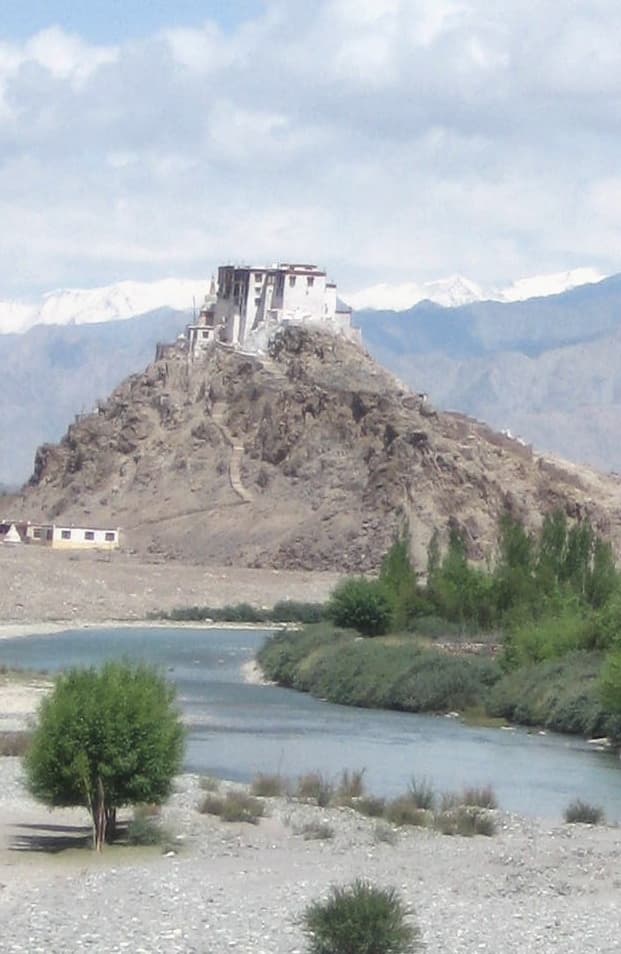
Stakna Monastery
Stakna Monastery, also known as Stakna Gompa, is a significant Buddhist monastery of the Drugpa sect located in Ladakh, northern India. Founded in the late 16th century by Bhutanese scholar Chosje Modzin, it is distinguished as the only Bhutanese Drukpa Kagyu monastery in the region, holding a sacred Arya Avalokitesvara statue.