
Stakna Monastery
Stakna Monastery, also known as Stakna Gompa, is a significant Buddhist monastery of the Drugpa sect located in Ladakh, northern India. Founded in the late 16th century by Bhutanese scholar Chosje Modzin, it is distinguished as the only Bhutanese Drukpa Kagyu monastery in the region, holding a sacred Arya Avalokitesvara statue.
Key Facts
- ›Founded in the late 16th century by Bhutanese scholar and Saint Chosje Modzin.
- ›Located in Stakna, Leh district, Ladakh, northern India, on the left bank of the Indus River.
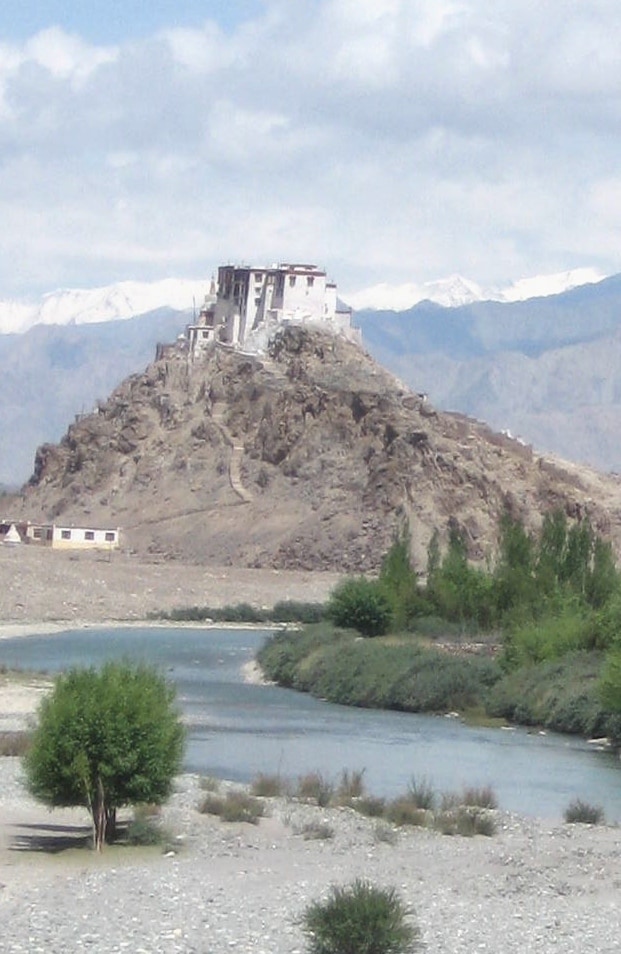
- ›Its name, 'tiger's nose,' derives from the hill's shape upon which it is built.
- ›Houses a sacred Arya Avalokitesvara statue originating from Kamrup, Assam.
- ›Is the sole Bhutanese Drukpa Kagyu monastery in Ladakh.
- ›Currently has a residence of approximately 30 monks.
Important Relationships
- Chosje Modzin (Founder)
- Je Khenpo (Spiritual Head in Bhutan)
- Gyalwang Drukpa (Lineage)
- Hemis Monastery (Other Drukpa monastery in Ladakh)
- Sacred Arya Avalokitesvara Statue From Kamrup, Assam
- Hill Shaped Like A Tiger's Nose
- Split In the Drukpa Kagyu Lineage In the 17th Century Over the Reincarnation of the 4th Gyalwang Drukpa.
About Stakna Monastery
Stakna Monastery, also referred to as Stakna Gompa, is a significant Buddhist monastery belonging to the Drugpa sect, situated in the Leh district of Ladakh, northern India. Located approximately 21 to 25 kilometers from Leh on the left bank of the Indus River, its distinctive name, meaning 'tiger's nose,' accurately describes the hill's anatomical resemblance upon which the monastery is constructed.
History and Affiliation
The monastery was established in the late 16th century by Chosje Modzin, a revered Bhutanese scholar and saint. Stakna holds a unique position in Ladakh as it is the only Bhutanese Drukpa Kagyu monastery in the region. Its spiritual leadership is tied to the Je Khenpo in Bhutan, distinguishing it from other Drukpa monasteries in Ladakh, which follow the school of the Gyalwang Drukpa based at Hemis. This monastic structure reflects a historical schism within the Drukpa Kagyu lineage that occurred in the 17th century, stemming from a dispute over the true reincarnation of the 4th Gyalwang Drukpa.
Key Features and Community
A notable feature of Stakna Monastery is its sacred Arya Avalokitesvara statue, which originates from Kamrup in Assam. The monastery currently serves as a residence for approximately 30 monks. The geographical setting and its unique sectarian affiliation contribute to its importance within the Buddhist landscape of Ladakh.
Source: Wikipedia ↗
Frequently Asked Questions
When was Stakna Monastery founded?
Stakna Monastery was founded in the late 16th century. Its establishment is attributed to the Bhutanese scholar and saint, Chosje Modzin.
What is the meaning of the name 'Stakna'?
The name 'Stakna' literally translates to 'tiger's nose.' This name was given to the monastery because it was built on a hill that is shaped like a tiger's nose.
What is notable about Stakna Monastery's affiliation?
Stakna Monastery is significant as it is the only Bhutanese Drukpa Kagyu monastery in Ladakh. This places its leadership under the Je Khenpo in Bhutan, distinguishing it from other Drukpa monasteries in the region.
What important relic is housed at Stakna Monastery?
A sacred Arya Avalokitesvara statue is a notable feature of Stakna Monastery. This statue originates from Kamrup, in Assam.
How many monks reside at Stakna Monastery?
Stakna Monastery has a community of approximately 30 monks in residence.
Related Buddhist Temples

Gemur Monastery
Gemur Monastery is a significant Buddhist gompa located above Gemur village in the Lahaul and Spiti district of Himachal Pradesh, India. Dating back to the first half of the 17th century, it serves as a central seat of Tibetan Buddhism in the stod valley and is associated with the Drukpa Kagyu sect. The monastery is known for its ancient artifacts, wall paintings, and the annual Tshechu festival featuring masked dances.

Chimi Lhakhang
Chimi Lhakhang is a significant Buddhist monastery located in Punakha District, Bhutan, founded in 1499 by Lama Ngawang Chogyal. It is renowned for its association with the "Divine Madman," Drukpa Kunley, and its unique tradition of blessing pilgrims, particularly women seeking fertility, with phallus symbols. The monastery is a popular pilgrimage site, drawing visitors interested in its history, blessings, and the distinctive cultural practices it upholds.
Phajoding Monastery
Phajoding Monastery is a significant Buddhist monastery located above Thimphu, Bhutan, originally founded in the 13th century. It is renowned for its historical importance in spreading Drukpa Kagyu teachings and, following a period of neglect, underwent extensive restoration funded by the Indian government, ensuring its continued role as a spiritual center.