
Gemur Monastery
Gemur Monastery is a significant Buddhist gompa located above Gemur village in the Lahaul and Spiti district of Himachal Pradesh, India. Dating back to the first half of the 17th century, it serves as a central seat of Tibetan Buddhism in the stod valley and is associated with the Drukpa Kagyu sect. The monastery is known for its ancient artifacts, wall paintings, and the annual Tshechu festival featuring masked dances.
Key Facts
- ›Founded in the first half of the 17th century.
- ›Regarded as a central seat of Tibetan Buddhism in the stod valley of Lahaul.
- ›Associated with the Drukpa Kagyu sect.
- ›Houses ancient Buddhist miniature paintings, wall paintings, chortens, and statues.
- ›Hosts the annual Tshechu festival, which includes the cham masked dance.
- ›The current structure may have been relocated to a lower hill in 1870.

Important Relationships
- stagtshang Raspa
- Lama Tanzin Paldan
- Thakurs of Khangsar
Sculpture of 'Marichi Vajravarahi', Ancient Buddhist Miniature Paintings, Wall Paintings, Chortens, Statues, Buddhist Artifacts
- Theft of A Thanka of A Dam-Can Jagpa Me-Len and Other Valuables In the 1960s.
- Annual Tshechu Festival Featuring Cham Dance.
About Gemur Monastery
Gemur Monastery, also known as Gemur Gompa, is a significant Buddhist monastery located above the village of Gemur in the Lahaul and Spiti district of Himachal Pradesh, northern India. It is recognized as a central seat of Tibetan Buddhism within the sTod valley of Lahaul and is identified in religious literature as Dge-smon Gsam-bstan chos-gling.
History and Founding
The monastery's origins are traced to the first half of the 17th century, with legends crediting its founding to sTagtshang Raspa. Folklore also suggests that Lama Tanzin Paldan of Gemur village played a key role in its construction, receiving aid from the Thakurs of Khangsar. Scholars have proposed that the original gompa might have been situated at a higher altitude, with the present structure relocated to a lower hill in 1870. The woodwork within the temple is attributed to Tashi Tamphel. The monastic community at Gemur belongs to the Drukpa Kagyu sect, and lamas were historically dispatched from this monastery to other gompas in the region.
Features and Significance
Gemur Monastery houses a variety of religious and artistic treasures, including a sculpture of the goddess 'Marichi Vajravarahi', ancient Buddhist miniature paintings, wall paintings, chortens, statues, and other artifacts. It is particularly known for its annual Tshechu festival, a religious fair celebrated throughout the Buddhist Himalayas. During the Tshechu at Gemur, held in June, the monastery hosts the cham, a vibrant masked and costumed dance performance. In the 1960s, a valuable Thanka of a Dam-can Jagpa Me-Len, a Tibetan Buddhist painting made of silk patches, was reported stolen from the monastery along with other items.
Source: Wikipedia ↗
Frequently Asked Questions
When was Gemur Monastery founded?
Gemur Monastery is believed to have been founded in the first half of the 17th century. Legends also attribute its construction to Lama Tanzin Paldan with the assistance of the Thakurs of Khangsar.
What is Gemur Monastery's religious affiliation?
The lamas of Gemur Monastery belong to the Drukpa Kagyu sect, a prominent tradition within Tibetan Buddhism.
What notable events or festivals take place at Gemur Monastery?
Gemur Monastery hosts the annual Tshechu festival, a religious celebration observed throughout the Buddhist Himalayas. During this festival, a lively masked and costumed dance known as the cham is performed.
What are some of the key features within Gemur Monastery?
The monastery contains a sculpture of the goddess 'Marichi Vajravarahi', along with ancient Buddhist miniature paintings, wall paintings, chortens, statues, and various Buddhist artifacts.
Is Gemur Monastery accessible from nearby towns?
Gemur Monastery is located above Gemur village and is accessible via a rural road that terminates at the gompa. This road is an offshoot of NH-505, situated between Keylong and Gemur village.
Related Buddhist Temples
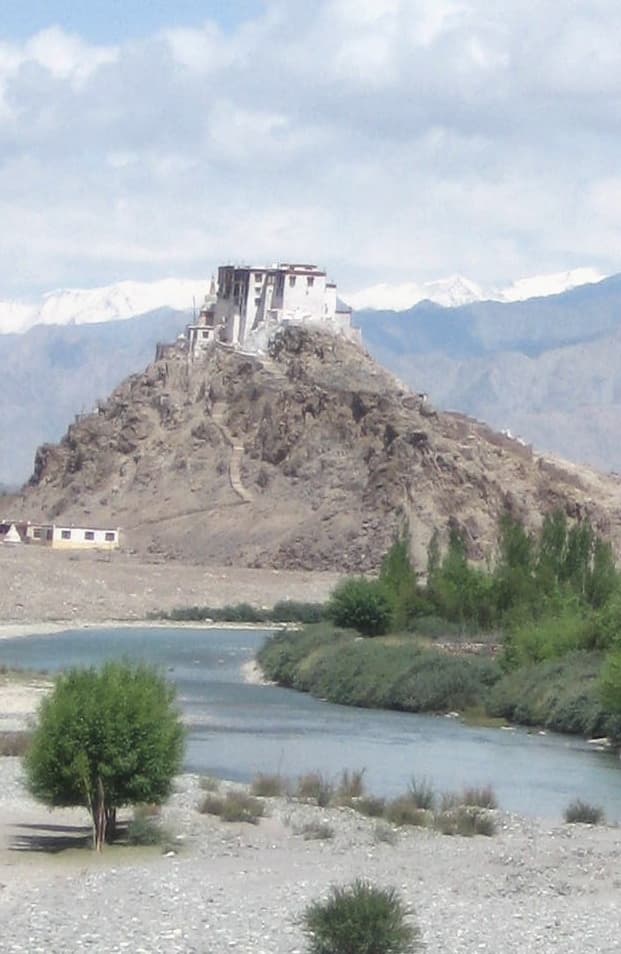
Stakna Monastery
Stakna Monastery, also known as Stakna Gompa, is a significant Buddhist monastery of the Drugpa sect located in Ladakh, northern India. Founded in the late 16th century by Bhutanese scholar Chosje Modzin, it is distinguished as the only Bhutanese Drukpa Kagyu monastery in the region, holding a sacred Arya Avalokitesvara statue.

Chimi Lhakhang
Chimi Lhakhang is a significant Buddhist monastery located in Punakha District, Bhutan, founded in 1499 by Lama Ngawang Chogyal. It is renowned for its association with the "Divine Madman," Drukpa Kunley, and its unique tradition of blessing pilgrims, particularly women seeking fertility, with phallus symbols. The monastery is a popular pilgrimage site, drawing visitors interested in its history, blessings, and the distinctive cultural practices it upholds.
Phajoding Monastery
Phajoding Monastery is a significant Buddhist monastery located above Thimphu, Bhutan, originally founded in the 13th century. It is renowned for its historical importance in spreading Drukpa Kagyu teachings and, following a period of neglect, underwent extensive restoration funded by the Indian government, ensuring its continued role as a spiritual center.