
Kushinagar
Kushinagar is a significant Buddhist pilgrimage site in Uttar Pradesh, India, renowned as the location where Gautama Buddha is believed to have attained parinirvana. Its historical importance is underscored by archaeological findings and its role in the distribution of Buddha's relics, making it a crucial destination for Buddhists worldwide.
Key Facts
- ›Kushinagar is the site where Gautama Buddha is believed to have attained parinirvana and was subsequently cremated.
- ›The Mahāparinibbāṇa Sutta describes Buddha's journey to Kushinagar and his final moments.
- ›Following Buddha's death, his relics were divided among eight clans and a king, with Kushinagar receiving a portion.
- ›Archaeological excavations in the 19th and 20th centuries, notably by Alexander Cunningham and Archibald Carlleyle, identified Kushinagar as the Buddha's parinirvana site.
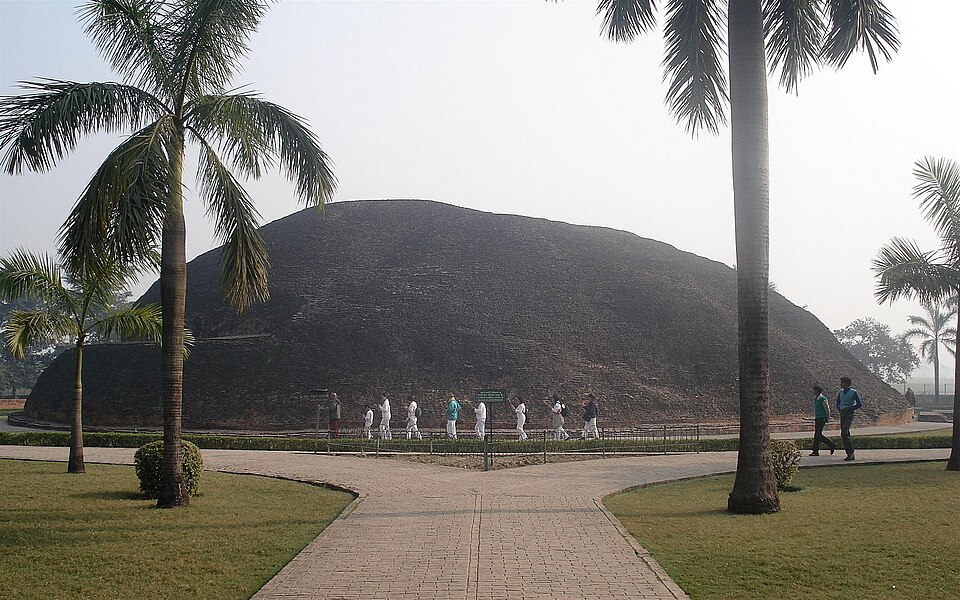
- ›Key structures include the Parinirvana Temple housing a reclining Buddha statue, the Parinirvana Stupa, and the Ramabhar Stupa, believed to be the cremation site.
- ›The site was abandoned by Buddhist monks around 1200 CE due to invading Muslim armies but was later rediscovered and restored.
Important Relationships
- Alexander Cunningham
- Archibald Carlleyle
- J. Ph. Vogel
- D. Liston
- Drona (Brahmin)
- Ashoka
- Gupta Empire rulers
- Mahāparinibbāṇa Sutta
Parinirvana Temple, Reclining Buddha Statue, Parinirvana Stupa, Ramabhar Stupa, Matha Kuar Shrine, Indo-Japan-Sri Lanka Temple, Wat Thai Temple
- Gautama Buddha Attained Parinirvana
- Cremation of Gautama Buddha's Remains
- Distribution of Buddha's Relics
- Ashoka Built A Stupa and Pillar
- Gupta Empire Rulers Enlarged the Stupa and Constructed A Temple
- Abandonment By Buddhist Monks Around 1200 Ce
- Rediscovery By Alexander Cunningham In the Late 19th Century
- Excavations By Archibald Carlleyle and J. Ph. Vogel
- Became A New District of Uttar Pradesh On May 13, 1994
Ancient Buddhist, Modern Buddhist
About Kushinagar
Overview
Kushinagar, historically known as Kusinārā in Pali and Kuśinagara in Sanskrit, is a town situated in the Kushinagar district of Uttar Pradesh, India. It holds profound significance in Buddhism as the place where Gautama Buddha is believed to have attained parinirvana, his final liberation from the cycle of existence, and where his remains were cremated. Recognized as a major Buddhist pilgrimage site, Kushinagar draws devotees from across the globe seeking to connect with the historical events of the Buddha's life.
History and Rediscovery
The historical importance of Kushinagar is documented in the Mahāparinibbāṇa Sutta, which details the Buddha's final journey and passing. Following his death, his relics were divided among various clans and a king, with Kushinagar being one of the recipients. Evidence suggests that the site was an ancient pilgrimage destination, with Emperor Ashoka of the 3rd century BCE constructing a stupa and pillar to commemorate the event. During the Gupta Empire (4th–7th centuries CE), the stupa was enlarged, and a temple housing a reclining Buddha statue was built.
After its abandonment by Buddhist monks around 1200 CE, likely due to the threat of invading Muslim armies, the site fell into disuse and decay. Its rediscovery in modern times is largely attributed to British archaeologists. D. Liston noted the ruins in 1837, and Alexander Cunningham conducted significant excavations in the 1860s, identifying the site as the location of Buddha's parinirvana. Further archaeological work by Archibald Carlleyle in the 1870s unearthed the Mahaparinirvana stupa and a reclining Buddha statue, while J. Ph. Vogel led campaigns in the early 20th century, uncovering substantial Buddhist artifacts. These efforts re-established Kushinagar as a vital center for Buddhist pilgrimage and study.
Key Sites and Modern Significance
Kushinagar is home to several key Buddhist monuments. The Parinirvana Temple encloses a striking 6.10-meter-long reclining Buddha statue, carved from red sandstone, representing the Buddha in his final moments. Adjacent to the temple is the Parinirvana Stupa (Nirvana Chaitya), which yielded a copper plate during excavation. The Ramabhar Stupa, also known as Mukutbandhan Chaitya, is a large stupa believed to mark the Buddha's cremation site and is surrounded by remains of ancient Buddhist monasteries (viharas) and votive stupas.
Other notable structures include the Matha Kuar Shrine, containing a 3-meter-tall seated Buddha statue carved from blue stone and dating to the 10th or 11th century CE, and modern temples reflecting diverse Asian Buddhist architectural styles, such as the Indo-Japan-Sri Lanka Temple and the Wat Thai Temple. The town itself became a separate district of Uttar Pradesh on May 13, 1994, continuing its role as a crucial spiritual and cultural hub.
Source: Wikipedia ↗
Frequently Asked Questions
What is the significance of Kushinagar in Buddhism?
Kushinagar is considered one of the most sacred Buddhist pilgrimage sites because it is where Gautama Buddha is believed to have attained parinirvana, his final liberation from the cycle of rebirth. It is also the location of his cremation.
What are the main Buddhist structures in Kushinagar?
The primary Buddhist structures include the Parinirvana Temple, which houses a large reclining Buddha statue, the Parinirvana Stupa (Nirvana Chaitya) located behind the temple, and the Ramabhar Stupa (Mukutbandhan Chaitya), believed to be the Buddha's cremation site.
When was Kushinagar rediscovered?
The ruins at Kushinagar were first mentioned in modern literature in 1837, but it was British archaeologist Alexander Cunningham who rediscovered the site in the late 19th century. Archaeological excavations continued into the early 20th century.
What is the reclining Buddha statue in Kushinagar?
The reclining Buddha statue inside the Parinirvana Temple is 6.10 meters long and carved from a single block of red sandstone. It depicts the Buddha in the posture of his death and attainment of parinirvana, with his head facing north.
What is the Ramabhar Stupa?
The Ramabhar Stupa, also known as Mukutbandhan Chaitya, is a large stupa believed to mark the exact spot of the Buddha's cremation. Archaeological digs have uncovered votive stupas and remains of Buddhist viharas around it.
Related Buddhist Temples

Sarnath
Sarnath is a significant Buddhist pilgrimage site in Uttar Pradesh, India, renowned as the location where Gautama Buddha delivered his first sermon after achieving enlightenment. This pivotal event, known as the First Turning of the Wheel of Dharma, marked the formation of the Buddha's sangha and is commemorated by numerous historical structures and artifacts, including the iconic Lion Capital of Ashoka.
Rivona
Rivona is a census town located in the Sanguem taluka of South Goa district, within the Indian state of Goa. It is noted for the presence of the Vimleshwar temple.

Crestone
Crestone, Colorado, is a small town situated at the foot of the Sangre de Cristo Range, recognized as a significant spiritual center for various religions including Tibetan Buddhism. Its development as a spiritual hub was notably influenced by Maurice and Hanne Strong in the 1970s, who established the Manitou Foundation and granted land to numerous spiritual organizations.